Bangladesh Faces Deadly Political Unrest as Hasina Supporters Enforce Shutdown and Former Leader Yunus' Family Home Is Set Ablaze
DHAKA, Bangladesh — November 19, 2026 — Bangladesh was hit by a fresh wave of political violence on Thursday as supporters of former Prime Minister Sheikh Hasina attempted to enforce a nationwide shutdown, leaving parts of the country disrupted and raising concerns about renewed instability.
Police reported that two members of the ruling Bangladesh Nationalist Party (BNP) had been killed, vehicles and buildings had been set on fire, and explosive devices had been detonated in several districts.
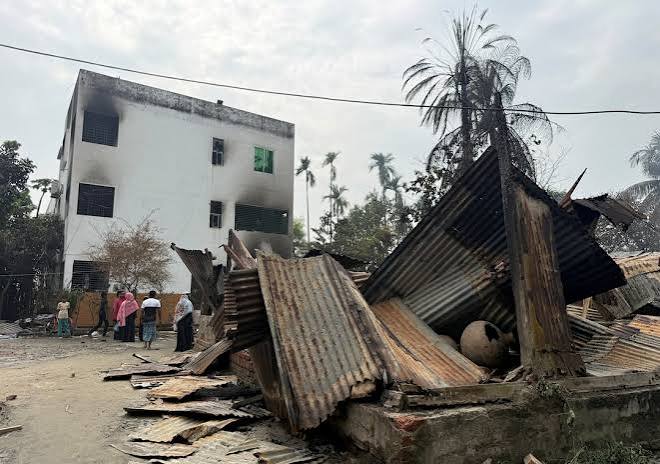
In one of the most notable incidents, the ancestral home of Nobel Peace Prize laureate and former interim leader Muhammad Yunus was set ablaze in the southeastern port city of Chattogram.
Authorities also arrested 107 people in Dhaka over a 24-hour period, including a former education minister, while paramilitary forces were deployed to contain the unrest.
The demonstrations followed Hasina's announcement that she intended to return to Bangladesh in December after living in exile in India since her removal from power in 2024.
The violence has become a significant test for Prime Minister Tarique Rahman's government, which came to power following elections earlier this year.
Political Protests Disrupt Parts of Bangladesh
The unrest intensified on Thursday as supporters of Hasina's banned Awami League party carried out a nationwide shutdown campaign.
The party had called for the action following a week of demonstrations and political rallies.
The protests were organized in response to the government's refusal to issue Hasina a new passport and national identity card, documents she sought ahead of her planned return.
Although the shutdown was announced nationwide, its impact varied across the country.
Some districts experienced serious disruptions, while others remained comparatively calm.
Police reported incidents involving vandalism, vehicle fires, crude bomb explosions and attacks on property.
The disturbances raised concerns about whether the political confrontation could expand as December approaches.
The government has accused Awami League figures living abroad of encouraging unrest.
However, the party's leaders, many of whom remain in hiding, could not immediately be reached by Reuters for comment on the latest incidents.
Two Ruling-Party Members Killed Amid Escalating Violence
One of the most serious developments was the deaths of two members of the governing Bangladesh Nationalist Party.
Police said both were killed on Wednesday night, November 18, during the period of escalating political unrest.
Authorities also reported attacks on properties associated with BNP lawmakers in Gopalganj, the home district of Sheikh Hasina.
The houses of two lawmakers were vandalized and set on fire.
Some shops and markets in Gopalganj town were also damaged during incidents police associated with Awami League supporters.
The attacks demonstrated how the confrontation had extended beyond street demonstrations to affect political figures and privately owned property.
The deaths increased concerns about the possibility of further violence between supporters of rival political groups.
Police had not publicly established the identities of all individuals responsible for the killings in the information available to Reuters.
The reports therefore document the deaths and ongoing investigation without establishing that specific people or party leaders ordered them.
Former Leader Muhammad Yunus' Ancestral Home Set on Fire
Another major incident occurred late Wednesday at the ancestral home of Muhammad Yunus in Chattogram, approximately 300 kilometers southeast of Dhaka.
Yunus, a Nobel Peace Prize laureate, led Bangladesh's interim government following Hasina's removal from office in August 2024.
Police said his family property was targeted in a suspected arson attack.
Officer Mozammel Haque told Reuters that investigators believed flammable materials had likely been thrown into an unused room on the ground floor.
The fire damaged part of the property.
Family members living on the upper floors were reported safe.
Authorities did not announce any deaths associated with the fire.
The attack attracted particular attention because Yunus became a central political figure during the transition that followed Hasina's departure.
His interim administration also oversaw measures affecting Hasina's political party.
Supporters of the former prime minister have repeatedly criticized Yunus and his government's actions.
However, the identity of the person or people responsible for the fire had not been definitively established in Reuters' report.
The Yunus Centre, which speaks on his behalf, could not immediately be reached for comment.
Bangladesh Deploys Paramilitary Forces Across Seven Districts
As violence spread, authorities expanded their security response.
Border Guard Bangladesh deployed 97 platoons across seven districts to help prevent further disturbances.
The deployment included Gopalganj and Faridpur, areas considered to have significant numbers of Hasina supporters.
Border Guard spokesperson Shariful Islam confirmed the operation.
The move reflected concern that local police resources might face additional pressure if clashes and attacks continued.
Security forces were tasked with deterring violence and helping restore public order.
The deployment did not amount to a nationwide state of emergency.
Instead, it was a targeted response to districts where the authorities believed additional security personnel were necessary.
The government has also indicated that it intends to take action against people involved in violent incidents.
At Least Six Vehicles Torched, Railway Line Targeted
The scale of the disturbances became clearer through police reports describing damage in multiple districts.
Since Wednesday night, at least six buses and pickup vehicles had been set on fire.
A section of railway track was also targeted in an arson incident.
Authorities additionally reported crude bomb explosions across six districts.
On Thursday, a bus and a truck were set ablaze on the Dhaka–Chattogram highway.
Police said passengers aboard the bus managed to escape without injuries.
The reported attacks created transportation disruptions and heightened concerns about the safety of people traveling through affected areas.
The damage to vehicles and railway infrastructure also raised questions about the economic consequences of continued shutdowns.
Although the available reports identify several serious incidents, they do not establish that every district in Bangladesh was equally affected.
Police Arrest 107 People in Dhaka
Authorities launched a series of arrests amid the disturbances.
In Dhaka, police detained 107 people over a 24-hour period on suspicion of links to the Awami League and affiliated organizations.
Police spokesperson Niaz Mehedi confirmed the arrests.
Among those detained was Nurul Islam Nahid, who previously served as education minister under Hasina.
Authorities said Nahid faced allegations connected to killings during the mass protests of 2024.
Police took him into custody at his residence in the capital.
His arrest represents a separate legal development from the latest street violence.
The allegations against those detained remain subject to investigation and judicial proceedings.
An arrest does not establish that a suspect committed a criminal offense.
The scale of the operation nevertheless demonstrated the government's response to the political unrest.
Sheikh Hasina's Planned Return Fuels the Crisis
The immediate political trigger for the latest demonstrations was Hasina's announcement that she planned to return home in December.
Hasina, 78, has lived in India since August 2024, when a mass student-led uprising ended her long period in power.
Her departure followed weeks of protests and a deadly government crackdown.
The political transition eventually led to an interim administration headed by Muhammad Yunus.
Hasina's Awami League party was subsequently barred from participating in political activities and elections.
In February 2026, Bangladesh held a general election that brought the BNP to power under Tarique Rahman.
The new administration inherited deep political divisions connected to Hasina's removal and the country's transition of power.
Her proposed return has brought those tensions back into the spotlight.
The government refused her request for new identity documents, while her supporters began organizing demonstrations in opposition to that decision.
The outcome of her effort to return remains uncertain.
Former Prime Minister Faces Death Sentence Over 2024 Crackdown
Hasina's potential return is complicated by serious legal proceedings connected to the uprising that forced her from office.
In November 2025, a Bangladeshi court sentenced her to death after finding her responsible for ordering a deadly crackdown on demonstrators during the 2024 protests.
The United Nations estimated that as many as 1,400 people were killed during the crackdown.
The court's judgment remains a major source of political controversy.
Hasina's supporters continue to challenge the government's actions against her and her political organization.
The administration, meanwhile, has defended efforts to pursue accountability for violence associated with the uprising.
Her residence in India adds an international dimension to the situation.
The latest reports did not establish that India had agreed to facilitate her return or that the Bangladeshi government had reversed its position on her travel documents.
These unresolved issues help explain why the December return announcement has become so politically significant.
Prime Minister Tarique Rahman Accuses Opponents of Destabilization
Prime Minister Tarique Rahman responded to the unrest by accusing political opponents of attempting to destabilize the country.
Addressing lawmakers on Wednesday, he said the government was working toward a more self-reliant Bangladesh.
He alleged that political forces associated with the previous administration were attempting to undermine those efforts.
Rahman's government has also accused Awami League leaders based outside Bangladesh of encouraging unrest.
Those accusations represent the government's position.
Reuters did not establish that every reported violent incident had been directed by party leaders abroad.
Still, the prime minister's remarks demonstrated the seriousness with which his administration views the protests.
The government faces the challenge of maintaining security while navigating a deeply divided political environment.
Garment Workers Stage Separate Wage Protests
Alongside the political unrest, Bangladesh faced another wave of demonstrations involving workers in its major garment industry.
Hundreds of garment workers blocked a key highway leading into Dhaka while demanding higher wages.
Their protests forced some factories to suspend operations.
These demonstrations were separate from the Awami League's political shutdown campaign.
The distinction is important because the two movements involve different demands and participants.
Garment workers have been protesting over pay and labor conditions, while Hasina's supporters are challenging political decisions affecting the former prime minister.
Nevertheless, the simultaneous demonstrations have increased pressure on transportation networks and economic activity.
Bangladesh is the world's second-largest garment exporter after China.
Its clothing industry is a major source of employment and export revenue.
Disruptions to production and transportation can therefore create significant challenges for manufacturers, workers and businesses.
A Country Facing Renewed Political and Economic Pressure
Bangladesh has experienced major political changes since Hasina's departure in 2024.
The uprising that ended her administration was followed by a period of interim government and then a national election.
The return to elected civilian leadership under Rahman was intended to provide greater political stability.
However, the latest violence demonstrates that divisions associated with the previous government have not disappeared.
The ruling BNP faces opposition from supporters of the banned Awami League, while unresolved legal and political disputes continue to shape public life.
At the same time, wage demonstrations are affecting an industry essential to the national economy.
The combination creates a complicated challenge for authorities.
They must respond to violent incidents while managing the effects of protests on transport, employment and economic activity.
Maintaining public order without unnecessarily restricting peaceful political expression is another important consideration.
What Happens Next?
As of November 19, 2026, authorities had deployed additional security forces and arrested more than 100 people in Dhaka.
Police were investigating the deaths of two ruling-party members, attacks on vehicles and property, and the suspected arson at Yunus' ancestral home.
Hasina's planned December return remained a central source of political tension.
The government had not announced that it would grant her the requested travel documents.
Meanwhile, garment workers continued separate demonstrations over wage demands.
The immediate situation remains uncertain because the protests, police operations and political responses are ongoing.
Future developments will depend on how the government handles the unrest, whether violent incidents continue and whether the dispute surrounding Hasina's return can be addressed.
For ordinary Bangladeshis, the consequences extend beyond national politics.
Transportation disruptions, damaged property, interrupted business activity and fears of violence can affect daily life across communities.
The recent events have therefore become an important test of the country's ability to maintain stability following its political transition.
The central question is whether Bangladesh's government can contain the violence and address the country's political divisions before Sheikh Hasina's planned return in December creates further confrontation.
For now, the killing of two ruling-party members, the attack on Yunus' family property and the widespread security response highlight the serious tensions facing Bangladesh during a period of renewed political uncertainty.