Hakeem Jeffries Moves Closer to Historic House Speakership After Democrats Back Him in 251–11 Vote, but Party Divisions Remain
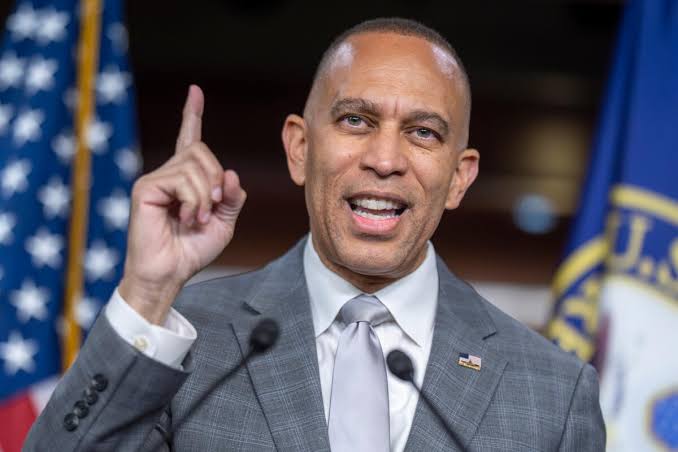
WASHINGTON — November 18, 2026 — House Democrats overwhelmingly nominated Hakeem Jeffries to become the next speaker of the U.S. House of Representatives on Wednesday, bringing the New York lawmaker closer to a historic milestone as his party prepares to assume control of the chamber in January.
Jeffries secured the nomination by a vote of 251–11 during a closed-door Democratic leadership election.
If elected by the full House when the new Congress convenes on January 3, 2027, he would become the first Black American to serve as speaker.
The nomination followed major Democratic gains in the November midterm elections, which shifted control of the House away from Republicans and placed Jeffries in position to lead the incoming majority.
But the overwhelming vote also revealed disagreements within the Democratic Party.
A group of newly elected progressive lawmakers opposed his nomination, calling for stronger commitments on healthcare, immigration enforcement, campaign finance and the war in Gaza.
The result represents a major step toward a new chapter in congressional leadership, although Jeffries must still secure the votes needed to become speaker.
Democrats Deliver Overwhelming Support for Jeffries
House Democrats gathered privately Wednesday to select their leadership team for the next Congress.
Jeffries, who has led House Democrats since 2022, ran without a formal challenger for the speaker nomination.
He received 251 votes in favor and 11 against.
The vote demonstrated substantial support from his colleagues after Democrats secured one of their largest incoming House majorities in decades.
Nevertheless, the opposition was notable because it came from within a party preparing to govern with a new generation of lawmakers.
Some newly elected progressives had questioned whether existing Democratic leaders were prepared to deliver the policy changes they wanted.
Others argued that the party needed to respond more directly to the concerns of activists and voters who had pressed for a different approach.
Following the nomination, Jeffries called for unity and emphasized the need for Democrats to work together on their priorities.
He presented the incoming Congress as an opportunity to advance legislation and address the concerns of Americans.
The vote settled the party's nomination but not the formal election of the House speaker.
Jeffries Could Become the First Black Speaker in American History
The significance of Jeffries' nomination extends beyond the internal Democratic leadership contest.
No Black American has previously served as speaker of the U.S. House of Representatives.
Jeffries' election would therefore represent an important milestone in the history of congressional leadership.
Black Americans first entered the House more than 150 years ago, following the Civil War and the expansion of political rights during Reconstruction.
Over the following generations, Black lawmakers gained greater representation and influence in Congress.
Jeffries' nomination places him on a path toward the chamber's highest leadership position.
Representative James Clyburn of South Carolina, a longtime Democratic leader, helped nominate Jeffries during the private meeting.
Clyburn described the moment as historically significant.
Representative Rosa DeLauro of Connecticut also emphasized the importance of the nomination, while Representative Kweisi Mfume of Maryland connected the development to the broader history of Black representation in American government.
Their remarks reflected the importance many lawmakers attached to the possibility of a historic speakership.
However, the milestone remains prospective until the full House conducts its vote.
Eleven Votes Against Jeffries Reveal Progressive Opposition
Although Jeffries won overwhelming support, his nomination did not receive unanimous approval.
Eleven votes were cast against him.
Among the opponents were several incoming progressive lawmakers, including members supported by the Democratic Socialists of America.
The group has called for more ambitious policy commitments from Democratic leaders.
Their priorities include expanding healthcare access through Medicare for All, changing immigration enforcement practices, reducing the influence of money in politics and ending Israel's war in Gaza.
In a joint statement, the lawmakers indicated that discussions with Jeffries had taken place but that additional work was necessary.
The opposition reflected policy disagreements rather than a competing candidacy.
Jeffries ran unopposed, and the critics did not unite behind another nominee.
The group included incoming lawmakers from New York, New Jersey, Colorado, Michigan, Pennsylvania and other states.
Their position illustrated how Democratic electoral gains have brought new voices into the House, some of whom expect a different approach from party leadership.
The disagreement also creates an early challenge for Jeffries as he prepares to lead a larger and more ideologically diverse caucus.
Democrats Face Pressure for Change After Midterm Victories
The leadership election followed a political shift in the November 3 midterms.
Voters handed Democrats a substantial House majority, ending Republican control of the chamber.
The result came during a period of public dissatisfaction with President Donald Trump and the Republican Party.
However, the Democratic victory has also increased expectations among the party's supporters.
Some activists believe the election results should lead to major policy changes rather than a continuation of previous congressional strategies.
According to Associated Press reporting, Democratic offices have received numerous phone calls and social media messages from voters expressing opinions about the party's leadership.
Jeffries also faced protesters during a Democratic conference in Denver the previous week.
These reactions demonstrate that winning control of Congress has not eliminated internal debates about the party's direction.
For Jeffries, the challenge involves maintaining support among lawmakers with different legislative priorities while preparing to lead the House.
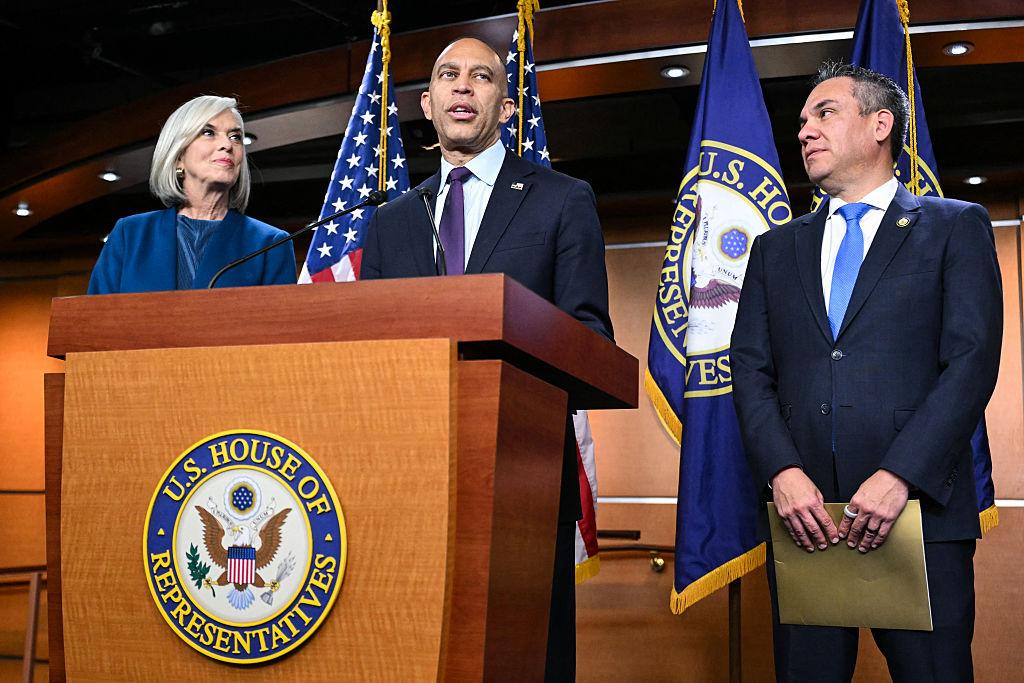
Katherine Clark and Pete Aguilar Also Prepare for Historic Leadership Roles
Jeffries will not be the only member of the Democratic leadership team positioned to make history.
Representative Katherine Clark of Massachusetts was selected to become the party's majority leader.
If she assumes that position in January, Clark would become the first woman to serve as House majority leader.
Representative Pete Aguilar of California was chosen for the majority whip position.
Aguilar would become the first Latino to hold that role.
Representative Ted Lieu of California was also selected to chair the House Democratic Caucus.
The leadership candidates ran without opposition.
Their selection reflects the leadership generation that emerged after former Speaker Nancy Pelosi stepped aside from Democratic leadership in 2022.
Jeffries, Clark and Aguilar have worked together during the party's years in the minority.
Now, they are preparing to transition from opposition leadership to managing a majority in the House.
That change carries additional responsibilities, including setting legislative priorities, organizing floor votes and managing disagreements among members.
Alexandria Ocasio-Cortez Supports Jeffries Despite Progressive Criticism
The debate over Jeffries' nomination also involved prominent progressive lawmakers.
Representative Alexandria Ocasio-Cortez of New York publicly expressed support for Jeffries ahead of Wednesday's vote.
She explained that he was the candidate seeking the party's nomination for speaker.
Her position demonstrated that progressive lawmakers were not united in opposition to his leadership.
Representative Yassamin Ansari of Arizona also defended Jeffries' approach.
Ansari described him as a collaborative leader who had been engaging with progressive members and listening to their concerns.
She emphasized that the Democratic leader would need to represent the entire caucus rather than one ideological faction.
Other lawmakers similarly argued that Jeffries' leadership during the recent election cycle justified continued support.
Representative Shomari Figures of Alabama said he intended to stand behind Jeffries as the party approached a historic transition.
The differing reactions illustrated that progressive priorities and support for Jeffries are not necessarily mutually exclusive.
The Democratic Leadership Transition Follows the Pelosi Era
The selection of Jeffries and his leadership team represents another stage in the Democratic Party's transition after Nancy Pelosi's long tenure.
Pelosi stepped away from party leadership following the 2022 elections, when Republicans gained control of the House.
Jeffries subsequently became the leading House Democrat.
Over the following years, he worked with Clark and Aguilar while the party remained in the minority.
The 2026 midterm results have now created the possibility for that leadership team to govern from the majority.
The transition is also taking place as Senate Democrats prepare for their own leadership decisions.
Senate Democratic leader Chuck Schumer of New York faces a challenge from Senator Chris Van Hollen of Maryland in elections scheduled for December.
The developments suggest that both chambers are experiencing internal discussions about leadership, policy and the party's future direction.
However, the House and Senate leadership contests are separate processes.
Jeffries' overwhelming nomination vote does not determine the outcome of the Senate contest.
What Must Happen Before Jeffries Becomes Speaker?
The next important step is the formal House speaker election.
The new Congress is scheduled to convene on January 3, 2027.
At that point, representatives will vote to choose the speaker.
Under the circumstances described by AP, Jeffries would need 218 votes to secure the position.
The Democratic nomination makes him the party's candidate, but it does not automatically give him the office.
The speaker is chosen by the full House, not solely by the Democratic caucus.
That distinction is essential because the November 18 vote was an internal party decision.
Once elected, the speaker presides over the House and plays a central role in organizing its legislative business.
The position also carries major responsibilities involving parliamentary procedures, committee organization and the House's relationship with the executive branch.
The January vote will therefore formally determine whether Jeffries assumes that authority.
What a Democratic House Majority Means for Washington
The change in House control will affect the balance of power in the federal government.
With Republicans losing their House majority, Democratic lawmakers will gain greater control over the chamber's legislative agenda.
They will be able to advance proposals, conduct oversight and organize congressional hearings through the leadership structures of the majority.
However, control of the House does not mean every Democratic proposal will automatically become law.
Legislation must still proceed through the constitutionally required process.
The president and the Senate remain important parts of that process.
For Jeffries, managing the new majority will require balancing the priorities of moderates, progressives and other members representing different districts.
The opposition expressed by some lawmakers during Wednesday's nomination demonstrates that those challenges are already visible.
His leadership will also be judged by how the Democratic majority handles issues such as healthcare, immigration, government spending and the broader relationship with the Trump administration.
What Happens Next?
The Democratic Party has selected its speaker nominee and leadership team for the incoming Congress.
Jeffries received overwhelming support, while Clark, Aguilar and Lieu were chosen for other senior positions.
The result places Democrats closer to a historic leadership transition.
At the same time, the 11 votes against Jeffries show that policy disagreements remain unresolved.
Progressive lawmakers are continuing to seek commitments on issues they consider important.
Supporters of Jeffries argue that his experience leading the party through the midterm elections provides a foundation for the next Congress.
The immediate task is to prepare for the January 3 speaker election.
Until that vote occurs, Jeffries remains the Democratic nominee rather than the formally elected speaker.
The broader challenge will come after the new Congress begins, when Democratic leaders must turn their electoral majority into an organized legislative program.
The central question is whether Jeffries can maintain support across a Democratic Party with competing priorities as he moves toward a potentially historic speakership.
For now, the November 18 nomination has brought him one step closer to becoming the first Black speaker of the House, while also offering an early glimpse of the internal debates that could shape the next Congress.