Houthi Missile Attack Damages Saudi Arabia's Tallest Skyscraper as Riyadh Faces Renewed Threats and Yemen War Intensifies
RIYADH, Saudi Arabia — November 19, 2026 — A Houthi attack damaged Saudi Arabia's tallest skyscraper on Thursday, striking the headquarters of the kingdom's powerful sovereign wealth fund in the heart of Riyadh's financial district as fighting between Saudi forces and Yemen's Iran-backed Houthi movement intensified.
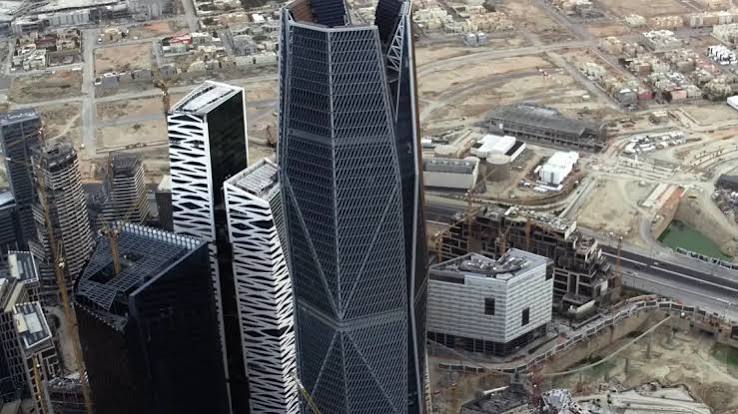
The attack damaged several floors of the Public Investment Fund Tower, a prominent landmark in the King Abdullah Financial District.
Saudi authorities confirmed damage to the building and surrounding structures but reported no injuries.
The incident came less than two weeks after another Houthi attack damaged the headquarters of Saudi state energy company Aramco in the same financial district.
Residents reported hearing a loud explosion early Thursday, while Saudi civil defense authorities issued warnings about possible danger in the capital.
The latest attack has renewed attention to the vulnerability of Saudi Arabia's financial and commercial infrastructure as the conflict in Yemen continues.
Saudi Arabia's Tallest Tower Damaged in Houthi Attack
The Public Investment Fund Tower, commonly known as PIF Tower, stands among the most recognizable buildings in Riyadh.
It houses the headquarters of Saudi Arabia's Public Investment Fund, a sovereign wealth fund that plays an important role in the country's economic development strategy.
On Thursday, the tower became the latest prominent structure to suffer damage during the escalating confrontation with Yemen's Houthi movement.
According to Saudi Arabia's civil defense authority, an attack caused material damage to several floors of a building in Riyadh's financial center and to nearby structures.
The official statement did not initially identify the building by name.
However, an accompanying photograph released by the Saudi Press Agency showed the PIF Tower.
Reuters reported that windows were blown out across approximately seven or eight floors, while parts of the building's metal exterior were bent.
Three sources familiar with the incident said the building had been struck by an incoming Houthi missile.
The extent of the financial damage had not been publicly established.
Despite the visible destruction, Saudi authorities reported no injuries.
Loud Explosion Shakes Riyadh as Authorities Issue Warnings
Residents of Riyadh were awakened by a loud explosion during the early hours of Thursday.
The Saudi-led military coalition subsequently announced that its forces had responded to a missile threat launched toward the capital by the Houthis.
Coalition spokesperson Major General Turki al-Maliki said the military had dealt with the incoming threat.
The coalition also confirmed that debris had fallen following the incident.
Saudi civil defense authorities issued several warnings to residents throughout Thursday, advising them of possible danger.
The warnings remained part of the emergency response as the authorities monitored the situation.
Officials later announced that the immediate threat had passed.
Following the attack, the King Abdullah Financial District was closed to visitors.
The closure reflected security concerns surrounding one of the capital's most important business areas.
The district contains major office buildings and financial institutions, making damage to its infrastructure particularly significant.
Houthi Forces Claim Two Attacks on Riyadh in One Day
The Houthi movement said it had targeted Riyadh's financial district twice on Thursday.
According to the group's statements, the first attack occurred around dawn, followed by another in the evening.
The Houthis also claimed responsibility for attacks against additional Saudi facilities.
They said their forces had targeted King Khalid International Airport in Riyadh, Khamis Mushait airbase in southern Saudi Arabia, and the SADAF Petrochemical Company in Jubail.
The claimed targets include civilian aviation infrastructure, a military installation and a major industrial facility.
However, Reuters reported that Saudi authorities had not immediately confirmed those additional attacks.
The Houthi statements therefore do not establish that the airport, airbase or petrochemical complex suffered damage.
The confirmed incident involved material damage in Riyadh's financial district, including the PIF Tower.
The distinction is important because the wider set of Houthi claims had not been independently verified.
Second Major Building Damaged in Less Than Two Weeks
Thursday's incident followed another attack on a prominent Saudi building.
On November 8, a Houthi attack damaged a building belonging to Saudi Aramco in Riyadh's financial district.
Aramco is Saudi Arabia's state oil company and one of the world's major energy producers.
The two incidents have brought renewed attention to attacks affecting high-profile economic infrastructure in the Saudi capital.
Although the targets differ, both buildings are closely associated with the kingdom's economic system.
The PIF Tower is connected to Saudi Arabia's sovereign wealth fund, while Aramco plays a central role in the country's energy industry.
Repeated attacks on such locations raise concerns about the security of major business districts during periods of military escalation.
However, the reported damage does not establish that the buildings have been permanently disabled or that their organizations have ceased operating.
Reuters did not report a confirmed casualty figure from either incident in its November 19 account of the PIF Tower strike.
Saudi Government Warns It May Take Further Action
Saudi Arabia's Foreign Ministry responded to the attack by emphasizing the kingdom's right to defend itself.
The ministry said the government reserved the right to take necessary measures to protect its sovereignty, population and national assets.
The statement reflected Riyadh's concern over continuing missile and drone attacks.
It also indicated that Saudi authorities were considering the latest incident within the wider context of the conflict with the Houthi movement.
However, the statement did not announce a specific new military operation in direct response to the PIF Tower attack.
The government's position comes as its forces remain engaged in the Yemen conflict.
Saudi Arabia has led a coalition opposing the Houthis since 2015.
The coalition originally intervened to support Yemen's internationally recognized government after the Houthi movement seized the capital, Sanaa, and large parts of the country.
Although a ceasefire reached in 2022 reduced fighting for several years, hostilities resumed in July 2026.
The latest attack represents another development in that renewed conflict.
Saudi Airstrikes Reported in Yemen's Capital
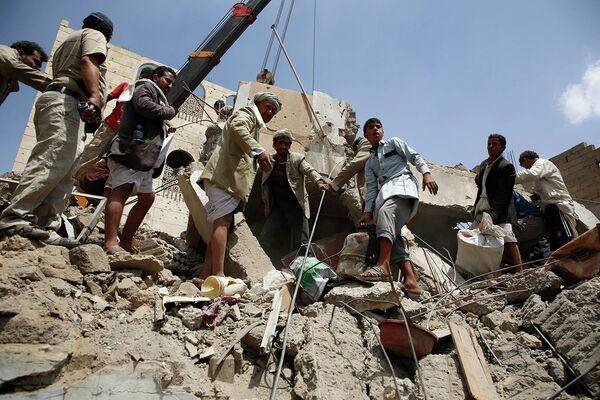
The fighting was not limited to Saudi territory.
The Houthi-run Saba news agency reported that Saudi aircraft carried out airstrikes against Sanaa early Thursday.
Sanaa remains under Houthi control.
The agency did not immediately provide detailed information about the targets, damage or possible casualties.
Saudi authorities did not respond immediately to Reuters' request for comment about the reported strikes.
Consequently, the full circumstances and effects of those airstrikes were not independently established in the report.
The claims nevertheless illustrate the continuation of military operations across the Saudi-Yemeni confrontation.
While Houthi forces have launched missiles and drones toward Saudi infrastructure, Saudi aircraft have conducted strikes against locations in Yemen.
The ongoing exchanges complicate attempts to restore stability after years of conflict.
They also create continuing risks for civilians living near areas affected by military activity.
Yemen's Houthis Expand Territorial Control
The Riyadh attack occurred during a period of significant military developments inside Yemen.
According to Reuters, the Houthi movement has captured additional territory from the Saudi-backed Yemeni government.
Its advances have forced government-aligned forces to retreat from several areas.
The Houthis now control Yemen's entire Red Sea coastline, including territory around the strategically important Bab el-Mandeb Strait.
They have also surrounded Taiz, a city located in highlands overlooking the approaches to Aden, where Yemen's internationally recognized government maintains its temporary capital.
These developments have altered the military situation on the ground.
Control over coastal areas and major transportation routes can influence military logistics and maritime security.
The Bab el-Mandeb Strait is especially important because it connects the Red Sea to the Gulf of Aden and international shipping routes.
Houthi territorial advances therefore have implications extending beyond Yemen's internal conflict.
Saudi Arabia Prepares for a Potentially Prolonged Campaign
Saudi officials have reportedly begun planning for the possibility that the campaign against the Houthis could continue well into 2027.
Reuters reported on November 18 that Saudi authorities anticipated the fighting might last up to six additional months.
That assessment was based on accounts from two Western officials briefed on Saudi plans and a third source familiar with the situation.
According to those sources, Saudi leaders want their allies to improve their positions on the battlefield before pursuing negotiations with the Houthis.
The kingdom has also made changes to its military leadership.
During the same week, Saudi Arabia replaced the commander of the coalition fighting in Yemen.
The move occurred amid concerns over Houthi advances and continued attacks on Saudi infrastructure.
The reported planning horizon does not establish that fighting will necessarily continue for six months.
It reflects the expectations of officials familiar with Saudi military preparations at the time.
The duration of the conflict will depend on military developments and any subsequent diplomatic efforts.
Saudi Crown Prince Meets U.S. Central Command Chief
The escalating confrontation has also prompted high-level consultations between Saudi Arabia and the United States.
Crown Prince Mohammed bin Salman met Admiral Brad Cooper, the commander of U.S. Central Command, in Riyadh on Wednesday.
According to Reuters, it was Cooper's third publicly reported visit to Saudi Arabia since fighting between the kingdom and the Houthis resumed in July.
The meeting reflects continuing military and security communication between Washington and Riyadh.
Saudi Arabia is a longstanding U.S. security partner and plays an important role in regional energy markets.
The renewed Houthi attacks have created additional concerns for Saudi defense planning.
However, Reuters did not report that the meeting resulted in an announcement of a new American military intervention against the Houthis.
The discussions occurred amid the broader regional conflict involving the United States and Iran.
Iran War Adds Pressure Across the Gulf
The Houthi-Saudi confrontation is taking place alongside the wider war involving Iran.
That conflict began in February 2026, when the United States and Israel launched attacks against Iran.
The fighting has contributed to instability across several parts of the Middle East.
Recent incidents have included Iranian attacks directed at U.S. allies Bahrain and Kuwait.
American forces also conducted airstrikes against Iran's Qeshm Island in the Strait of Hormuz on Tuesday, November 17.
Those developments have added to a tense security environment.
Regional diplomatic efforts have continued, including negotiations mediated by Qatar.
However, Reuters reported no breakthrough in the peace discussions as of November 19.
The continuation of multiple confrontations has made regional security arrangements increasingly complicated.
The Houthis' relationship with Iran also adds a strategic dimension to the Yemen conflict.
Nevertheless, the Reuters report did not establish that Tehran directly ordered the specific attack on the PIF Tower.
Saudi Arabia's Economic Ambitions Face New Security Challenges
The damage to the PIF Tower has significance beyond the immediate physical destruction.
Saudi Arabia has invested heavily in efforts to diversify its economy and reduce its reliance on oil revenue.
The Public Investment Fund plays a major role in financing projects connected to those ambitions.
Crown Prince Mohammed bin Salman has made economic diversification a central element of the kingdom's long-term development strategy.
The latest missile attack demonstrates that major financial infrastructure can be affected by regional military conflict.
Repeated incidents may require additional security measures and operational planning.
They can also create uncertainty for businesses operating in exposed locations.
However, the financial consequences of the November 19 attack have not been fully quantified.
There is no confirmed evidence in Reuters' report that the attack caused the cancellation of major PIF investments or a permanent interruption of the fund's operations.
The confirmed consequences are material damage to the building and nearby structures, a temporary restriction on visitor access to the financial district, and renewed security warnings.
What Happens Next?
Saudi Arabia has warned that it reserves the right to take measures necessary to defend its territory and national assets.
The Houthis continue to claim missile and drone attacks against Saudi targets.
Meanwhile, the military campaign inside Yemen remains active, with Houthi advances placing pressure on forces supported by Riyadh.
Saudi officials are reportedly preparing for the possibility of a prolonged confrontation.
The involvement of senior American military officials in discussions with Saudi leaders underscores the regional importance of the situation.
However, no comprehensive agreement ending the renewed conflict was announced in Reuters' November 19 report.
Further developments will depend on military operations, diplomatic contacts and the ability of the parties to address their security disagreements.
The immediate confirmed outcome of Thursday's attack is that Riyadh's tallest skyscraper suffered significant material damage, while Saudi officials reported no injuries.
The Houthi movement's additional claims about attacks on an airport, airbase and petrochemical facility remain unconfirmed by Saudi authorities.
The central question is whether the continuing attacks on Saudi Arabia's economic infrastructure will lead to further military escalation — or increase pressure for renewed negotiations to end the Yemen conflict.
For now, the damage to the PIF Tower highlights the growing security challenges facing Riyadh as its confrontation with the Houthi movement continues.