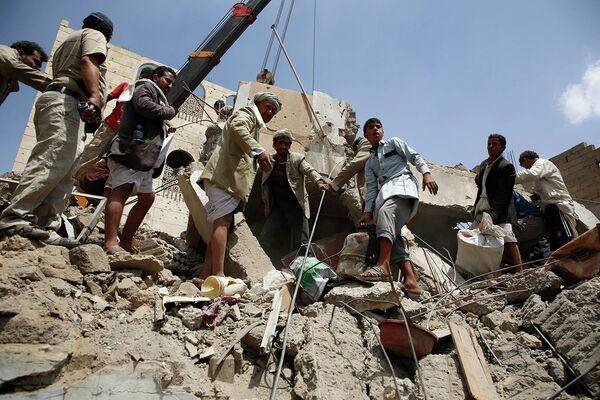
HOUTHIS STRIKE SAUDI'S TALLEST TOWER, THREATEN RIYADH AIRPORT
RIYADH, SAUDI ARABIA, November 19, 2026 — Yemen's Iran-aligned Houthi rebels launched another wave of attacks against Saudi Arabia on Thursday, damaging the tallest skyscraper in Riyadh and claiming to have targeted the capital's international airport, a military airbase and a major petrochemical facility.
The attack struck the heart of King Abdullah Financial District, one of Saudi Arabia's most prominent business centers.
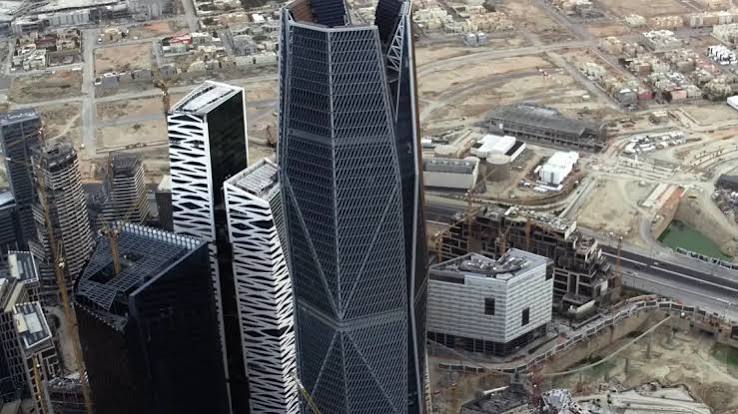
The 80-story Public Investment Fund Tower, headquarters of the kingdom's powerful sovereign wealth fund, suffered damage across several floors.
Windows shattered.
Sections of the building's metal exterior were bent.
Nearby buildings also sustained damage.
Saudi authorities confirmed the incident but reported no injuries.
Yet the most serious development extended beyond the damaged skyscraper.
Houthi military spokesman Yahya Saree said the group had also launched attacks against King Khalid International Airport, Khamis Mushait airbase and the SADAF Petrochemical Company in Jubail.
The Houthis claimed to have targeted Riyadh's financial district twice on Thursday, once before dawn and again in the evening.
Saudi officials did not immediately confirm the alleged damage at the airport, airbase or petrochemical facility.
The distinction is important.
The physical damage to the PIF Tower was confirmed.
The broader Houthi claims concerning additional targets had not been independently verified.
The attacks nevertheless marked another escalation in a conflict that has increasingly threatened Saudi Arabia's economic infrastructure.
And the timing was particularly significant.
Just 11 days earlier, another Houthi attack had damaged a building associated with Saudi oil giant Aramco in the same financial district.
For the second time in less than two weeks, a major landmark in the Saudi capital had been hit.
**RIYADH'S TALLEST SKYSCRAPER TAKES A DIRECT HIT**
The Public Investment Fund Tower stands approximately 385 meters tall in Riyadh's King Abdullah Financial District.
With 80 floors, it is the tallest building in the Saudi capital.
The skyscraper serves as the headquarters of the Public Investment Fund, the kingdom's sovereign wealth fund.
The building is a prominent symbol of Saudi Arabia's efforts to develop Riyadh into a global financial and investment center.
But early Thursday, the tower became the scene of a major security incident.
Residents reported hearing a powerful explosion after warnings of an incoming aerial threat.
The Saudi-led coalition said its forces had responded to a missile launched toward Riyadh.
The coalition's initial assessment indicated that debris had fallen and caused material damage.
Three sources familiar with the incident told Reuters that an incoming Houthi missile had struck the tower.
Photographs and witness accounts showed substantial damage to portions of the skyscraper's exterior.
Windows were blown out across seven to eight floors.
Parts of the metal facade were twisted or displaced.
Additional damage was reported at neighboring buildings.
Despite the visible destruction, Saudi Civil Defence said no injuries had been recorded.
The full structural consequences of the strike were not immediately established.
**A POWERFUL EXPLOSION SHAKES THE CAPITAL**
The incident began during the early hours of Thursday.
Residents in Riyadh received warnings about a possible incoming aerial threat.
A loud explosion was subsequently heard in the city.
The blast was particularly noticeable around the capital's financial district.
Emergency vehicles and security personnel responded to the affected area.
Authorities restricted access to King Abdullah Financial District following the incident.
The closure prevented visitors from entering while officials assessed the situation.
Throughout Thursday, Saudi Civil Defence issued additional warnings about possible threats.
Authorities later informed residents when particular alerts had ended.
The warnings reflected the continuing risk of aerial attacks against the capital.
However, the available reporting did not establish that every warning corresponded to a successful strike.
The Saudi-led coalition said it had dealt with a missile threat.
Its initial statement did not clearly establish whether the missile had been intercepted before reaching the financial district.
That left an important question unresolved.
Investigators still needed to determine how the weapon or resulting debris caused the damage to the PIF Tower.
**HOUTHIS CLAIM MULTIPLE ATTACKS ON SAUDI TARGETS**
The Houthi movement subsequently claimed responsibility for operations against several Saudi locations.
Military spokesman Yahya Saree said the group had targeted Riyadh's financial center using cruise missiles.
The Houthis also announced attacks against King Khalid International Airport.
The airport is a major transportation hub serving the Saudi capital.
The group additionally claimed to have targeted Khamis Mushait airbase in southern Saudi Arabia.
That installation is associated with Saudi military operations near the Yemeni border.
Another claimed target was the SADAF Petrochemical Company in Jubail.
Jubail is a major industrial center in Saudi Arabia's Eastern Province.
The combination of targets showed the range of facilities the Houthis said they were attempting to strike.
Financial institutions, transportation infrastructure, military facilities and petrochemical operations were all included in the group's statements.
However, Saudi authorities did not immediately confirm that the additional locations had been successfully hit.
The claims therefore cannot be treated as independently established damage reports.
The confirmed incident remained the attack affecting the PIF Tower and nearby buildings in Riyadh.
**KING KHALID AIRPORT FACES RENEWED THREATS**
The Houthi claim concerning King Khalid International Airport attracted particular attention.
The airport is an essential gateway for Riyadh.
It supports international travel, domestic flights, commercial operations and connections with major global cities.
Any sustained disruption could affect passengers, airlines, businesses and cargo transportation.
The airport has already experienced serious security problems during the latest escalation.
Earlier in the conflict, repeated attacks forced Saudi authorities to suspend airport operations.
In October, a deadly attack killed 14 people and injured hundreds, according to reporting carried by AFP.
Flights were suspended for approximately two weeks.
The airport's operational difficulties demonstrated the potential consequences of attacks against civilian aviation infrastructure.
Thursday's announcement renewed concerns about possible disruption.
However, the Houthis' statement did not independently establish that the airport suffered fresh damage on November 19.
Nor did Saudi authorities immediately confirm a new airport shutdown resulting from the latest claimed operation.
Those distinctions remain essential when assessing the developing situation.
A claimed attack does not necessarily mean a facility was hit or forced to close.
**SAUDI WEALTH FUND HEADQUARTERS BECOMES A TARGET**
The damage to the PIF Tower carried economic and symbolic significance.
The Public Investment Fund is one of the central institutions supporting Saudi Arabia's long-term economic transformation.
The fund invests in domestic development projects and international businesses.
It has played an important role in financing initiatives associated with Crown Prince Mohammed bin Salman's Vision 2030 strategy.
That strategy aims to expand economic activity beyond oil production.
Its priorities include tourism, infrastructure, advanced technology, entertainment and investment.
The PIF Tower represents the financial institutions supporting those ambitions.
The attack therefore affected more than an ordinary office building.
It struck a prominent structure associated with the kingdom's economic modernization.
However, physical damage to the headquarters does not establish that the sovereign wealth fund's financial operations have been disabled.
The available reporting did not identify losses to investment assets or confirm a lasting interruption to the fund's activities.
The immediate confirmed consequences involved damage to the building and surrounding area.
A full assessment would be needed to determine repair requirements and operational effects.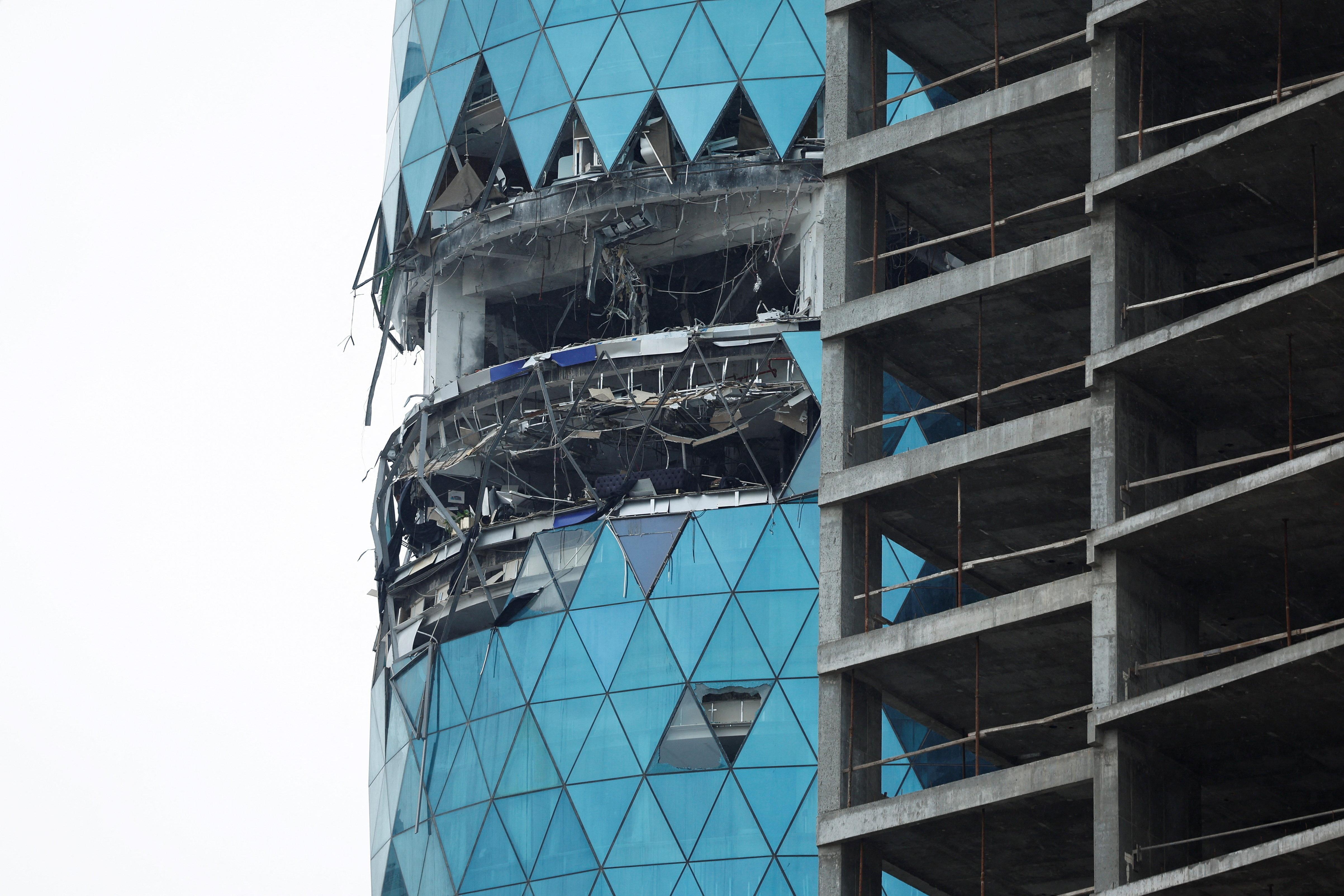
**SECOND MAJOR ATTACK ON RIYADH'S FINANCIAL DISTRICT**
Thursday's strike was not an isolated incident.
On November 8, a Houthi attack damaged a building associated with Saudi Aramco in Riyadh's financial district.
Aramco is Saudi Arabia's state-controlled energy company and one of the world's most important oil producers.
The November 8 incident placed a prominent energy-sector landmark under direct threat.
Eleven days later, the PIF Tower was damaged.
The two incidents affected buildings associated with major institutions in the Saudi economy.
Their proximity in time raised concerns about the security of Riyadh's business district.
The financial center contains office towers, commercial facilities and infrastructure serving companies and investors.
Repeated attacks can create challenges even when casualties are avoided.
Security alerts may interrupt business operations.
Restricted access can prevent employees and visitors from entering buildings.
Repairs and safety inspections can also impose additional costs.
Yet the available evidence does not establish that the attacks have brought Riyadh's financial sector to a standstill.
The reported damage was serious, but its longer-term economic consequences remain uncertain.
**SAUDI ARABIA WARNS OF FURTHER ACTION**
The Saudi government responded with a warning that it could take additional measures to protect the kingdom.
The Foreign Ministry said Saudi Arabia reserved the right to defend its sovereignty, citizens and national assets.
The statement followed confirmation of damage in the financial district.
Riyadh has repeatedly condemned Houthi attacks on its territory.
Saudi authorities regard strikes on civilian and economic infrastructure as unacceptable threats to national security.
However, the Foreign Ministry's warning did not announce a specific new military operation.
It also did not provide a timetable for retaliation.
The response left open several possibilities.
Saudi Arabia could strengthen defensive measures, increase military pressure or pursue additional diplomatic efforts.
The direction of the government's next steps will depend on security assessments and developments inside Yemen.
The kingdom is already engaged in an expanding military campaign against the Houthis.
Additional attacks on Riyadh could complicate efforts to reduce the confrontation.
**HOUTHIS SAY ATTACKS ARE RETALIATION FOR YEMEN STRIKES**
The Houthis presented Thursday's operations as retaliation for Saudi-backed attacks in Yemen.
Yahya Saree said the group was responding to strikes that had caused civilian casualties.
The Houthi statement referred to an attack on a boat near Ras al-Ara and the strategic Bab al-Mandab Strait.
According to the group, civilians, including women and children, were among those killed.
These claims were part of the Houthis' explanation for their military operations.
The available reporting did not independently verify every allegation concerning the earlier strike.
Nevertheless, the statements demonstrated the cycle of attacks and retaliation that has intensified the war.
Saudi-backed forces have conducted strikes against Houthi-held territory.
The Houthis have responded with missiles and drones aimed at Saudi locations.
Both sides describe their operations as necessary responses to their opponents' actions.
The result has been continued military escalation rather than a durable ceasefire.
**FIFTEEN REPORTED KILLED IN YEMEN AIRSTRIKES**
The attacks on Riyadh occurred alongside reports of civilian casualties in Yemen.
A spokesperson for the Houthi-run Health Ministry said airstrikes killed 15 people in two separate locations on Thursday.
The spokesperson, Anees al-Asbahi, reported that one strike hit a rest stop in the port city of Mokha.
According to his account, 10 people were killed and nine others wounded.
Another strike reportedly targeted workers repairing a road in Taiz province.
Five people were reported killed and five injured in that incident.
Al-Asbahi attributed the attacks to Saudi-backed forces.
The Associated Press said the claims could not be independently verified.
The reported casualties nevertheless illustrated the human consequences of the renewed fighting.
The incidents occurred as the Houthis expanded their own attacks against Saudi infrastructure.
The competing claims require careful assessment.
Casualty reports from parties involved in a conflict may be incomplete or disputed.
Independent verification is particularly difficult in areas where active fighting restricts access.
**SAUDI STRIKES REPORTED IN SANAA**
Houthi-controlled media also reported Saudi airstrikes against Sanaa early Thursday.
Sanaa is Yemen's capital and has been under Houthi control for years.
The Houthi-run Saba news agency reported the attacks without providing detailed information about their effects.
Saudi authorities did not immediately confirm the specific strikes described in the report.
The announcement came during a period of intensified fighting across Yemen.
Military operations have affected areas controlled by both the Houthis and forces supported by Saudi Arabia.
The conflict has increasingly involved aerial attacks, long-range missiles and fighting over strategically important territory.
The reports from Sanaa therefore formed part of a broader pattern of escalation.
However, the available information did not establish the full extent of damage in the capital.
It also did not provide independently verified casualty figures for those particular reported strikes.
**YEMEN'S WAR RETURNS AFTER YEARS OF RELATIVE CALM**
Saudi Arabia first entered Yemen's civil war in 2015.
The kingdom led an Arab coalition seeking to restore Yemen's internationally recognized government after the Houthis seized Sanaa and substantial parts of the country.
The intervention developed into a prolonged conflict.
Years of fighting produced extensive destruction and a severe humanitarian crisis.
A ceasefire reached in 2022 reduced large-scale hostilities.
Although the agreement did not resolve the underlying political dispute, it contributed to a period of relative calm.
That situation changed during 2026.
The conflict resumed in July amid a wider regional confrontation involving the United States and Iran.
Since then, fighting between the Houthis and Saudi-backed forces has intensified.
The Houthis have launched repeated attacks against airports, energy facilities and other infrastructure in Saudi Arabia.
Saudi-backed forces have conducted military operations against Houthi-controlled areas.
The latest strike in Riyadh represents another episode in that renewed war.