Trump, Xi and Putin Hold Historic Nuclear Summit in China — But Major Agreements on Ukraine, Iran and Arms Control Remain Out of Reach
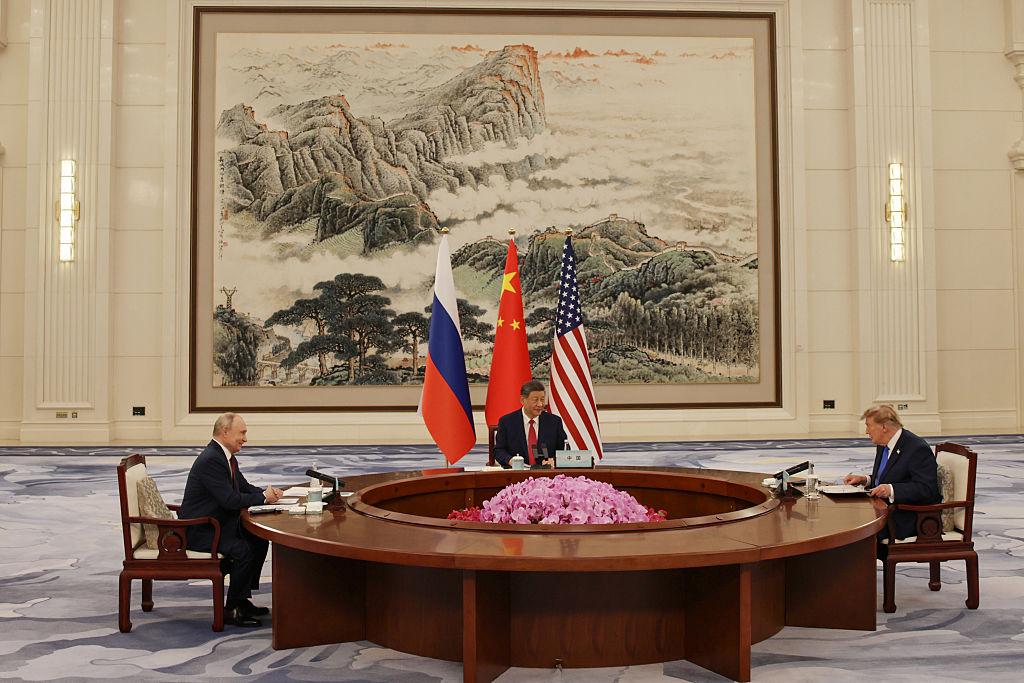
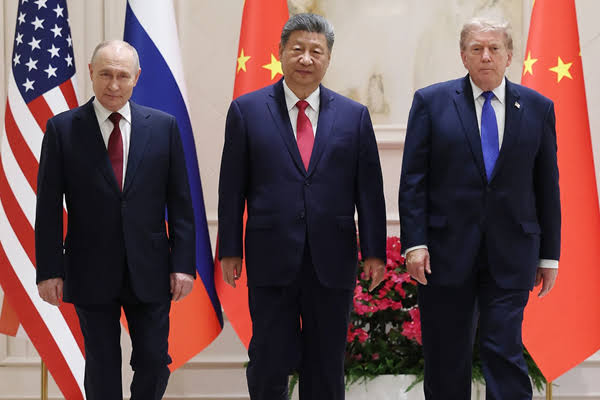
SHENZHEN, China — November 19, 2026 — U.S. President Donald Trump met with Chinese President Xi Jinping and Russian President Vladimir Putin in an unprecedented three-way summit Thursday, bringing together the leaders of three of the world's most powerful nuclear nations for discussions on international security, nuclear weapons and ongoing wars.
The meeting, held in the Chinese technology hub of Shenzhen during the Asia-Pacific Economic Cooperation summit, was presented as an opportunity to reshape relations among Washington, Beijing and Moscow.
Trump entered the negotiations expressing optimism that direct engagement with Xi and Putin could help reduce nuclear dangers and create new possibilities for ending the wars in Ukraine and Iran.
But after approximately 70 minutes of discussions behind closed doors, the three leaders emerged without announcing a major nuclear arms control agreement or a breakthrough on either conflict.
Instead, they reached narrower understandings involving potential reforms to the United Nations, expanded fossil fuel refining and criticism of the International Criminal Court.
The outcome highlighted the considerable distance between the summit's ambitions and the agreements the three governments were prepared to announce.
Trump Calls the Gathering an Opportunity to Make History
Before the private talks began, Trump described the meeting as an important moment for international diplomacy.
Sitting alongside the Russian and Chinese presidents, he emphasized the unique responsibilities of countries possessing major nuclear arsenals.
Trump said the United States, China and Russia had an opportunity to discuss reducing the number of nuclear weapons and limiting the risk that those weapons might be used.
The president has repeatedly argued that personal relationships with other world leaders can help overcome longstanding political disagreements.
Ahead of the summit, he referred warmly to both Xi and Putin.
His statements suggested that Washington viewed direct discussions among the three leaders as an opportunity to make progress on some of the world's most difficult security problems.
Xi also expressed support for cooperation among the major powers, while Putin emphasized the importance of dialogue on strategic issues.
However, the favorable public remarks did not eliminate the substantial disagreements among the three governments.
Seventy Minutes Behind Closed Doors Produce Limited Results
The leaders spent approximately 70 minutes in private discussions.
The meeting's agenda included nuclear arms control, the war in Ukraine, the conflict involving Iran and wider international security challenges.
Yet the agreements announced afterward were considerably narrower.
The three governments expressed interest in reforming the United Nations, increasing fossil fuel refining and limiting what they described as excessive authority exercised by the International Criminal Court.
Their criticism of the court was particularly notable.
The ICC has issued an arrest warrant for Putin, while the Trump administration has imposed sanctions on the institution and some of its officials over investigations involving the United States and its allies.
The leaders argued that government officials should receive greater protection from international prosecution.
Such positions remain politically and legally contested.
Although the three governments identified areas of shared interest, they did not announce a new nuclear treaty or an agreement resolving either war.
Following the meeting, Trump departed the venue without answering questions from reporters.
He later described the visit positively on social media and announced plans to hold a White House news conference Friday.
Nuclear Weapons Remain the Biggest Unresolved Question
One of the summit's most important subjects was nuclear arms control.
The last major nuclear weapons treaty between the United States and Russia, known as New START, expired in February 2026.
The treaty had established limits and verification arrangements covering certain strategic nuclear weapons deployed by the two countries.
Its expiration created uncertainty about the future of bilateral arms control.
Trump has expressed interest in negotiating a new framework that would include China.
However, the three countries possess substantially different nuclear arsenals.
According to estimates cited by AP, the United States and Russia each possess more than 5,000 nuclear warheads, while China's arsenal is estimated at more than 600.
That imbalance creates a significant negotiating challenge.
Beijing has previously shown limited interest in accepting restrictions comparable to those applied to the much larger American and Russian arsenals.
Daryl Kimball, executive director of the Arms Control Association, cautioned that a single meeting was unlikely to deliver a major agreement.
He emphasized that meaningful reductions would require sustained negotiations and detailed commitments.
The Shenzhen summit did not establish such a treaty.
Nevertheless, the meeting demonstrated that nuclear weapons remain a central issue in relations among the three governments.
Ukraine War Dominates Separate Trump-Putin Discussions
Before the three-way meeting, Trump also held separate discussions with Putin.
The meeting marked their first direct talks since negotiations in Alaska in 2025 failed to produce a settlement of Russia's war against Ukraine.
The conflict, which began with Russia's full-scale invasion in February 2022, remains one of the most serious security challenges facing Europe.
Trump has repeatedly expressed confidence that direct talks with Putin could create opportunities for negotiations.
However, major disagreements remain over Ukrainian territory, security guarantees and the conditions necessary to end hostilities.
According to AP, Trump subsequently joined a separate discussion involving Ukrainian President Volodymyr Zelenskyy and more than 40 European leaders.
American envoys Jared Kushner and Steve Witkoff participated in the meeting in Berlin.
Witkoff said Trump informed the gathering that he had discussed finding a peaceful end to the Ukraine war with Xi and Putin.
The conversations indicated that diplomatic contacts were continuing.
However, no agreement ending the war was announced.
Ukraine was not represented at the original three-way summit, and its participation would remain essential to any negotiated settlement affecting its sovereignty and security.
Iran War and Strait of Hormuz Enter the Discussions
The continuing conflict involving Iran was another subject of the summit.
The war has disrupted energy transportation through the Strait of Hormuz, a narrow maritime passage connecting the Persian Gulf to international shipping routes.
Before the trilateral meeting, Trump discussed the issue separately with Xi.
The two leaders recognized their shared interest in maintaining the flow of oil through the waterway.
China is a major energy importer, making secure international shipping important to its economy.
The United States has also placed substantial emphasis on maritime security during the conflict.
Repeated disruptions to shipping have created uncertainty for oil markets and commercial transportation.
The discussions demonstrated that Washington and Beijing have overlapping economic interests despite their differences over other security and trade matters.
However, the summit did not produce a ceasefire agreement involving Iran or an arrangement fully restoring normal navigation through the Strait of Hormuz.
Those issues remain unresolved.
Trump and Xi Discuss Trade and Taiwan
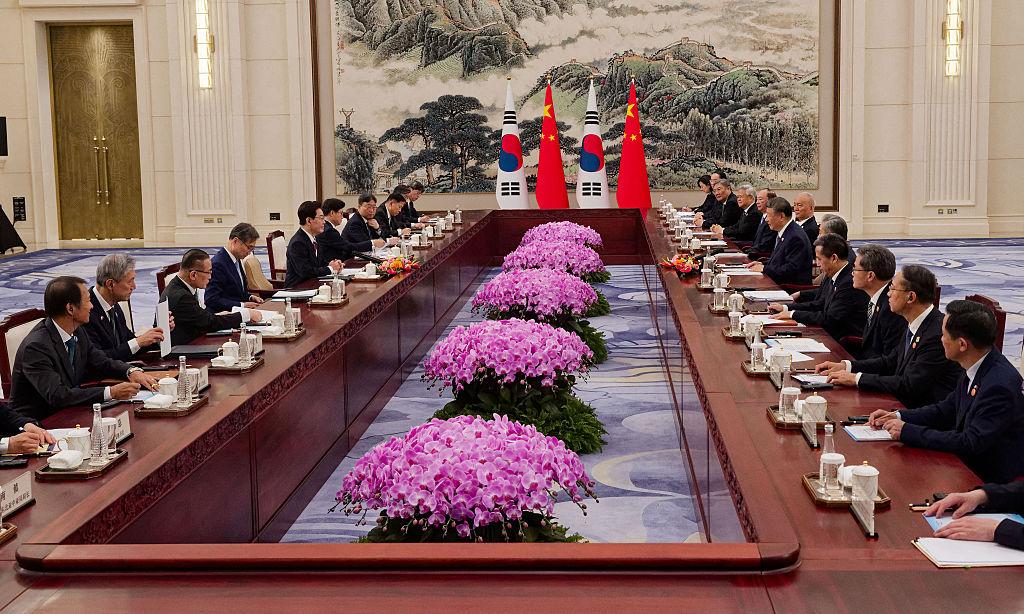
The American president also held an individual meeting with Xi before the trilateral gathering.
It was their third substantial meeting of 2026.
The leaders discussed trade, agricultural products and broader economic relations between the United States and China.
Trump indicated that he wanted China to increase purchases of American agricultural goods.
Xi offered a generally positive assessment of bilateral relations during Trump's presidency.
According to China's official Xinhua news agency, Xi also raised Taiwan and emphasized the need to improve communication on economic and trade disputes.
These discussions reflected the complex relationship between Washington and Beijing.
The two governments have major economic connections but remain divided over technology restrictions, Taiwan and strategic influence.
Their willingness to meet does not establish that those disagreements have been resolved.
The summit instead provided another opportunity to manage competing interests through direct communication.
China and Russia Demonstrate Their Close Relationship
The gathering also highlighted the established relationship between Xi and Putin.
The two leaders greeted each other warmly during events surrounding the APEC summit.
Russia and China have developed close economic and diplomatic ties, particularly since Moscow's invasion of Ukraine.
China has provided Russia with important economic connections during a period when Western governments imposed extensive sanctions.
Their cooperation has become a significant part of the international political landscape.
Trump has also emphasized his personal relationships with both leaders.
However, the American relationship with either country differs considerably from the partnership between Beijing and Moscow.
These differences complicate efforts to negotiate agreements involving all three governments.
Shared interests on particular issues do not necessarily mean the leaders hold the same positions on Ukraine, Taiwan, Iran or global security arrangements.
International Criminal Court Becomes a Point of Agreement
One of the more concrete areas of discussion involved the International Criminal Court.
Following the meeting, the leaders criticized the ICC's exercise of jurisdiction over government officials.
They argued for greater immunity from international criminal prosecution.
The issue has direct relevance to Putin because the court issued an arrest warrant against him in connection with alleged crimes arising from Russia's war in Ukraine.
The Trump administration has also challenged the institution and imposed sanctions related to investigations involving the United States and Israel.
Supporters of the ICC maintain that international criminal accountability is important when allegations involve serious violations of international law.
The summit did not establish any change to the court's legal authority.
The leaders' statements reflected their governments' positions rather than a binding reform of international law.
Experts Caution Against Expecting Immediate Breakthroughs
The scale of the summit attracted international attention because the United States, China and Russia possess significant military and economic influence.
However, high-level meetings do not automatically resolve deeply rooted disputes.
Nuclear arms control requires detailed negotiations concerning weapons limits, monitoring and verification.
Ending wars involves additional questions about territorial control, security arrangements and the participation of governments directly affected.
The Shenzhen meeting created opportunities for discussion but did not settle those issues.
Arms control specialists have emphasized the importance of evaluating diplomacy through concrete agreements rather than public statements alone.
The positive reactions from the participating governments should therefore be considered alongside the absence of major negotiated outcomes.
Following the meeting, Xi described the talks as positive and productive.
Putin characterized the discussions as open and substantive.
Those statements indicate that the leaders welcomed the dialogue, but they do not establish that the summit produced an agreement on nuclear disarmament or the wars.
What Happens Next?
The November 19 summit marked a rare diplomatic encounter among the leaders of the United States, China and Russia.
Its immediate outcomes were limited.
No replacement for New START was announced.
No peace agreement ending Russia's war in Ukraine emerged from the discussions.
No settlement ending the conflict involving Iran was reported.
However, the three governments identified several areas where they were willing to express common positions.
Trump also continued diplomatic engagement with Ukraine and European leaders following the meeting.
Further developments will depend on whether the participating governments pursue detailed negotiations and whether those discussions produce measurable agreements.
For nuclear arms control, the challenge is finding a framework that accounts for the different sizes and strategic requirements of the three countries' arsenals.
For Ukraine, meaningful progress would require addressing the positions of Kyiv and other governments involved in the peace process.
For Iran, any lasting settlement would need to resolve major security and maritime disagreements.
The central question is whether the historic Shenzhen summit will become the starting point for sustained negotiations — or remain a high-profile diplomatic gathering that produced only limited agreements.
For now, the leaders have demonstrated a willingness to meet, but the major international conflicts and nuclear security questions they discussed remain unresolved.