Missiles Strike Toward Saudi Capital as Yemen Airstrikes Reportedly Kill 15, While Iran Warns of New Oil Tanker Threats
RIYADH / CAIRO — November 19, 2026 — A new round of military attacks across the Middle East has intensified concerns about regional security, with missile fire targeting Saudi Arabia's capital, deadly airstrikes reported in Yemen, and Iran claiming that two supertankers caught fire after striking mines in the Strait of Hormuz.
The developments unfolded Thursday as fighting between Saudi-backed forces and Yemen's Iran-backed Houthi movement continued to escalate.
The Saudi-led coalition reported that debris from a Houthi missile fell in Riyadh, while a witness described visible damage to a prominent skyscraper in the capital's financial district.
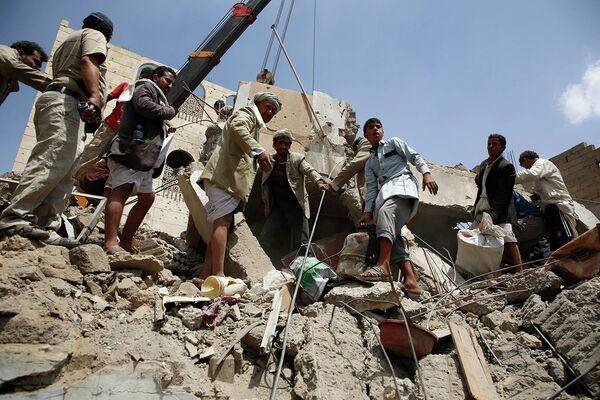
In Yemen, a spokesperson for the Houthi-run Health Ministry said airstrikes killed at least 15 people and injured 14 others in separate incidents.
The violence came alongside additional developments in Lebanon and Iraq, where disputes involving Iran-backed armed groups continued to affect regional security.
The incidents illustrate how military tensions involving multiple countries are creating overlapping risks for civilians, infrastructure and international shipping.
Missile Attack Sends Debris Falling Over Riyadh
The Saudi-led coalition reported Thursday that a missile launched by Yemen's Houthi rebels targeted Riyadh.
According to the coalition, debris from the incoming missile fell in the Saudi capital.
Residents reported hearing a loud explosion after receiving warnings about an incoming attack.
In the city's financial district, a witness described visible damage to the Public Investment Fund Tower, one of Riyadh's tallest buildings.
The witness spoke anonymously because of safety concerns.
The available reporting did not establish the full extent of the damage or confirm casualties resulting from the incident.
The missile attack nevertheless demonstrated that Saudi Arabia's capital remains exposed to threats from long-range weapons launched by the Houthi movement.
Riyadh has been repeatedly named as a target in recent Houthi military statements.
The latest incident follows a series of similar claims made by the group during recent weeks.
Houthis Claim Multiple Attacks Against Saudi Targets
Houthi military spokesperson Yahya Saree issued a statement claiming that the group had targeted Riyadh at dawn and again during the evening on Thursday.
He described the attacks as retaliation for Saudi military operations in Yemen.
The Houthi movement also claimed attacks against several additional locations.
Those locations included the Sadaf petrochemical complex in Jubail, Khamis Mushait air base and Khalid International Airport in Riyadh.
These facilities represent different categories of strategically important infrastructure, including energy production, military aviation and civilian air transportation.
However, the Associated Press could not independently verify the additional Houthi claims.
The statements therefore do not establish that all the named facilities were successfully struck or damaged.
The Saudi-led coalition separately reported that it intercepted and destroyed missiles in the country's southern region overnight.
Together, the statements indicate continued missile activity, although the full effects of individual attacks remained unclear.
Houthi Officials Report 15 Killed in Yemen Airstrikes
While Saudi Arabia faced missile threats, officials associated with the Houthi movement reported deadly strikes in Yemen.
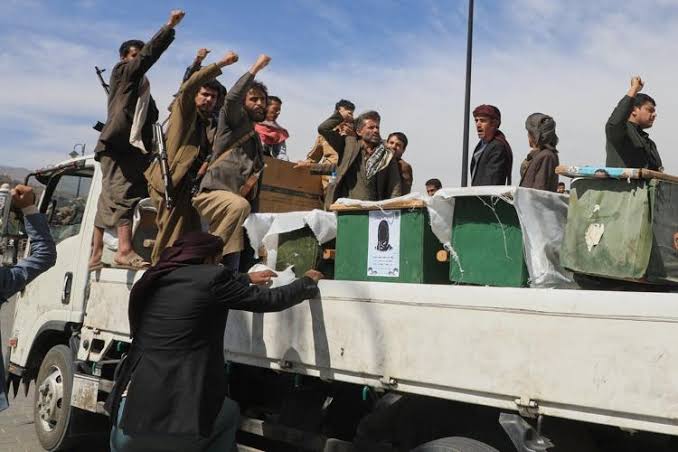
Anees al-Asbahi, spokesperson for the Houthi-run Health Ministry, said a total of 15 people were killed Thursday in two separate incidents.
According to his account, an airstrike struck a rest stop in the port city of Mokha.
He said 10 people were killed and nine others injured in that incident.
A separate strike in Taiz province reportedly targeted workers repairing a road.
Al-Asbahi said five people were killed and another five wounded.
The spokesperson attributed the attacks to Saudi-backed forces.
However, AP stated that it could not independently verify that attribution.
The reported casualty figures and responsibility for the strikes therefore remain based on information provided by Houthi authorities.
The Houthi-run media office also reported attacks on Sanaa, Yemen's rebel-held capital, early Thursday.
The reports add to concerns about the effects of renewed military activity on civilians and workers.
Houthis Accuse Saudi Arabia of Striking Civilian Boat
The Houthi movement also linked its attacks on Saudi Arabia to an alleged strike on a boat near Ras al-Ara and the Bab al-Mandab Strait.
According to Saree, the strike killed civilians, most of them women and children.
The Houthi spokesperson presented that incident as part of the justification for the group's retaliatory operations.
The available AP reporting did not independently establish the circumstances of the alleged boat attack or provide a verified casualty total for that incident.
It is therefore important to distinguish the group's account from independently confirmed findings.
The accusation nevertheless draws attention to the Bab al-Mandab Strait, a strategically important maritime passage connecting the Red Sea with the Gulf of Aden.
Continued fighting around Yemen threatens to complicate maritime security near this international shipping route.
The situation is particularly sensitive because commercial shipping is already facing disruptions elsewhere in the Middle East.
Saudi Arabia Intensifies Military Campaign in Yemen
The latest missile attacks followed a week of major Saudi airstrikes against Houthi-held areas of Yemen.
Saudi Arabia leads a coalition supporting forces opposed to the Houthi movement.
The Houthis, who are backed by Iran, control important parts of Yemen and possess the capability to launch missiles and drones over considerable distances.
Fighting between the two sides intensified after the breakdown of a previous period of relative calm.
The renewed conflict has created risks on both sides of the Saudi-Yemeni border.
For Saudi Arabia, incoming missiles pose threats to infrastructure and populated areas.
For communities in Yemen, airstrikes and ground fighting threaten lives, homes and essential services.
The reported strikes in Mokha and Taiz demonstrate the continuing human consequences of military operations.
Neither the Saudi-led coalition nor the Houthis announced a comprehensive agreement to end hostilities in the November 19 report.
Iran Says Two Supertankers Caught Fire in Strait of Hormuz
Another major development emerged from the Strait of Hormuz.
Iran's Islamic Revolutionary Guard Corps reported that two supertankers caught fire after striking mines while traveling through the waterway.
According to a statement broadcast by Iranian state media, the vessels were carrying more than 4 million barrels of crude oil combined.
Iranian officials claimed the ships had been using an unauthorized shipping route along the southern side of the strait.
The Revolutionary Guards further alleged that American fighter jets and surveillance drones were protecting the tankers.
AP could not independently verify those claims.
U.S. Central Command, which oversees American military operations in the Middle East, did not immediately respond to the report.
The absence of independent confirmation means the reported mine strikes and the claimed U.S. military involvement should not be treated as established facts.
Nevertheless, the announcement reflects continued disagreement over maritime movement through the strategically important passage.
Iran Issues Warning to Ships Cooperating With U.S. Forces
Iran repeated its warning Thursday that ships should not pass through the Strait of Hormuz without authorization from Tehran.
Iranian authorities also warned that vessels cooperating with the U.S. military could face serious consequences.
The statements came amid wider tensions involving Iranian maritime restrictions and American military operations.
The Strait of Hormuz connects the Persian Gulf to international sea routes and is essential to the transportation of oil and liquefied natural gas.
Disruption to the passage can affect energy shipments far beyond the Middle East.
The reported tanker incidents therefore carry international significance, even though their precise circumstances remain unverified.
Commercial shipping operators must contend with concerns about mines, military activity and restrictions on navigation.
The developments near Hormuz also coincide with continued Houthi activity near Yemen's Red Sea coastline.
That places attention on two major maritime chokepoints at the same time.
Israel Announces New Strike Against Hezbollah in Lebanon
The November 19 AP report also described military developments in Lebanon.
Israel's military said it had attacked a location in the eastern Beqaa region where it believed Hezbollah was attempting to reestablish missile production and weapons storage capabilities.
According to the Israeli military, the site had previously been targeted during earlier fighting.
Israel said the latest attack struck entrances to the facility to prevent continued activity.
Hezbollah did not immediately comment.
No casualties were reported in the initial account.
The attack came days after Israel said it had struck a weapons shipment allegedly intended for Hezbollah near Lebanon's border with Syria.
Although the latest Israel-Hezbollah war ended with a U.S.-brokered ceasefire on June 20, Israeli military operations have continued in certain areas of Lebanon.
The latest strike demonstrates that disputes over Hezbollah's military infrastructure remain unresolved.
Israel's description of the target represents its military's account of the operation.
Iraqi Government Reaches Compromise With Iran-Backed Militia
In Iraq, the government announced a separate development involving Kataib Hezbollah, an influential militia backed by Iran.
Prime Minister Ali al-Zaidi's office said a new security command headquarters would be established in Jurf al-Sakhar, south of Baghdad, beginning Friday.
The arrangement followed tensions over government efforts to expand security control in the area.
Jurf al-Sakhar has long been associated with Kataib Hezbollah.
The Iraqi government previously alleged that the militia had been involved in oil smuggling.
Kataib Hezbollah had warned that it might confront government forces and opposed demands to disarm armed groups operating outside direct state command.
Under the announced compromise, security forces deployed to the area would include brigades from the Popular Mobilization Forces.
That organization consists of armed groups formally incorporated into Iraq's security system, including some fighters associated with Kataib Hezbollah.
The agreement provides a framework for managing security control in the area.
However, it does not establish that all disagreements between the Iraqi government and the militia have been resolved.
United Nations Addresses Future of Lebanon Peacekeeping Mission
The United Nations Security Council also addressed the future of its peacekeeping presence in southern Lebanon.
All 15 council members approved a statement reaffirming their support for the United Nations Interim Force in Lebanon, commonly known as UNIFIL.
The statement called on the parties involved to respect the safety of United Nations personnel and facilities.
The discussion occurred as the mission approaches its scheduled termination on December 31, 2026.
The Security Council voted in August 2025 to end UNIFIL's mandate at the conclusion of 2026.
That decision followed longstanding criticism from the United States and Israel, which argued that the peacekeeping force had not prevented Hezbollah from expanding its military capabilities.
When asked whether the latest statement indicated support for continuing the mission beyond its scheduled end, the council president declined to clarify.
As a result, the November 19 statement did not confirm an extension of UNIFIL's mandate.
The mission's future remains an important security question for southern Lebanon.
Multiple Conflicts Create Overlapping Regional Risks
The latest events demonstrate the complexity of the security situation across the Middle East.
Saudi Arabia and the Houthis remain engaged in military confrontation.
Iran continues issuing warnings about passage through the Strait of Hormuz.
Israel is conducting operations against locations it associates with Hezbollah.
Iraq is negotiating security arrangements with a powerful Iran-backed militia.
Although these developments occurred during the same period, they involve different governments, armed organizations and immediate causes.
It would be inaccurate to describe them as a single coordinated military operation without evidence establishing such a connection.
However, they share broader regional implications.
Iran's relationships with armed groups in Yemen, Lebanon and Iraq are important to the security environment.
American military operations and international maritime routes add further complexity.
For civilian populations, these overlapping conflicts mean continued uncertainty over safety, infrastructure and access to essential services.
For international shipping companies, developments near Hormuz and Bab al-Mandab are particularly important because both waterways connect major commercial routes.
What Happens Next?
The events of November 19 leave several major questions unresolved.
Saudi authorities have reported missile activity affecting Riyadh, while the Houthis have claimed additional attacks against military, aviation and energy infrastructure.
Houthi officials have also reported 15 deaths in Yemen from airstrikes they attribute to Saudi-backed forces.
The reported casualty figures and responsibility for those strikes require independent confirmation.
Iran's claim that two supertankers struck mines in the Strait of Hormuz also remains unverified.
In Lebanon, Israel's latest strike underscores continuing disputes over Hezbollah's military activities despite the ceasefire.
In Iraq, the newly announced security compromise will face an early test as forces prepare to establish the command headquarters in Jurf al-Sakhar.
These developments show that diplomacy and military operations are continuing simultaneously across several parts of the region.
The central question is whether the latest attacks in Yemen and Saudi Arabia, combined with growing maritime tensions involving Iran, will lead to further military escalation or renewed efforts to reduce hostilities.
For now, confirmed missile activity, reported civilian casualties and competing military claims highlight the challenges facing governments attempting to restore stability and protect international shipping across the Middle East.