RUSSIAN STRIKES HIT NATO EMBASSIES, DUTCH SUMMON ENVOY
KYIV / THE HAGUE, November 19, 2026 — Russian drone strikes on Ukraine's capital damaged the embassies of two NATO member countries on Thursday, killing at least one person and triggering a diplomatic confrontation between Moscow and the Netherlands.
The attacks struck multiple areas of Kyiv during a day of explosions, fires and emergency responses.
Among the buildings affected were the embassies of the Netherlands and Austria, along with a historic cathedral in the Ukrainian capital.
Dutch officials confirmed that a projectile landed behind their embassy, causing minor damage to the diplomatic building.
No Dutch embassy employees were injured.
But the incident quickly developed into an international diplomatic dispute.
The Netherlands summoned Russia's ambassador in The Hague, describing the damage to its diplomatic mission as unacceptable.
The confrontation unfolded just days after Moscow publicly questioned whether the Netherlands was becoming directly involved in the war.
That accusation followed reports that weapons manufactured by a Netherlands-based defense company had been used in a Ukrainian attack on the Crimean Bridge.
The timing raised questions about escalating tensions between Moscow and The Hague.
However, investigators had not established any connection between the embassy damage and the earlier dispute over Dutch-manufactured weapons.
The latest developments have placed diplomatic security, military assistance to Ukraine and the wider Russia-NATO confrontation under renewed scrutiny.
**RUSSIAN DRONES STRIKE CENTRAL KYIV**
Russian forces carried out a series of attacks against Kyiv on November 19, according to Ukrainian authorities.
Explosions were reported across the capital as air-defense systems responded to incoming threats.
Journalists from Agence France-Presse reported hearing repeated blasts throughout the day.
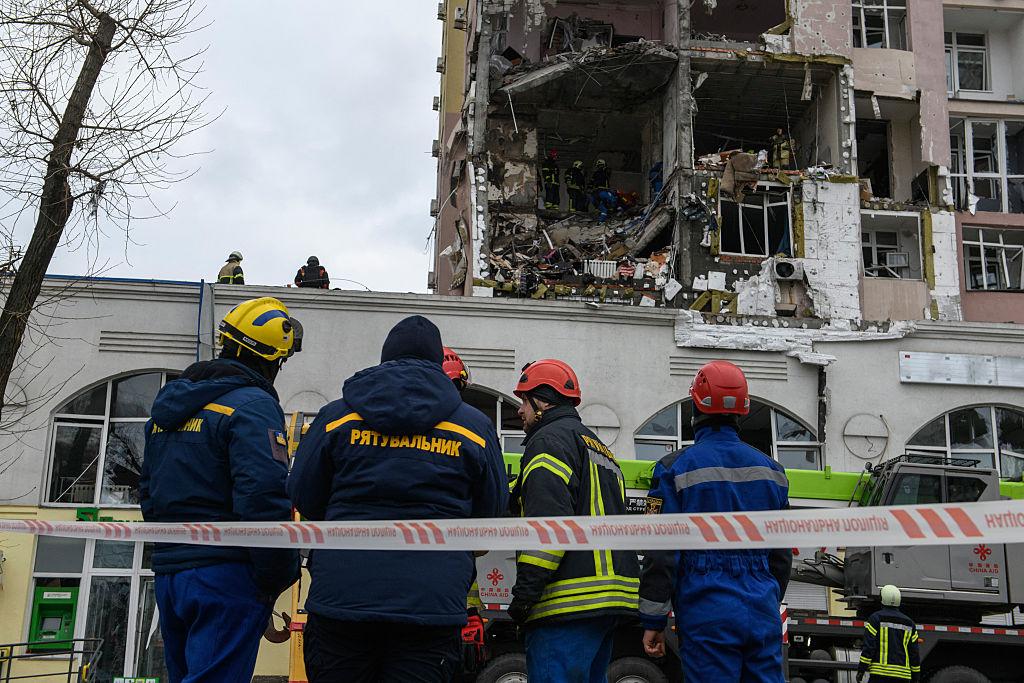
Several strikes affected the central Podil district, where smoke was seen rising from damaged locations.
Emergency services responded to fires, damaged buildings and reports of casualties.
Ukrainian Prime Minister Sergiy Koretsky said the attacks had killed at least one person and injured four others.
The casualty figures represented the information available at the time of his statement.
Authorities continued assessing the consequences of the strikes.
The attacks also damaged civilian buildings and areas containing important diplomatic and religious sites.
Ukraine's Foreign Ministry reported that debris had fallen onto its grounds.
The incidents demonstrated the continuing danger posed by aerial attacks on densely populated urban areas.
Even where a drone does not directly strike a particular building, nearby explosions and falling debris can cause damage.
The consequences can extend beyond the intended or reported target.
**DUTCH EMBASSY DAMAGED DURING ATTACK**
One of the most significant incidents occurred near the Embassy of the Netherlands in Kyiv.
Dutch Foreign Minister Tom Berendsen confirmed that a projectile had struck an area behind the diplomatic building.
The impact caused minor structural damage.
Ukrainian officials identified a Russian drone as the source of the incident.
According to Ukrainska Pravda, the drone struck a building located behind the embassy.
The resulting damage affected the Dutch diplomatic mission.
Local reporting described shattered windows and damage to nearby vehicles and a security post.
Euronews reported that approximately 40 people work at the embassy, including Dutch and locally employed personnel.
None of those staff members was injured.
Berendsen said the Dutch government was investigating the exact circumstances.
He emphasized that the immediate priority was protecting embassy employees and ensuring their wellbeing.
The available reporting did not establish whether the embassy itself had been deliberately targeted.
That distinction is important.
Damage to a diplomatic mission during a wider military attack does not, by itself, prove that the mission was the intended target.
Nevertheless, the incident created a serious diplomatic concern for the Netherlands.
**THE NETHERLANDS SUMMONS RUSSIAN AMBASSADOR**
The Dutch government responded by summoning Russia's ambassador in The Hague.
Berendsen told Dutch broadcaster RTL that the incident was unacceptable.
The decision represented a formal diplomatic protest over damage to the Netherlands' mission in Ukraine.
Summoning an ambassador is an established method for governments to express objections or demand explanations.
It does not automatically mean that diplomatic relations have been suspended.
Nor does it amount to a declaration of war.
However, the move signaled that the Dutch government considered the incident sufficiently serious to require a direct response from Moscow.
The Netherlands has been among the European countries providing military, financial and political assistance to Ukraine.
Its government has repeatedly supported Ukraine's right to defend itself against Russia's invasion.
That position has generated disagreements with Moscow.
The latest embassy incident adds another issue to an already difficult diplomatic relationship.
Dutch officials had not announced that their embassy would permanently close because of the damage.
The immediate focus remained on assessing the building and protecting its staff.
**AUSTRIAN EMBASSY ALSO SUFFERS DAMAGE**
The Dutch diplomatic mission was not the only foreign embassy affected.
Austria's embassy in Kyiv also sustained damage during the Russian strikes.
Austrian Chancellor Christian Stocker confirmed the incident.
No Austrian embassy personnel were reported injured.
The damage was described as minor.
Austria is not a NATO member, although it belongs to the European Union and maintains diplomatic relations with Ukraine.
The two embassy incidents therefore affected countries with different security arrangements.
Their shared concern was the safety of diplomatic personnel working inside an active war zone.
Diplomatic missions operate under international protections designed to safeguard representatives of foreign governments.
Those protections do not eliminate the physical dangers created by nearby military operations.
Repeated explosions in an urban area can damage diplomatic buildings even when those facilities are not directly targeted.
The incidents renewed attention to the challenges of maintaining foreign embassies in Kyiv while Russian attacks continue.
**SWEDEN PREPARES A DIPLOMATIC RESPONSE**
Sweden also announced plans to summon Russia's ambassador.
Swedish Foreign Minister Maria Malmer Stenergard said the decision followed an explosion near Sweden's embassy in Kyiv.
The development expanded the diplomatic consequences of Thursday's attacks.
The Netherlands, Austria and Sweden had all reported concerns involving their diplomatic missions or nearby areas.
However, the incidents should not automatically be interpreted as one coordinated operation specifically directed against foreign embassies.
The available evidence established that Russian attacks affected locations in Kyiv where diplomatic facilities operate.
It did not establish a deliberate Russian campaign to strike all three missions.
Still, the diplomatic reaction demonstrated that the attacks had consequences beyond Ukraine's borders.
Foreign governments must consider both the safety of their personnel and their responses to military activity near their diplomatic properties.
The situation also illustrates how attacks inside Ukraine can generate direct disputes between Russia and European countries.
**HISTORIC CATHEDRAL DAMAGED IN THE STRIKES**
The attacks also affected Saint Volodymyr's Cathedral, a prominent religious landmark in Kyiv.
An AFP journalist reported minor damage to the cathedral.
At least one large window was shattered.
Workers were seen clearing broken glass after the explosions.
The damage drew attention to the risks facing historic and religious buildings during urban warfare.
Cathedrals, churches, museums and other cultural institutions can suffer damage from nearby explosions and falling debris.
Even when structural damage is limited, repeated attacks can create additional challenges for preservation and public safety.
The reported damage to Saint Volodymyr's Cathedral did not establish that Russian forces had deliberately selected the church as a target.
The available information identified the damage but did not provide a conclusive explanation of the intended target.
The incident occurred alongside attacks that killed and injured civilians elsewhere in the capital.
Together, the reports illustrated the broad consequences of the day's military activity.
**MOSCOW QUESTIONS DUTCH INVOLVEMENT IN THE WAR**
The embassy incident followed an increasingly public dispute between Russia and the Netherlands.
Earlier in the week, Russia's embassy in The Hague questioned whether the Dutch government was becoming directly involved in the conflict.
The statement came after Netherlands-based defense company Destinus discussed its role in supplying weapons used by Ukraine.
The company said its missiles were the only foreign-manufactured weapons used in Ukraine's attack on the Crimean Bridge on November 17.
The bridge connects Russia with the Crimean Peninsula, which Moscow annexed in 2014.
Ukraine considers Crimea part of its sovereign territory.
The crossing has become an important strategic location during the war.
Its transportation connections are significant for civilian travel, commercial activity and Russian military logistics.
Kyiv has repeatedly targeted infrastructure that it says supports Russian military operations.
Moscow strongly opposes those attacks.
The latest reported use of Dutch-manufactured weapons created a new political dispute over the role of foreign defense companies.
**RUSSIAN EMBASSY ISSUES WARNING ABOUT THE HAGUE**
Following the reports about Destinus, Russia's embassy in the Netherlands issued a critical public statement.
The Russian diplomatic mission argued that Dutch activities were deepening the country's involvement in the conflict.
It also claimed that those activities contributed to the continuation and escalation of the war.
The statement reflected Moscow's position on Western military assistance to Ukraine.
The Netherlands and other European governments maintain that their support is intended to help Ukraine defend itself.
The distinction between military assistance and direct participation in hostilities remains central to the dispute.
Supplying weapons does not automatically establish that a government is directly conducting military operations.
Legal and political assessments depend on the circumstances, including the activities carried out and the degree of government involvement.
Russian officials have repeatedly criticized European countries for providing advanced weapons to Kyiv.
The latest disagreement involving Destinus added another example of that broader confrontation.
However, Russia's statements about Dutch involvement were political allegations.
They did not establish that the Netherlands had formally entered the war.
**DUTCH DEFENSE COMPANY FACES NEW SCRUTINY**
Destinus became a central subject of the dispute after reports about its weapons and activities in Ukraine.
The company is based in the Netherlands and develops military technology.
Its products have reportedly been supplied to Ukrainian forces.
According to Reuters, Dutch newspaper NRC reported that Destinus personnel had operated in Ukraine.
The newspaper said employees had tested company drones against Russian targets.
Those allegations raised questions about the activities of private defense contractors working in a conflict zone.
Destinus responded that its personnel had supported the Ukrainian military in accordance with contractual arrangements.
The company's statement did not confirm every detail of the newspaper's reporting.
The distinction matters because manufacturing weapons, providing technical assistance and directly conducting attacks are different activities.
The legal implications depend on the specific facts.
The Dutch government had not announced that the company was operating as an independent branch of the Netherlands' armed forces.
The reports nevertheless intensified Moscow's criticism of Dutch participation in Ukraine's military supply chain.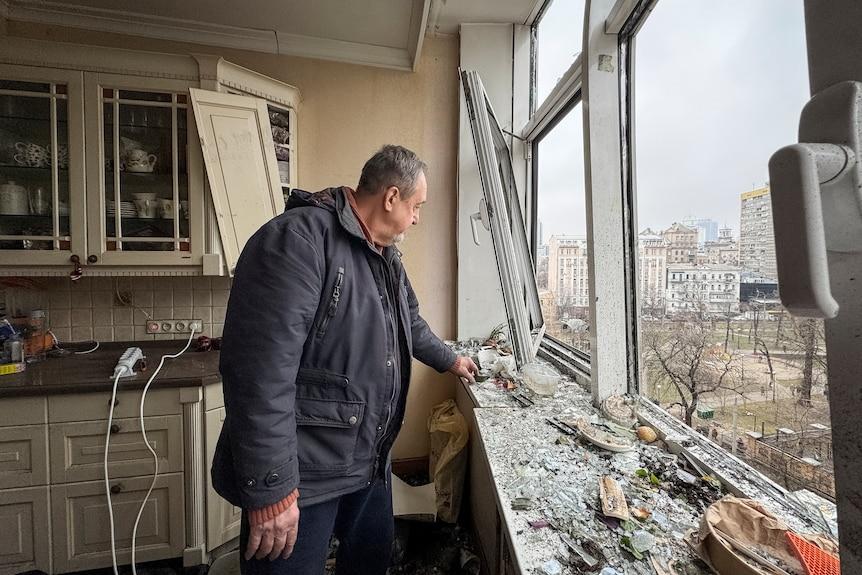
**WAS THE EMBASSY INCIDENT CONNECTED TO THE CRIMEAN BRIDGE?**
The timing of the Kyiv attack attracted attention because it followed the dispute involving the Crimean Bridge.
The sequence was notable.
First, Ukraine carried out an attack on the bridge.
Then, Destinus discussed the use of its weapons in the operation.
Russia's embassy publicly criticized Dutch involvement.
Two days after the bridge attack, the Dutch embassy in Kyiv sustained damage during Russian strikes.
The Netherlands subsequently summoned Russia's ambassador.
However, the chronology does not prove a causal relationship.
Reuters specifically reported that it was unclear whether the Kyiv embassy incident was connected to the reports involving Destinus.
The available evidence does not demonstrate that Moscow deliberately targeted the Dutch diplomatic mission in retaliation.
No verified information established an order directing Russian forces to strike the embassy.
Nor had investigators publicly identified the specific intended target of the projectile that damaged the Dutch building.
Without that evidence, describing the incident as confirmed retaliation would go beyond the reporting.
The possibility has attracted attention, but it remains unproven.
**PUTIN SPEAKS AS KYIV COMES UNDER ATTACK**
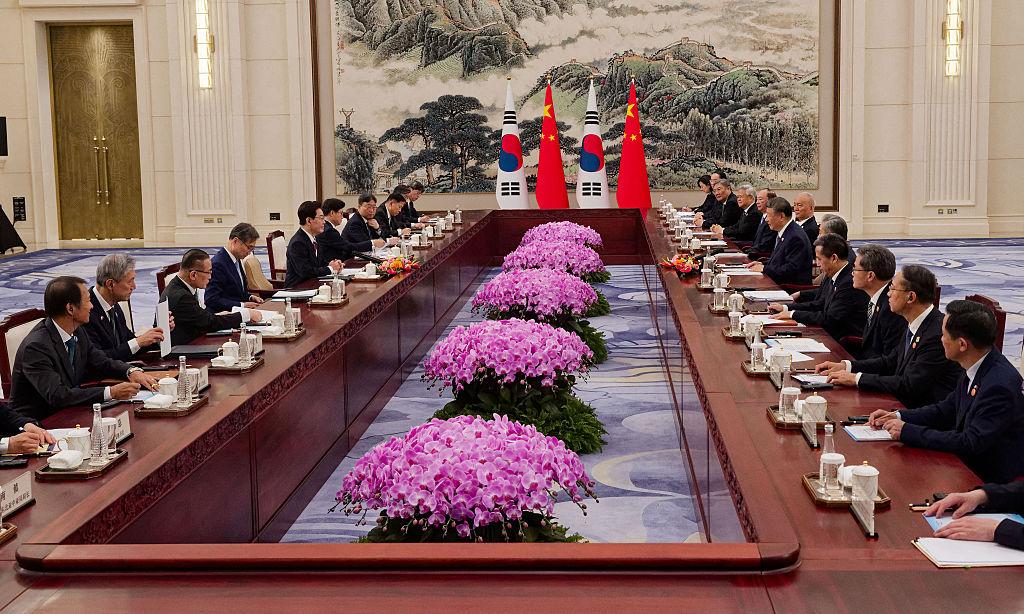
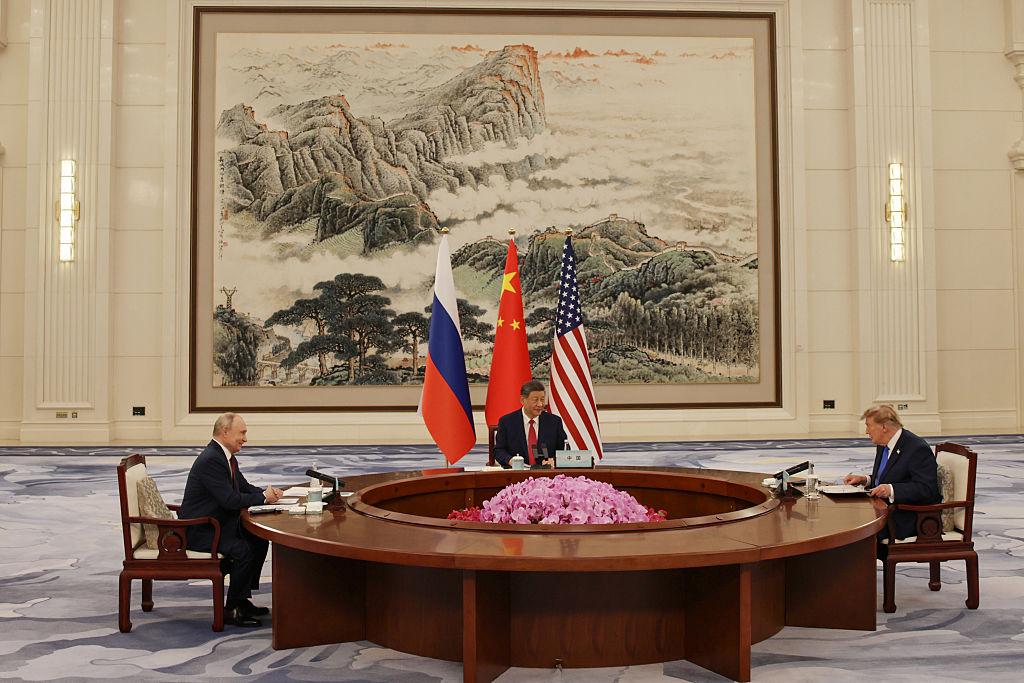
The attacks occurred as Russian President Vladimir Putin participated in high-level diplomatic discussions in China.
Putin was attending the Asia-Pacific Economic Cooperation summit in Shenzhen.
The gathering brought together leaders of major economies, including the United States and China.
Russian military operations continued in Ukraine during the diplomatic events.
The contrast became a central subject of criticism from Ukrainian officials.
Ukrainian Foreign Minister Andrii Sybiha condemned the strikes while referring to Putin's appearance at the summit.
He accused Moscow of carrying out attacks against civilians and diplomatic facilities while presenting itself internationally as a responsible global actor.
Those remarks represented Ukraine's official position.
Russia maintains a different interpretation of its military campaign and repeatedly rejects Ukrainian and Western accusations concerning its conduct.
The overlapping developments nevertheless demonstrated that international diplomacy had not produced a cessation of hostilities.
Military operations continued while leaders discussed broader geopolitical issues.
**UKRAINE DEMANDS INTERNATIONAL CONDEMNATION**
Sybiha called on the international community to condemn the damage to foreign diplomatic missions.
He also expressed support for the Dutch embassy personnel affected by the attack.
Ukraine has repeatedly argued that Russian strikes against cities create unacceptable risks for civilians and foreign representatives.
The latest incidents provided new examples for Kyiv's diplomatic appeals.
The Ukrainian government has sought stronger international pressure on Russia through sanctions, military assistance and diplomatic measures.
Its officials argue that continued support is necessary to deter additional attacks.
Moscow, by contrast, accuses Western countries of prolonging the conflict through their support for Ukraine.
These opposing positions have shaped international discussions since the full-scale invasion began in February 2022.
The damage to multiple foreign diplomatic facilities could become another subject of debate among European governments.
However, no new collective European response had been confirmed in the reporting available immediately after the attacks.
Individual governments had announced or described their own diplomatic reactions.
**PREVIOUS EMBASSY INCIDENTS RAISE CONCERNS**
Thursday's events were not the first occasion on which diplomatic buildings had been damaged during the war.
Ukrainska Pravda reported that a Russian attack on Dnipro damaged Austria's honorary consulate on November 17.
In November 2025, a large-scale Russian attack damaged the Azerbaijani embassy in Kyiv.
Another incident occurred in September 2026, when a Russian missile damaged the Polish embassy.
The European Union's delegation in Ukraine also sustained damage during that period.
These incidents have increased concern about diplomatic security in Ukrainian cities.
Foreign embassies often continue operating during armed conflicts because communication with host governments remains essential.
Their personnel assist citizens, coordinate international cooperation and maintain diplomatic channels.
Closing a mission can interrupt important services.
Keeping it open, however, requires security planning and emergency procedures.
The repeated incidents show that diplomatic status does not provide physical protection against nearby explosions.
**INTERNATIONAL LAW PROTECTS DIPLOMATIC MISSIONS**
The safety of embassies is governed by international diplomatic and humanitarian legal principles.
The Vienna Convention on Diplomatic Relations provides protections for diplomatic premises.
International humanitarian law also establishes rules concerning the conduct of hostilities and the protection of civilians and civilian objects.
Diplomatic buildings are not automatically legitimate military targets merely because they are located in a country at war.
However, determining responsibility for a particular incident requires examining the facts.
Investigators would need to assess the weapon involved, the circumstances of the strike and the identity of any intended target.
The distinction between an intentional attack and incidental damage can be important in legal analysis.
The available reporting established that foreign diplomatic buildings suffered damage during Russian attacks on Kyiv.
It did not establish every element necessary to determine whether those buildings were deliberately targeted.
Dutch officials said they were investigating the circumstances of the embassy incident.
Their conclusions could influence the government's subsequent response.
**DUTCH OFFICIALS REAFFIRM SUPPORT FOR UKRAINE**
Dutch Defense Secretary Derk Boswijk responded to the incident by emphasizing continued support for Ukraine.
Speaking to Dutch public broadcaster NOS, he said the damage reinforced his view that assistance to Kyiv should continue.
His remarks reflected the Netherlands' broader policy of supporting Ukraine against Russia's invasion.
The country has provided military equipment and other forms of assistance during the conflict.
That support has made the Netherlands an important participant in European efforts to strengthen Ukraine's defenses.
However, the latest diplomatic dispute highlights the pressures facing governments that provide military assistance while maintaining relations with Moscow.
European countries must balance their support for Ukraine with the security of their citizens and diplomatic personnel.
The Dutch government's decision to summon Russia's ambassador demonstrates one method of responding through diplomatic channels.
Whether additional measures will follow remains uncertain.
**THE WAR CONTINUES BEYOND THE DIPLOMATIC DISPUTE**
The damage to foreign embassies attracted international attention, but the wider consequences of Thursday's attacks extended well beyond diplomatic buildings.
At least one person was reported killed.
Four others were injured, according to Ukrainian authorities.
Residential and civilian areas experienced explosions, debris and damage.
Emergency workers responded to affected locations while officials assessed the situation.
The strikes occurred during a broader war in which both sides continue military operations.
Russia has repeatedly launched drones and missiles against Ukrainian cities and infrastructure.
Ukraine has expanded its own long-range operations against Russian military and energy-related targets.
The conflict has created persistent security risks for civilians on both sides of the front line.
It has also disrupted transportation, energy supplies and economic activity.
The embassy incidents illustrate how the effects of the war can reach international diplomatic institutions.
Yet the primary humanitarian consequences continue to fall on people living in areas exposed to attacks.
**WHAT HAPPENS NEXT?**
The Netherlands now faces several immediate decisions.
Its government must complete its assessment of the embassy damage and determine whether further security measures are necessary.
Officials may also seek additional explanations from Moscow following the summons of the Russian ambassador.
The Dutch diplomatic mission must evaluate its operational arrangements while protecting employees.
Austria and Sweden are also expected to assess the incidents affecting their diplomatic interests.
Meanwhile, attention remains focused on the dispute surrounding Netherlands-based defense company Destinus.
Moscow has publicly criticized Dutch involvement in supplying weapons to Ukraine.
The company has defended its activities as contractual support for Ukrainian forces.
But the relationship between the weapons dispute and the damage to the Dutch embassy remains unproven.
No evidence presented in the available reporting establishes that the embassy was deliberately targeted in retaliation for the Crimean Bridge attack.
Further investigation would be required before such a conclusion could be supported.
The latest developments also raise broader questions about diplomatic security during an ongoing war.
Foreign embassies continue operating in Kyiv despite repeated aerial attacks.
Their presence remains important for Ukraine's international relationships.
Yet every new strike creates additional security concerns.
For the Netherlands, the immediate result has been a formal diplomatic confrontation with Russia.
For Austria and Sweden, the attacks have generated their own concerns about diplomatic safety.
For Ukraine, the strikes have caused further civilian casualties and damage.
And for Russia, the incidents have intensified international criticism of its military operations.
The diplomatic consequences remain uncertain.
No direct military confrontation between Russia and the Netherlands has been announced.
Nor has the available evidence established a deliberate Russian attack on Dutch diplomatic personnel.
What has been confirmed is significant enough.
Russian strikes killed at least one person in Kyiv.
Multiple diplomatic facilities suffered damage.
The Netherlands summoned Moscow's ambassador.
And a separate dispute over Dutch-manufactured weapons has added pressure to an already strained relationship.
For now, the Dutch embassy incident remains both a security concern and a diplomatic confrontation.
Its longer-term consequences will depend on the findings of investigators, the responses of the governments involved and the course of the continuing war.