SOUTH KOREA PUSHES TO END 73-YEAR WAR, BUT KIM STAYS SILENT
SHENZHEN, CHINA, November 19, 2026 — South Korean President Lee Jae Myung called on world leaders Thursday to support renewed negotiations with North Korea, raising the possibility of formally ending a war that has remained legally unresolved for more than seven decades.
Speaking at the Asia-Pacific Economic Cooperation summit in Shenzhen, Lee urged regional governments to help reopen diplomatic communication with Pyongyang.
His ultimate objective is a permanent peace arrangement on the Korean Peninsula.
But the appeal came with a major obstacle.
North Korean leader Kim Jong Un had not publicly agreed to resume negotiations with Seoul.
No new inter-Korean peace agreement had been announced.
And despite growing diplomatic activity involving the United States, China and Russia, the two Koreas remained technically at war.
The Korean War ended in an armistice in 1953, not a formal peace treaty.
That distinction has shaped security relations in Northeast Asia for more than 70 years.
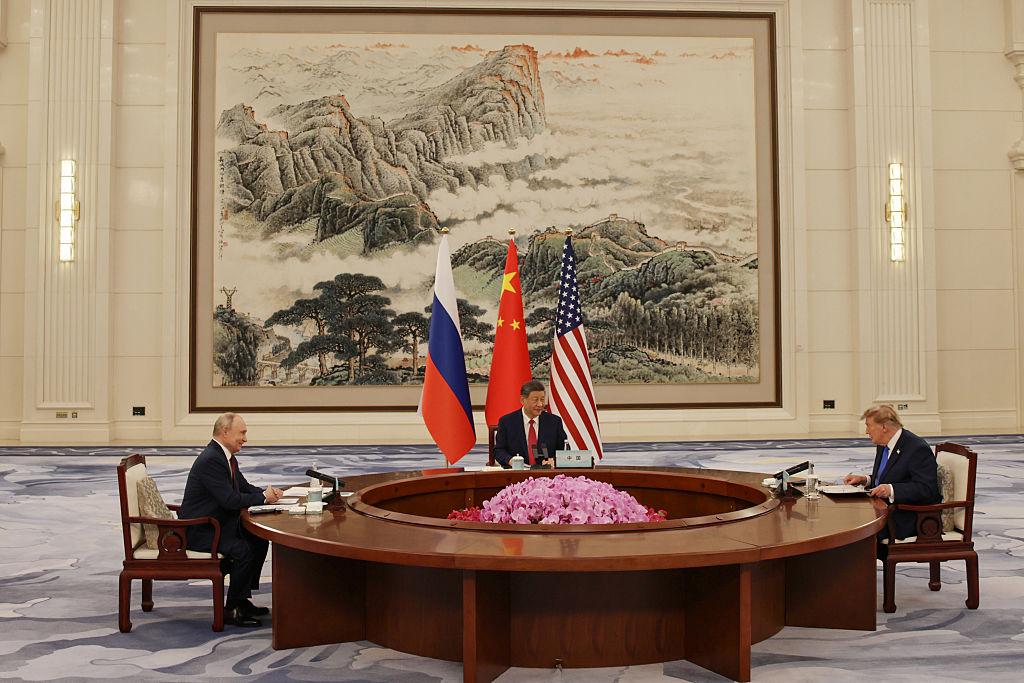
Lee's appeal came as U.S. President Donald Trump, Chinese President Xi Jinping and Russian President Vladimir Putin gathered in China for high-level diplomatic discussions.
South Korea has been seeking support from all three major powers for efforts to reduce tensions with North Korea.
Xi pledged to play a constructive role.
Putin agreed to cooperate with Seoul on easing tensions where possible.
Trump has expressed interest in renewing direct communication with Kim.
Yet the central question remains unanswered.
Will North Korea agree to return to negotiations?
**LEE CALLS FOR AN END TO THE KOREAN WAR**
Lee delivered his appeal during a meeting of APEC leaders on November 19.
The South Korean president argued that peace on the Korean Peninsula was essential to economic prosperity across the Asia-Pacific region.
He emphasized that regional security and economic cooperation could not be separated.
According to Yonhap News Agency, Lee expressed hope that renewed dialogue with North Korea would eventually lead to discussions on formally ending the Korean War.
He also called for establishing a lasting peace system.
His remarks represented a renewed public commitment to diplomatic engagement with Pyongyang.
The South Korean government has sought ways to reduce military tensions while preserving its security relationship with the United States.
Lee's approach emphasizes dialogue as a potential path toward lowering the risk of confrontation.
However, he did not announce a breakthrough in direct negotiations.
No meeting between senior North and South Korean officials was confirmed.
Nor did the speech establish that Pyongyang had accepted an invitation to talks.
The immediate objective was to build international support for restarting communication.
**THE KOREAN WAR NEVER FORMALLY ENDED**
The historical background remains central to the dispute.
The Korean War began on June 25, 1950, when North Korean forces invaded South Korea.
The conflict eventually involved China and a United Nations Command led by the United States.
Fighting caused enormous destruction across the peninsula.
Millions of soldiers and civilians were killed, wounded or displaced.
On July 27, 1953, an armistice agreement brought large-scale fighting to a halt.
But the agreement was not a peace treaty.
It established arrangements for stopping hostilities and managing the military confrontation.
The two Koreas remained divided.
The Demilitarized Zone became one of the world's most heavily guarded borders.
For decades, the absence of a formal peace settlement has remained a defining feature of relations between Seoul and Pyongyang.
South Korea and North Korea have pursued negotiations at different times.
Some periods produced agreements, family reunions and economic cooperation.
Others were marked by military incidents, weapons tests and the suspension of communication.
Lee's latest proposal seeks to address that unresolved historical situation.
However, formally ending the war would involve complicated political, security and legal questions.
It would not automatically resolve every disagreement between the two Koreas.
**KIM JONG UN HAS NOT ACCEPTED THE INVITATION**
The most important uncertainty concerns North Korea's response.
Kim Jong Un has not publicly committed to renewed dialogue with Lee's administration.
Pyongyang has increasingly distanced itself from Seoul.
North Korean authorities have adopted a more confrontational position toward inter-Korean relations.
The government has also continued developing nuclear weapons and missile capabilities.
These developments complicate South Korea's efforts to restore communication.
Lee's appeal at APEC was directed partly toward other governments capable of influencing the diplomatic environment.
China and Russia maintain important relationships with North Korea.
The United States remains central to negotiations involving Pyongyang's nuclear program.
Seoul hopes cooperation among these governments could create conditions for discussions.
But external support cannot substitute for a decision by North Korea itself.
Even if regional leaders endorse dialogue, negotiations cannot begin without Pyongyang's participation.
The available reporting contained no confirmed agreement from Kim to restart talks.
That remains the central obstacle facing Lee's peace initiative.
**CHINA PROMISES TO PLAY A CONSTRUCTIVE ROLE**
Lee's diplomatic efforts received an important response from Chinese President Xi Jinping.
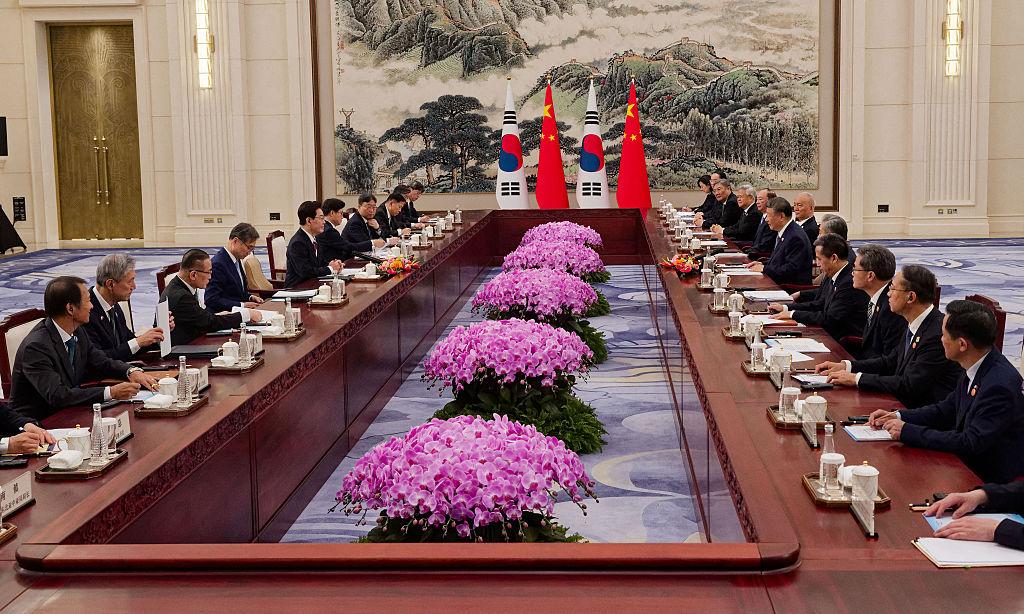
The two leaders met in Shenzhen on November 18.
Their discussions included security conditions on the Korean Peninsula.
According to South Korean National Security Adviser Wi Sung-lac, Xi expressed support for efforts to ease tensions.
The Chinese president also indicated that Beijing would play a constructive role in promoting peace.
Xi specifically supported efforts involving potential dialogue between North Korea and the United States.
The commitment was significant because China remains an important economic and diplomatic partner of Pyongyang.
Beijing has historically maintained close relations with North Korea.
The two countries share a border and longstanding political ties.
China also has substantial interests in preventing instability on the peninsula.
A military crisis could affect Chinese border regions, international trade and regional security.
However, Xi's commitment did not establish that Beijing had secured North Korea's agreement to negotiate.
No specific Chinese mediation timetable was announced.
The statement represented diplomatic support for the peace initiative rather than a completed arrangement.
**PUTIN AGREES TO COOPERATE WITH SOUTH KOREA**
Lee also held his first in-person meeting with Russian President Vladimir Putin.
The two leaders spoke on November 18 during the APEC gathering.
According to Yonhap, they reached a broad understanding that South Korea and Russia would pursue cooperation where circumstances permitted.
Their discussions included efforts to reduce tensions on the Korean Peninsula.
The encounter was notable because Moscow has developed closer military relations with Pyongyang.
Russia and North Korea have expanded cooperation during the war in Ukraine.
That relationship has complicated South Korea's position toward Moscow.
Seoul remains concerned about the security implications of military cooperation between Russia and North Korea.
Nevertheless, Lee's administration has sought diplomatic channels that could contribute to regional stability.
Putin's willingness to discuss Korean Peninsula issues offered an opportunity for communication.
But the agreement was limited.
The two governments acknowledged that broader political circumstances could make cooperation difficult.
No formal peace initiative jointly sponsored by Seoul and Moscow was announced.
There was also no confirmation that Putin had obtained a commitment from Kim to resume dialogue.
**TRUMP COULD BECOME CENTRAL TO FUTURE NEGOTIATIONS**
The United States remains one of the most important participants in efforts to address North Korea's nuclear program.
Trump has previously held direct meetings with Kim Jong Un.
Those encounters generated international attention and temporarily opened new diplomatic channels.
However, the earlier negotiations did not produce a comprehensive agreement eliminating North Korea's nuclear weapons.
Trump has continued expressing interest in renewed communication.
His presence at the Shenzhen summit revived speculation about possible discussions involving Kim.
Some observers considered whether a meeting between the American and North Korean leaders might occur around the APEC gathering.
But South Korean officials said the possibility remained uncertain.
No confirmed Trump-Kim meeting had been announced in the reporting surrounding Lee's speech.
The distinction is significant.
A willingness to meet does not establish that negotiations have been scheduled.
And a meeting would not necessarily produce agreement on nuclear weapons, sanctions or peace arrangements.
Nevertheless, Lee's administration hopes renewed U.S.-North Korea dialogue could create an opportunity to improve relations between Seoul and Pyongyang.
**A HIGH-STAKES SUMMIT WITHOUT NORTH KOREA**
The timing of Lee's appeal attracted particular attention.
Trump, Xi and Putin were participating in a major diplomatic gathering in Shenzhen.
The three leaders represent countries with substantial influence over international security.
Their governments also hold different positions on North Korea's nuclear weapons and international sanctions.
Washington has emphasized security concerns about Pyongyang's weapons development.
Beijing favors stability and dialogue while maintaining close relations with North Korea.
Moscow has expanded cooperation with Pyongyang despite Western objections.
Their participation in the same summit created opportunities for discussions about Korean Peninsula security.
However, North Korea was not represented as a participant in Lee's appeal.
Kim had not publicly accepted an invitation to join the diplomatic process.
The situation illustrated a fundamental challenge.
Major powers may discuss ways to reduce tensions.
But any lasting settlement would require engagement with the governments directly involved.
South Korea's diplomatic campaign therefore remains dependent on developments beyond Lee's immediate control.
**NORTH KOREA'S NUCLEAR PROGRAM REMAINS A MAJOR OBSTACLE**
North Korea's nuclear weapons program is one of the most difficult issues facing any future negotiations.
Pyongyang has developed nuclear weapons and a range of ballistic missiles.
Its weapons capabilities have generated serious concerns in South Korea, Japan and the United States.
International sanctions have been imposed in response to North Korean nuclear and missile activities.
North Korea has rejected demands that it unilaterally surrender its nuclear arsenal.
The government has increasingly presented nuclear weapons as central to its national defense.
This position complicates attempts to revive denuclearization negotiations.
The United States and its allies continue to regard North Korea's nuclear capabilities as a major security challenge.
China and Russia have different approaches to sanctions and diplomatic pressure.
Any renewed negotiations could therefore involve several connected issues.
These include nuclear weapons, security guarantees, economic restrictions and the future of military tensions on the peninsula.
However, Lee's November 19 speech did not announce a new denuclearization agreement.
Nor did it establish a timetable for nuclear negotiations.
His immediate appeal focused on restoring dialogue and creating conditions for peace.
**SOUTH KOREA SEEKS SUPPORT FROM REGIONAL LEADERS**
Lee used his attendance at APEC to build wider support for the peace initiative.
The summit brought together leaders from across the Asia-Pacific region.
The president argued that stability on the Korean Peninsula would benefit countries beyond Northeast Asia.
His remarks emphasized the economic consequences of regional insecurity.
South Korea is a major exporter and an important participant in international manufacturing and technology supply chains.
A serious military confrontation could disrupt business activity, transportation and investment.
Other economies also have interests in preventing instability.
Japan maintains significant security concerns about North Korea's missile program.
China depends on stable regional trade relationships.
The United States maintains major military and economic commitments in the region.
For these governments, Korean Peninsula security is connected to broader strategic interests.
Lee's appeal sought to turn those overlapping interests into diplomatic support.
However, APEC itself is primarily an economic cooperation forum.
It does not have the authority to impose a peace settlement between North and South Korea.
The president's speech was therefore a political appeal rather than a binding regional decision.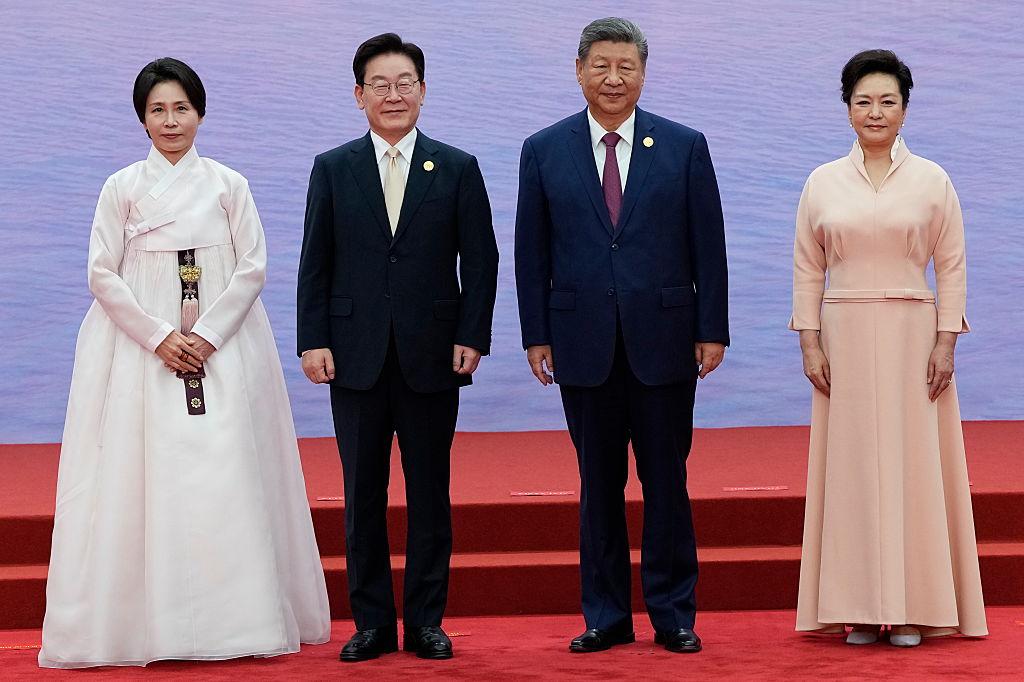
**SOUTH KOREA AND CHINA ADVANCE TRADE COOPERATION**
Lee's diplomatic efforts were accompanied by developments in economic relations with China.
During his summit with Xi, the two countries announced substantial progress toward expanding their free trade agreement.
According to Yonhap, negotiations had reached a stage described as a de facto conclusion.
The proposed expansion covers services and investment.
It followed nearly nine years of negotiations.
The prospective arrangement includes provisions affecting South Korean entertainment businesses.
China agreed to extend most-favored-nation treatment in the film and gaming sectors once the formal agreement enters into force.
The arrangement would also introduce nondiscrimination principles affecting the screening of South Korean online games and films.
Other service industries, including tourism, legal services and finance, could benefit.
However, the agreement had not yet completed every formal step.
Its implementation would depend on subsequent procedures.
The economic announcement demonstrated that Seoul and Beijing were pursuing cooperation alongside discussions about North Korea.
For Lee, the combination reflected the relationship between economic prosperity and regional stability.
**APEC BECOMES A PLATFORM FOR PEACE DIPLOMACY**
The annual APEC summit focused on building a more prosperous Asia-Pacific community.
Lee used the gathering to present a broader vision for regional cooperation.
His proposals addressed innovation, economic resilience and inclusive development.
He emphasized the importance of artificial intelligence.
South Korea intends to share its technological experience through a planned Asia-Pacific AI Center.
Lee also called for stronger supply chain cooperation.
He urged regional governments to preserve international trade relationships and improve energy security.
The president emphasized renewable energy and electrification as areas for cooperation.
He additionally addressed demographic changes affecting societies across the region.
Those issues extend beyond the immediate security situation on the Korean Peninsula.
Yet Lee connected them through a common argument.
Economic cooperation becomes more difficult when countries face the threat of military instability.
His peace initiative was therefore presented as part of a broader regional development strategy.
**LEE ALSO STRENGTHENS DIPLOMACY WITH JAPAN**
Before arriving in China, Lee attended regional meetings in Manila.
During the visit, he held discussions with Japanese Prime Minister Sanae Takaichi.
The two leaders focused on expanding economic cooperation and exchanges between their countries.
Their meeting continued efforts to sustain regular high-level dialogue.
Relations between South Korea and Japan have historically been complicated by disputes involving their shared history.
However, both governments have important interests in regional security.
North Korea's nuclear and missile programs remain a major concern.
Japan and South Korea also maintain security relationships with the United States.
Improved communication between Seoul and Tokyo could support coordination during a crisis.
Nevertheless, Lee's discussions with Takaichi did not produce a new agreement with North Korea.
The meeting formed part of South Korea's broader effort to maintain regional diplomatic relationships.
**THE PEACE INITIATIVE FACES DIFFICULT POLITICAL REALITIES**
Lee's proposal offers a diplomatic objective, but implementing it would require overcoming substantial obstacles.
North Korea has shown little public willingness to restore relations with Seoul.
The nuclear issue remains unresolved.
Russia and North Korea have strengthened military cooperation.
The United States and China continue competing over trade, technology and strategic influence.
These developments affect the environment in which future talks might occur.
Even if communication resumes, negotiations could face disagreements over their agenda.
South Korea may seek measures to reduce immediate military risks.
North Korea could prioritize security assurances or sanctions.
Washington would likely remain concerned about nuclear weapons and missile development.
China and Russia would bring their own regional interests.
The parties would need to determine whether talks should begin with limited confidence-building measures or broader security arrangements.
No such negotiating framework was announced in Shenzhen.
Lee's initiative therefore remains at an early diplomatic stage.
**A PEACE DECLARATION WOULD NOT AUTOMATICALLY END TENSIONS**
A formal agreement ending the Korean War could carry major historical significance.
But an end-of-war declaration and a comprehensive peace treaty are not necessarily the same thing.
A political declaration could acknowledge that the wartime confrontation should end.
A detailed peace arrangement could address practical security questions.
These may include military boundaries, communication mechanisms, verification procedures and the prevention of accidental clashes.
The future role of international military arrangements could also become a subject of negotiation.
However, such issues require agreement among the relevant parties.
An announcement by one government cannot unilaterally settle them.
The 1953 armistice involved military representatives from opposing sides.
Replacing or supplementing the existing arrangements would raise questions about which governments and institutions must participate.
Lee's remarks did not provide a detailed legal framework for that process.
Instead, the president called for dialogue that might eventually create conditions for a lasting settlement.
**THE UNITED STATES AND SOUTH KOREA REMAIN SECURITY PARTNERS**
South Korea's diplomatic approach operates alongside its longstanding security alliance with the United States.
American forces have remained stationed in South Korea for decades.
The alliance is intended to deter attacks and support the country's defense.
North Korea has frequently criticized joint military activities conducted by Washington and Seoul.
Pyongyang presents those activities as threats to its security.
South Korea and the United States maintain that their defense cooperation serves deterrence and regional stability.
The disagreement has repeatedly complicated diplomatic negotiations.
Renewed talks could involve debates about military exercises, security assurances and measures to prevent escalation.
However, Lee did not announce a change to the alliance during his APEC speech.
His appeal for dialogue should not be interpreted as evidence that South Korea had abandoned its existing defense arrangements.
The immediate goal was to encourage communication while reducing the risk of confrontation.
**ECONOMIC STABILITY DEPENDS ON REGIONAL SECURITY**
Lee repeatedly linked peace to economic development.
The Korean Peninsula lies near some of the world's most important manufacturing and technology centers.
South Korea is a major producer of semiconductors, vehicles, electronics and industrial equipment.
Japan and China also play central roles in regional supply chains.
A serious military confrontation could interrupt manufacturing and international transportation.
Financial markets might respond to heightened uncertainty.
Businesses could delay investment decisions.
Governments could face additional defense and emergency costs.
These are potential risks rather than consequences that have already occurred as a result of Lee's speech.
The president's argument was that preventing instability is an important economic priority.
He urged other APEC members to recognize the broader benefits of peace.
The approach was intended to expand support beyond countries traditionally involved in Korean security negotiations.
**WHAT HAPPENS NEXT?**
The next stage depends largely on whether North Korea signals any willingness to reopen communication.
Lee has publicly reaffirmed his commitment to negotiations.
China has pledged constructive support.
Russia has agreed to pursue cooperation with Seoul where circumstances permit.
And Trump remains an important potential participant in renewed discussions involving Pyongyang.
But no direct agreement with Kim Jong Un has been announced.
There is no confirmed timetable for inter-Korean talks.
No formal peace treaty has been negotiated.
And North Korea's nuclear weapons remain a major unresolved issue.
South Korea may continue seeking diplomatic support through bilateral meetings and international forums.
China could use its relationship with Pyongyang to encourage communication.
Russia may participate in discussions where its interests and diplomatic relationships allow.
Washington could explore whether direct talks with North Korea are possible.
However, none of those steps guarantees a breakthrough.
The governments involved still face disagreements over security, sanctions and nuclear weapons.
For Lee, the challenge is to turn international expressions of support into a diplomatic process involving North Korea itself.
The November 19 appeal demonstrated that Seoul remains committed to a negotiated approach.
It also highlighted the limitations of diplomacy conducted without Pyongyang's participation.
The Korean War's armistice has endured for more than seven decades.
Generations have lived with the peninsula's unresolved political and military division.
A formal peace arrangement would be a historic development.
But the path toward that outcome remains uncertain.
For now, Lee has made his position clear.
He wants the door to dialogue reopened.
He wants discussions about formally ending the Korean War.
And he wants a permanent peace arrangement to replace decades of unresolved confrontation.
China and Russia have indicated support for easing tensions.
The United States remains central to the diplomatic equation.
But the response that matters most has yet to arrive.
North Korea has not publicly agreed to restart negotiations.
Until that changes, the prospect of ending the Korean War remains a diplomatic goal rather than an achieved settlement.