TEXAS MOTHER AND SON FOUND SHOT DEAD — DID A WI-FI FEUD WITH THE MAN NEXT DOOR PLAY A ROLE IN THEIR KILLINGS?
LUFKIN, TEXAS, November 7, 2026 — A Texas mother and her adult son were found shot to death inside their home, and investigators say a disagreement over something as ordinary as Wi-Fi access has emerged as a significant detail in the case.
But the most unsettling revelation came nearly two weeks after the killings.
Police arrested a 47-year-old man who lived directly next door to the victims — in the other half of the same duplex.
The suspect, identified as Jeremiah McGee, had previously told investigators that he had been involved in disputes with the victims over Wi-Fi service.
On Friday, November 6, officers arrested McGee at his Lufkin residence and recovered a firearm they believe may have been used in the shootings.
He now faces a capital murder charge.
But authorities have not established whether the Wi-Fi dispute was the motive behind the killings, leaving a disturbing question unanswered.
Could an argument over internet access have played a role in the deaths of two family members?
A MOTHER AND SON FOUND DEAD INSIDE THEIR HOME
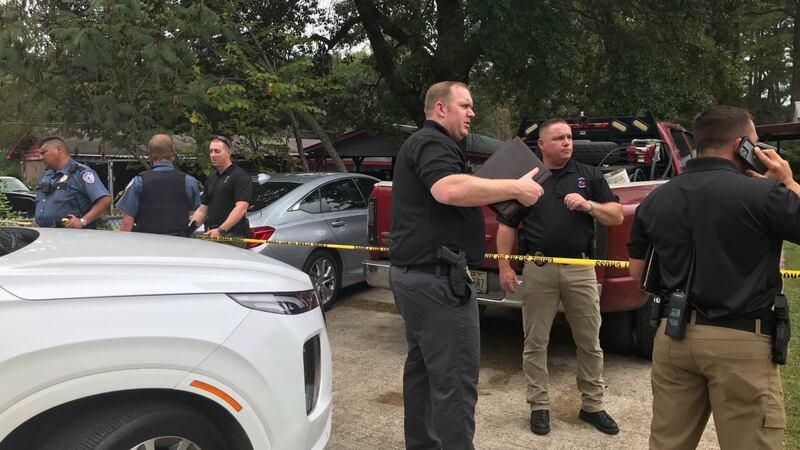
The investigation began on October 23, when Lufkin police received an emergency call reporting a shooting at a residence in the 900 block of Third Street.
Officers arrived to find two people dead from gunshot wounds.
The victims were identified as Maria Davalos, 61, and her 32-year-old son, Ariel Arellano Jr.
The person who called 911 was another family member — Davalos' son and Arellano's brother.
What officers discovered prompted a double-homicide investigation.
Detectives began gathering evidence, speaking with people who knew the victims and examining possible connections between the family and individuals living nearby.
The Texas Rangers joined Lufkin police in the investigation.
For nearly two weeks, authorities worked to establish who was responsible.
Their attention eventually focused on someone who lived only steps away.
THE NEIGHBOR WHO SHARED THE SAME BUILDING
Investigators identified Jeremiah McGee, 47, as their primary suspect.
McGee was not a stranger living somewhere across town.
According to police, he and the victims occupied separate sides of the same duplex.
The arrangement placed them in unusually close proximity, making their reported disagreements over Wi-Fi particularly relevant to investigators.
Lufkin police Lt. James Cowan said officers interviewed multiple people, including McGee himself, while examining the relationship between the neighbors.
Those interviews revealed that disagreements involving Wi-Fi service had occurred.
McGee acknowledged being involved in such disputes with Davalos and Arellano, according to police.
But the precise nature of those arguments has not been publicly explained.
Investigators have not disclosed who controlled the internet connection, whether access had been restricted or whether threats were exchanged before the shootings.
They have also not said whether the disagreements escalated immediately before the victims were killed.
That distinction matters.
The existence of a previous dispute can help investigators establish a possible connection, but it does not by itself prove why a crime occurred.
For now, the Wi-Fi disagreement remains a reported part of the background rather than an officially established murder motive.
TWO WEEKS OF INVESTIGATION LEAD TO AN ARREST
After gathering information from witnesses and other leads, investigators obtained a warrant for McGee's arrest and another warrant to search his residence.
On Friday, November 6, officers moved in.
McGee was arrested at his home at approximately 1 p.m.
During the search, investigators recovered a firearm they believe was involved in the killings.
Authorities have not released the results of any forensic testing linking the weapon to the victims.
They also have not disclosed what other evidence was used to establish probable cause for the arrest.
Lufkin Police Chief Travis Brazil credited the investigative work of detectives and the assistance of the Texas Rangers.
Police said the investigation involved multiple leads and information obtained from people connected to the case.
McGee was taken to the Angelina County Jail.
As of Friday's announcement, a bond determination had not yet been reported.
WHY THE SUSPECT FACES CAPITAL MURDER
McGee has been charged with capital murder in connection with the deaths of Davalos and Arellano.
Police explained that the charge reflects the allegation that two people were killed during the same criminal episode.
The seriousness of the charge does not establish guilt.
McGee is accused of the killings, and the allegations must be proven through the legal process.
Authorities have not publicly released a detailed account of how the shootings unfolded.
The available reports also do not explain whether investigators believe the victims were deliberately targeted because of the reported disagreement.
Those questions could become important as the criminal proceedings develop.
THE QUESTION BEHIND THE WI-FI DISPUTE
The discovery of the reported internet-access disagreement has attracted particular attention because of the contrast between an everyday neighborhood conflict and the severity of the alleged crime.
Disagreements over shared services, property arrangements and household boundaries are not unusual among neighbors.
What makes this case different is that two people were killed and a man who lived in the same building now stands accused of their murders.
Still, police have not established a direct causal connection between the Wi-Fi arguments and the shootings.
The next stage of the case may provide additional information about the relationship between the suspect and the victims.
Investigators may also disclose more evidence concerning the recovered firearm, the timeline of the killings and the circumstances leading to the arrest.
Until then, the precise motive remains uncertain.
TWO LIVES LOST AND AN UNANSWERED QUESTION
For the family of Maria Davalos and Ariel Arellano Jr., the case began with the discovery of two loved ones shot to death inside their home.
Two weeks later, the arrest of a next-door neighbor marked a major development.
But the investigation has left one central question unresolved.
Were the reported arguments over Wi-Fi simply part of a troubled relationship between neighbors, or did they contribute to the events that ended in two deaths?
Police have confirmed the dispute, the arrest and the recovery of a suspected weapon.
They have not confirmed the motive.
As the capital murder case moves forward, investigators and prosecutors will have to establish what happened inside the home and what evidence connects the accused man to the killings.
For now, the contrast remains deeply troubling.
Two family members are dead.
Their neighbor is facing a capital murder charge.
And an ordinary disagreement over internet access has become one of the most closely examined details in a double-homicide investigation.