TRUMP COULD FACE A SUPREME COURT BLOCKADE UNTIL 2028 — AND SCHUMER WON'T RULE OUT A MOVE REPUBLICANS USED BEFORE
WASHINGTON, November 7, 2026 — President Donald Trump's ability to shape the U.S. Supreme Court could face a major obstacle after Democrats won control of the Senate, giving them the power to reject his judicial nominees during the final two years of his presidency.
But one question could make the confrontation even more consequential.
Could Democrats refuse to fill a Supreme Court vacancy until after the 2028 presidential election?
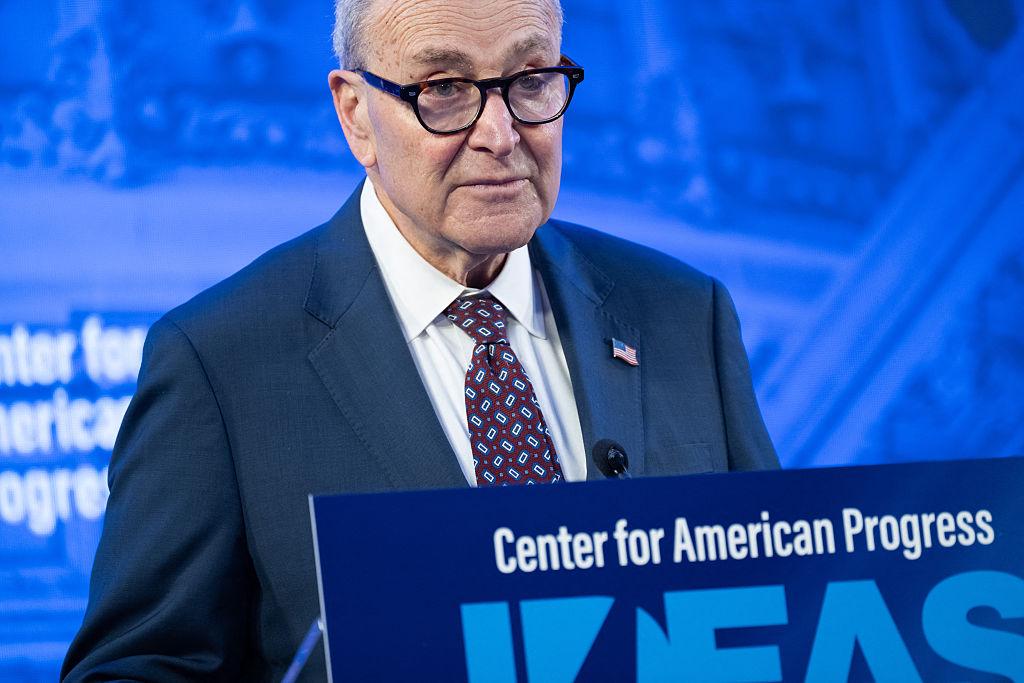
Senate Democratic leader Chuck Schumer has pledged to block conservative nominees he considers unacceptable. And when asked whether his party might leave a Supreme Court seat vacant until the next presidential election, he declined to rule out that possibility.
The prospect echoes a controversial Republican strategy used a decade earlier, when Senate Majority Leader Mitch McConnell blocked President Barack Obama's Supreme Court nominee in 2016.
Now, with Democrats preparing to take control of the chamber, the political balance surrounding Trump's judicial appointments is changing.
And the implications could extend far beyond Washington.
A WARNING DIRECTED AT TRUMP
Speaking to The Associated Press following the November 3 midterm elections, Schumer made clear that Democrats intend to use their new Senate majority to scrutinize the president's nominees.
He promised that the party would not permit Trump to install what he described as a right-wing justice on the Supreme Court.
His warning extended beyond the nation's highest court.
Schumer also said Democrats would reject nominees they considered unacceptable for other federal judicial positions and Cabinet offices.
The declaration came as Democrats celebrated significant gains in congressional elections.
The party is expected to control at least 54 seats in the 100-member Senate when the new Congress convenes in January 2027.
That number could increase depending on the final outcomes of races in Alaska and Mississippi.
With a majority, Democrats will be able to control committee leadership, confirmation hearings and the Senate floor schedule.
For Trump, that means future nominees could face a fundamentally different confirmation process.
And unlike ordinary legislation, Supreme Court nominations cannot be enacted through a presidential veto.
They require Senate confirmation.
COULD DEMOCRATS REPEAT THE 2016 SUPREME COURT STRATEGY?
One of the most significant questions involves a political confrontation that reshaped the Supreme Court a decade ago.
In February 2016, conservative Justice Antonin Scalia died while Barack Obama was serving his final year as president.
Obama nominated federal appeals court Judge Merrick Garland to replace him.
But Republicans controlled the Senate, and Majority Leader Mitch McConnell refused to advance Garland's nomination.
McConnell argued that voters should have a voice in selecting the next president before the vacancy was filled.
The seat remained open until Trump took office in January 2017.
Trump subsequently nominated Neil Gorsuch, who was confirmed to the Supreme Court.
The decision helped establish the foundation for the conservative majority Trump would later expand.
Now Democrats could face a similar choice.
If a justice leaves the court during the final two years of Trump's presidency, Schumer's majority could consider a nominee, reject that nominee or decline to move the nomination forward.
When AP asked Schumer whether he would keep a vacancy open until after the 2028 election, he did not commit to doing so.
But he also did not categorically reject the idea.
That distinction matters.
Democrats have not announced an official plan to leave a Supreme Court seat vacant.
Nevertheless, the new Senate majority gives them the procedural ability to delay or block confirmation. 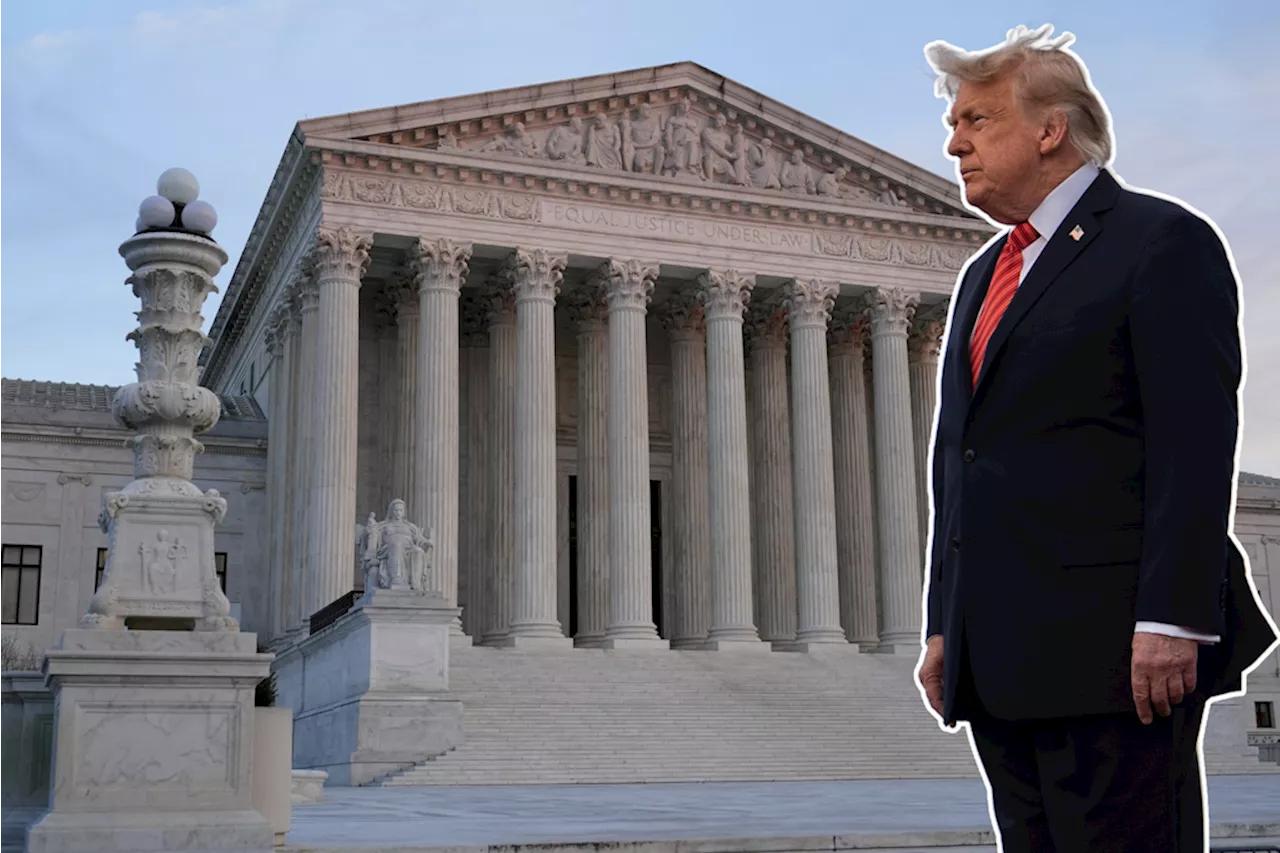
THE TWO JUSTICES AT THE CENTER OF THE SPECULATION
Attention has turned toward the Supreme Court's two oldest members.
Justice Samuel Alito is 76, while Justice Clarence Thomas is 78.
Both are members of the court's conservative majority.
Neither has announced an imminent retirement.
Alito has previously acknowledged uncertainty about how much longer he will continue serving, although he has also indicated that he intends to remain on the court through its current term.
Thomas, meanwhile, is approaching a historic milestone in his judicial career.
If he remains on the court until May 2028, he would become the longest-serving Supreme Court justice in American history.
Any retirement would create an opening for Trump to nominate a replacement.
But whether that nominee could obtain Senate confirmation would depend heavily on the political circumstances.
For Republicans, the possibility of a vacancy under Democratic Senate control presents an important obstacle.
Florida Gov. Ron DeSantis suggested in a social media post following the election that confirming successors to Thomas or Alito during Trump's remaining term would be extremely difficult.
That assessment reflects his political view, rather than a confirmed future outcome.
THE WHITE HOUSE PUSHES BACK
The White House has rejected Democratic criticism of the president's approach to the Supreme Court.
Spokeswoman Lauren Bis accused Democrats of politicizing the judiciary and criticized proposals to expand the number of Supreme Court justices.
The administration maintains that Trump is committed to preserving judicial independence.
Democrats, meanwhile, argue that their Senate victory gives them a mandate to scrutinize nominees and resist appointments they believe would move the courts further to the right.
Those competing positions set the stage for a potentially prolonged confirmation dispute.
The stakes are especially significant because Supreme Court justices receive lifetime appointments.
Their decisions can shape federal law long after the presidents who nominated them have left office.
TRUMP'S THREE PREVIOUS APPOINTMENTS
During his first presidential term, Trump appointed three Supreme Court justices.
Neil Gorsuch was confirmed in 2017.
Brett Kavanaugh followed in 2018.
And Amy Coney Barrett joined the court in 2020, shortly before that year's presidential election.
Together, the appointments helped establish the court's current 6-3 conservative majority.
That majority has participated in landmark decisions involving abortion, presidential authority and federal regulatory power.
In 2022, the Supreme Court overturned Roe v. Wade, ending the federal constitutional protection for abortion that had existed for nearly five decades.
The decision illustrated the long-term consequences of presidential judicial appointments.
Trump has previously discussed the possibility of making additional Supreme Court nominations.
But the election results have substantially changed the conditions under which any future nomination would be considered.
A NEW SENATE, A DIFFERENT POLITICAL REALITY
The impact of Democratic control will not be limited to the Supreme Court.
Schumer has identified lower living costs, housing, health care, tariffs, child care and energy prices as major priorities.
Democrats also plan to increase oversight of the Trump administration, including investigations involving immigration enforcement.
However, winning the Senate does not mean Democrats can automatically enact their entire legislative agenda.
Many bills will still require bipartisan cooperation to overcome Senate procedural hurdles.
And Trump will retain his presidential veto power.
Judicial nominations present a different situation.
Because nominees require Senate confirmation, Democratic control of the chamber will give Schumer and his colleagues direct leverage over appointments.
That makes the judiciary a particularly important area of potential conflict.
THE QUESTION THAT COULD DEFINE THE NEXT TWO YEARS
For now, the Supreme Court has no announced vacancy requiring immediate Senate action.
Trump has not submitted a new Supreme Court nomination, and Democrats have not formally committed to keeping any future seat empty.
But Schumer's warning has established the political stakes.
If a vacancy emerges after Democrats take control in January, the president may face a Senate unwilling to approve his preferred candidate.
A prolonged dispute could leave the seat unfilled while the two parties negotiate, confront one another or wait for the next election.
Such an outcome is possible, not inevitable.
The central question is whether Trump and Democratic leaders could agree on a nominee acceptable to both sides.
If they cannot, the confrontation could revive one of the most divisive Supreme Court confirmation battles in modern American history.
A decade after Republicans blocked Obama's nominee, Democrats are preparing to hold the same institutional power.
And Trump's opportunity to appoint another Supreme Court justice could depend on how they choose to use it.