TRUMP PROMISED AMERICANS $5,000 IF REPUBLICANS WON — NOW THE WHITE HOUSE WON'T SAY IF THE CHECKS ARE DEAD
WASHINGTON, November 7, 2026 — President Donald Trump made an extraordinary financial promise to American voters before the midterm elections: If Republicans retained control of Congress, adult U.S. citizens would receive $5,000 payments.
Now, with Democrats having won control of both the House and Senate, a major question remains unanswered.
What happened to the money?
The White House has declined to clarify whether Trump's proposed payments have been officially canceled, leaving Americans without a clear answer about a plan that could have cost the federal government approximately $1.35 trillion.
And the $5,000 checks were only one part of a series of promises Trump connected to Republican victories in November.
From compensation for veterans exposed to contaminated water to federal investments and agricultural policies, several commitments now face renewed questions following the election results.
THE $5,000 PROMISE THAT CAPTURED NATIONAL ATTENTION
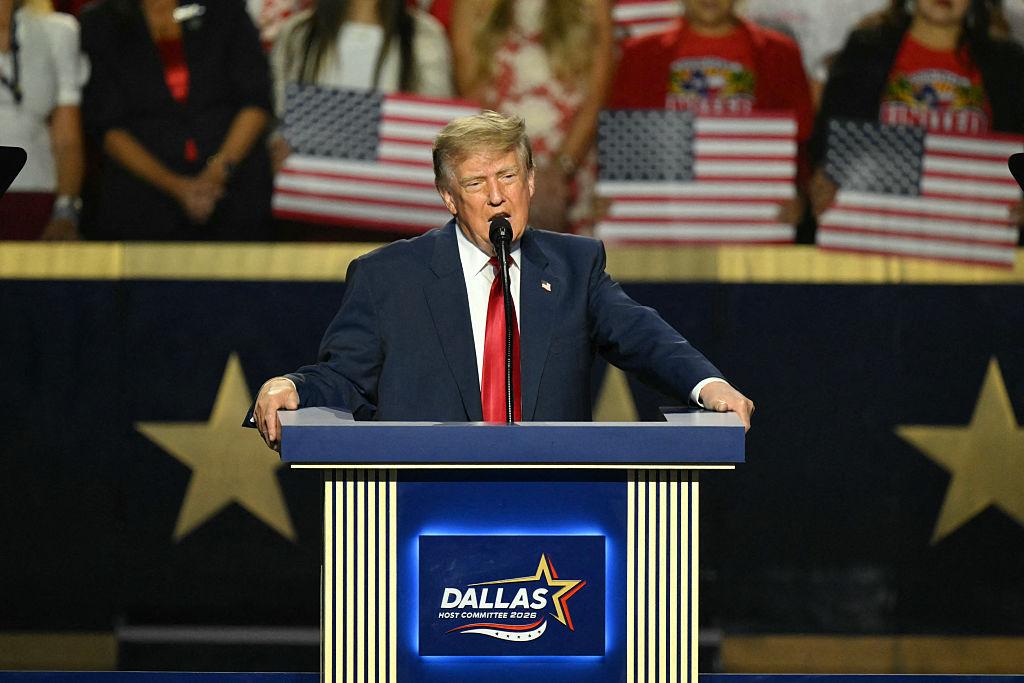
The proposal first drew widespread attention during a Republican midterm convention in Dallas in September.
Trump announced that he would provide a $5,000 payment to every adult American citizen if Republicans maintained their congressional majorities.
He called the proposal a "Trump dividend."
At the time, the president offered few details about how the payments would be funded, administered or approved.
Reuters reported that, with approximately 270 million adults in the United States, distributing $5,000 per person could cost around $1.35 trillion.
The plan immediately raised questions about federal spending, congressional authorization and its potential economic consequences.
Trump continued promoting the idea during campaign appearances in October, telling voters that Republican victories were essential to delivering the money.
During an appearance in Montana, he described the payment as an important promise and suggested that Republican leadership made it possible.
However, his public descriptions of the proposal were not entirely consistent.
While the original announcement described a $5,000 dividend, subsequent remarks referred to payments of $5,000 a year.
No detailed public plan established whether the proposal would involve a single payment or recurring annual benefits.
That distinction matters because recurring payments would create substantially larger long-term financial obligations.
THE ELECTION CHANGED EVERYTHING — BUT DID IT CANCEL THE CHECKS?
On November 3, Democrats won control of both chambers of Congress, defeating the political condition Trump had attached to his proposal.
Three days later, CNN asked the White House whether the promised payments would still move forward.
The administration did not provide a direct answer.
White House spokesperson Matthew Middleton instead issued a statement expressing the president's willingness to work with lawmakers on economic priorities.
When CNN specifically asked whether Trump had officially abandoned the $5,000 plan, the White House did not respond.
That silence leaves an important distinction unresolved.
Trump had made Republican control of Congress a condition for the payments.
But the administration has not formally announced that the plan is canceled.
Nor has it identified an alternative route for delivering the money under Democratic congressional majorities.
As of November 7, there is no confirmed payment schedule, approved funding mechanism or official announcement that Americans will receive the proposed checks. 
A PROMISE THAT WOULD REQUIRE ENORMOUS FUNDING
Even if Republicans had retained control of Congress, implementing the proposal would have presented major challenges.
The estimated $1.35 trillion cost would represent an extraordinary federal expenditure.
Such a program would ordinarily require a lawful funding mechanism and potentially congressional legislation.
Trump did not explain during his initial announcement how the government would finance the payments.
The plan also raised questions about eligibility.
Trump referred to adult citizens, rather than everyone residing in the United States.
That distinction would affect who qualified for the money and how an eventual program would operate.
Criticism also emerged from within the Republican Party.
Outgoing Republican Sen. Thom Tillis dismissed the proposal as a political gimmick that would not address underlying economic problems.
Others questioned why Trump would not pursue the payments immediately while Republicans still controlled both congressional chambers.
During a September interview, Fox News host Laura Ingraham challenged the president on that point.
Trump maintained that the political circumstances prevented him from delivering the checks at that time.
But the administration did not release a detailed explanation establishing why payments could not be pursued before the election.
THE OTHER PROMISES NOW FACING QUESTIONS
The uncertainty extends well beyond the proposed $5,000 checks.
During his October campaign tour, Trump made several commitments linked to Republican electoral success.
In North Carolina, he pledged to accelerate settlements for people affected by water contamination at Marine Corps Base Camp Lejeune.
The issue concerns veterans, military families and others who have pursued compensation over exposure to contaminated drinking water.
At an October 20 rally in Greenville, Trump connected further settlement efforts to Republicans winning Congress.
His remarks suggested that a Democratic victory could jeopardize the availability of money.
However, the claims process is governed by existing legal procedures and federal authorities. A change in congressional control does not automatically eliminate valid claims.
The White House previously said the administration had already delivered approximately $1 billion in settlements.
Trump also promoted plans involving pharmaceutical manufacturing investment in Kentucky and greater availability of a fuel used by farmers in Kansas and Iowa.
In Alaska, he linked continued federal assistance to Republican political success.
CNN asked the White House about the status of these commitments as well.
The administration did not provide specific updates.
WHY THE WHITE HOUSE'S RESPONSE MATTERS
The situation raises questions about the difference between a campaign promise and an approved government program.
Presidents frequently outline policies that depend on congressional cooperation.
But the $5,000 proposal was unusual because Trump explicitly connected a direct financial benefit for citizens to a particular election outcome.
Critics argued that such promises improperly blurred the line between government benefits and partisan campaigning.
Trump presented the payments as a benefit that Republican leadership could deliver.
Those competing interpretations became part of the political debate surrounding the proposal.
Now, the election has passed, and the original condition has not been met.
The administration has indicated that it is willing to cooperate with Democrats on economic matters, but it has not identified the $5,000 payments as an active bipartisan initiative.
The absence of a detailed proposal also means there is no clear legislative framework for Congress to consider.
WHAT HAPPENS NEXT?
For Americans hoping to receive the promised money, the immediate situation is straightforward.
No payments have been authorized under the proposal.
No distribution date has been announced.
And the White House has not confirmed whether the plan will be revived, revised or abandoned.
Congressional Democrats could theoretically consider a future direct-payment proposal, but no such agreement has been announced in connection with Trump's promise.
The president could also introduce a revised plan and seek congressional support.
Neither possibility should be confused with an existing commitment to distribute funds.
For now, the original proposal remains unresolved.
The $5,000 checks were among Trump's most attention-grabbing promises during the midterm campaign.
But after Republicans lost control of Congress, the administration stopped short of explaining what would happen to them.
The result is a question that remains unanswered for millions of Americans:
Was the $5,000 dividend always dependent on a Republican victory, or will the president still attempt to deliver the money under a divided government?
Until the White House provides a definitive answer, the proposed payments remain a campaign promise — not an approved federal benefit.