TRUMP RALLIED TWICE TO SAVE A KANSAS SENATOR — BUT DID HUNDREDS OF PATIENT-DEBT LAWSUITS HELP END 94 YEARS OF GOP VICTORIES?
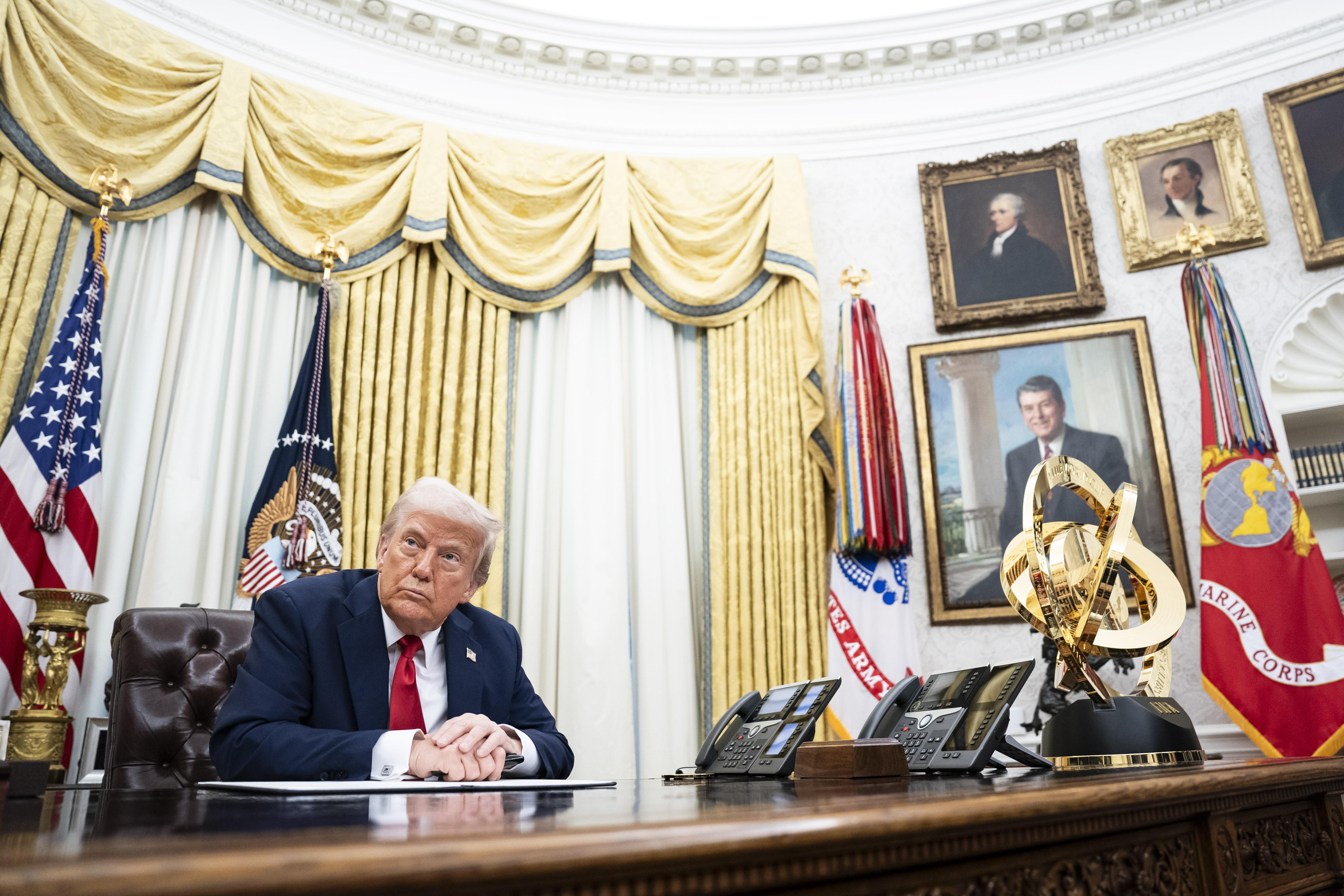
TOPEKA, KANSAS, November 7, 2026 — President Donald Trump traveled to Kansas twice in the final weeks of the midterm campaign, hoping to help Republican Sen. Roger Marshall secure another six years in Washington.
But neither Trump's personal intervention nor millions of dollars in Republican advertising could prevent a historic political reversal.
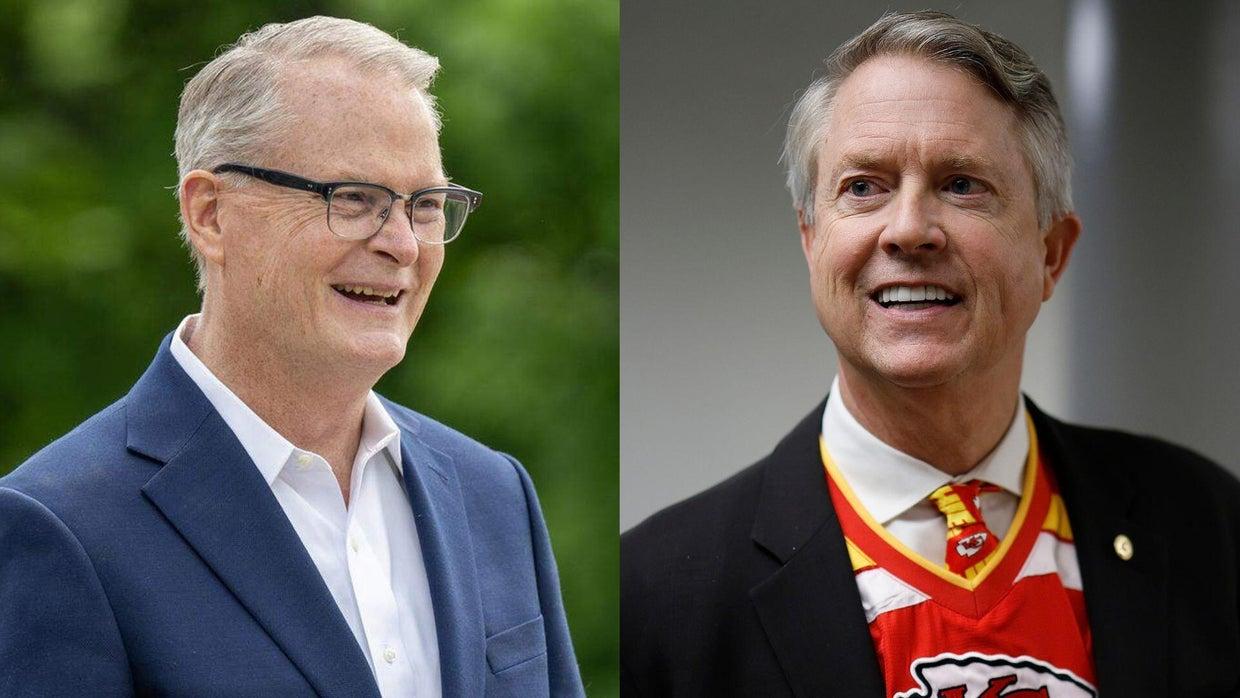
Democrat Adam Hamilton, a 62-year-old Methodist pastor who had never held elected office, defeated Marshall in a state that had not elected a Democratic U.S. senator since 1932.
The victory ended a 94-year losing streak for Kansas Democrats and transformed what Republicans once considered a relatively secure Senate seat into one of the election's most consequential results.
Yet behind the historic upset was an unusual campaign controversy.
Marshall, a former physician, faced renewed scrutiny over reports that he and his medical practice had sued hundreds of patients over unpaid medical bills.
Hamilton, a pastor known for emphasizing compassion and social responsibility, made the controversy part of his argument against the incumbent.
The dispute raised a question that reached beyond the candidates themselves: Could a senator's medical billing record help persuade voters to abandon a party they had supported for generations?
THE MEDICAL BILLING CONTROVERSY THAT FOLLOWED MARSHALL
Before entering Congress, Roger Marshall spent approximately 25 years working as an obstetrician and gynecologist.
His medical career became a major issue during the Senate campaign after reporting by The New York Times examined how he and his practice pursued unpaid patient bills.
According to reporting cited by The Associated Press, Marshall and his practice filed lawsuits against more than 700 patients.
In 81 cases, patients were arrested after failing to appear for court proceedings.
The reporting also raised questions about the severity of the debt-collection tactics used.
During a televised debate, Marshall rejected the criticism, arguing that his professional record had been grossly mischaracterized.
The lawsuits did not establish that Marshall had personally committed a crime, and the arrests were connected to missed court appearances rather than simply an inability to pay medical bills.
Nevertheless, the issue became politically significant.
For Hamilton, it offered an opportunity to question whether Marshall's record reflected the priorities of ordinary Kansas families struggling with health care expenses.
The contrast was especially notable because Hamilton had built his public career around religious teachings emphasizing compassion, poverty and community responsibility.
A PASTOR CHALLENGES A TRUMP-BACKED REPUBLICAN
Hamilton entered the race with an unusual political background.
He is the founding pastor of the Church of the Resurrection, a United Methodist congregation in the Kansas City metropolitan area with approximately 25,000 members.
He has also written more than 30 books addressing faith, theology and contemporary social questions.
Rather than presenting himself as a conventional progressive candidate, Hamilton emphasized political moderation, affordability and cooperation across party lines.
He criticized Washington's partisan divisions and repeatedly described himself as an independent-minded Democrat.
That approach was designed to appeal to voters who might ordinarily support Republicans.
Hamilton also made clear that he would not automatically support keeping Democratic Sen. Chuck Schumer as the party's leader.
His position allowed him to distance himself from national Democratic leadership while challenging a Republican incumbent closely aligned with Trump.
Marshall, meanwhile, defended the president's economic and foreign policies.
His campaign portrayed Hamilton as too liberal for Kansas, including over the church's support for LGBTQ rights.
The political disagreement extended to immigration enforcement, religious values and the direction of the federal government.
TRUMP AND VANCE JOINED THE FIGHT
As the contest tightened, national Republican leaders stepped up their efforts to defend Marshall.
Trump held campaign rallies in Kansas on October 19 and October 31.
Vice President JD Vance also appeared in the state, campaigning for Marshall in September and returning on October 26.
Their appearances reflected growing concern that Republicans could lose a Senate seat they had controlled for decades.
Republican organizations committed approximately $45 million to television and digital advertising, according to AdImpact figures cited by AP.
Democrats and their allies spent about $65 million.
Combined campaign advertising reached approximately $110 million, a record level for a Kansas Senate contest.
Republicans even shifted campaign resources from North Carolina to Kansas as the race became increasingly competitive.
But money and high-profile endorsements were only part of the contest.
Voters were also evaluating rising living costs, agricultural expenses, tariffs and the ongoing war with Iran.
Those issues complicated Marshall's effort to defend the administration's record. 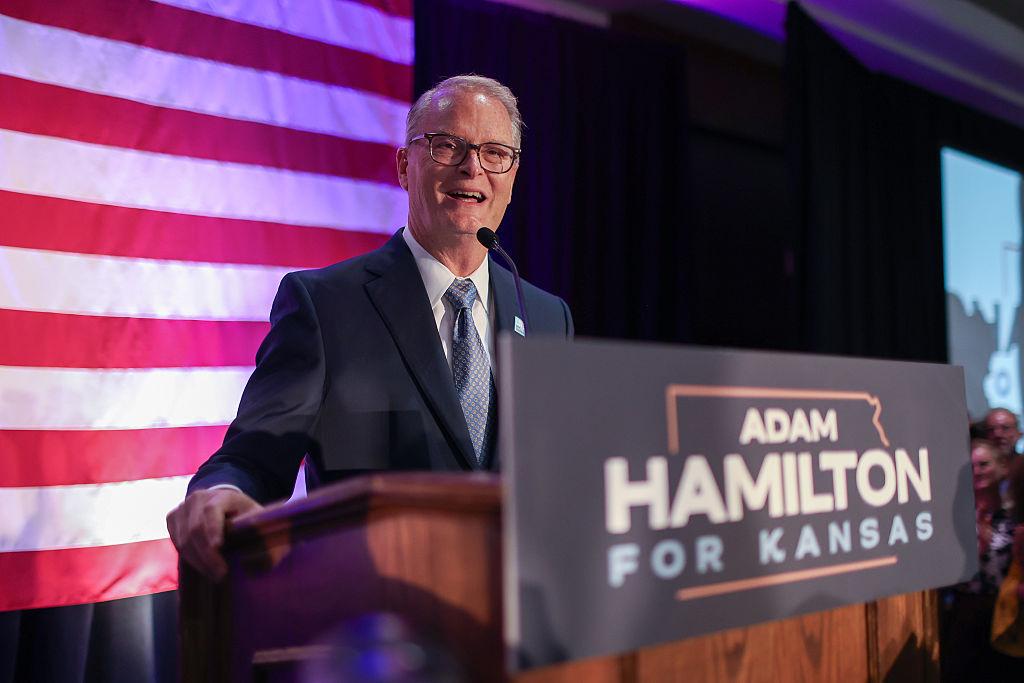
WHY KANSAS VOTERS WERE READY TO CONSIDER CHANGE
Kansas has long supported Republican presidential and Senate candidates.
Trump carried the state by more than 16 percentage points in the 2024 presidential election.
But its political history contains an important distinction.
Although Republicans dominated Senate elections, moderate voters had periodically supported Democratic candidates for governor.
Suburban communities near Kansas City also became increasingly competitive.
Hamilton sought to build on those voting patterns.
He emphasized household expenses and economic uncertainty, including the pressures facing farmers who had experienced higher diesel and fertilizer costs.
He criticized Trump's tariffs and handling of the Iran war, arguing that federal policies had contributed to economic difficulties.
Marshall defended the administration while offering his own explanations for higher energy costs.
The candidates presented sharply different assessments of the economy.
For some moderate Republicans and independents, Hamilton's message of political cooperation offered an alternative without requiring them to embrace every position associated with national Democrats.
That crossover appeal became central to his victory.
CONTROVERSIES ALSO FOLLOWED HAMILTON
Hamilton's campaign faced scrutiny of its own.
Republicans highlighted allegations involving sexual abuse of teenage boys by an adult leader at church camps in 2005 and 2006.
According to AP, the church investigated the first incident but did not report it to law enforcement after the victims could not positively identify the perpetrator.
The adult leader returned the following year.
The second incident was reported, and the church subsequently provided records concerning the earlier allegation.
Local prosecutors did not pursue criminal charges.
Hamilton acknowledged that failing to report the initial incident and not personally ensuring the man did not return were mistakes.
The church subsequently strengthened its child-protection reporting policies.
The controversy formed part of Republican efforts to challenge Hamilton's leadership record.
But it did not prevent him from winning the election.
THE NIGHT A 94-YEAR STREAK ENDED
On November 3, Kansas voters delivered a result that changed the state's political history.
Hamilton defeated Marshall, becoming the first Democrat elected to represent Kansas in the U.S. Senate since George McGill won in 1932.
The victory was part of broader Democratic gains in the midterm elections.
In his election-night remarks, Hamilton emphasized Kansas' national importance and called for greater political unity.
Marshall conceded defeat, acknowledging that he did not have an explanation for the result while expressing appreciation for his years in public office.
The loss ended his effort to secure a second Senate term.
For Hamilton, it marked an extraordinary transition from religious leadership to national politics.
He now faces the challenge of representing a state with a long Republican tradition while fulfilling his campaign promises of moderation and bipartisan cooperation.
WHAT REALLY ENDED THE REPUBLICAN STREAK?
The controversy involving Marshall's medical billing practices became an important campaign issue.
But the available reporting does not establish that it alone caused his defeat.
Hamilton's strong fundraising, voter dissatisfaction with living costs, concerns about federal policies and support from moderate and independent voters all contributed to the broader political environment.
The Republican campaign also faced criticism over its relatively late advertising start and Marshall's difficulties matching Hamilton's fundraising.
Together, those factors help explain how a previously secure Republican seat became competitive.
For Trump, the outcome illustrates that presidential campaigning cannot guarantee victory for an endorsed candidate.
For Democrats, Kansas provides an example of a candidate winning in traditionally Republican territory by emphasizing economic concerns and political moderation.
The election also leaves one especially striking contrast.
Marshall entered the race as an incumbent senator, former physician and Trump-backed Republican.
Hamilton entered as a pastor who had never won public office.
After one of the most expensive Senate campaigns in Kansas history, voters chose the newcomer.
A 94-year political streak was over.
And the debate over what changed Kansas voters' minds may continue well beyond Election Day.