TRUMP WON THESE WISCONSIN DISTRICTS IN 2024 — SO HOW DID DEMOCRATS FLIP THEM AND TAKE CONTROL OF THE STATE?
MADISON, WISCONSIN, November 7, 2026 — President Donald Trump won Wisconsin in the 2024 presidential election. Two years later, Democrats have captured the governor's office and both chambers of the state Legislature.
But one of the most revealing details lies beneath the statewide results.
Democrats defeated three Republican Assembly incumbents in districts that Trump himself carried in 2024.
Those victories helped deliver a 53-46 Democratic majority in the state Assembly, alongside an 18-15 majority in the state Senate, according to preliminary results reported by Wisconsin Public Radio and The Associated Press.
Combined with David Crowley's victory in the governor's race, the results put Democrats on course for unified control of Wisconsin's state government for the first time in 16 years.
The outcome raises an important question: How did Democrats break Republican control of the Legislature, including in communities that had recently supported Trump?
THREE TRUMP DISTRICTS THAT CHANGED SIDES
The most striking results came from three Assembly districts where Republicans entered the election with a built-in advantage.
In the 30th District, Democratic challenger Kevin Knoke defeated Republican Rep. Shannon Zimmerman, who had served in the Assembly since 2017.
In the 85th District, Democrat John Kroll defeated Republican Rep. Pat Snyder, another incumbent who had held office for nearly a decade.
And in the 92nd District, Democrat Jeremiah Fredrickson defeated Republican Rep. Clint Moses, who first won election in 2020.
All three districts had supported Trump in the 2024 presidential election.
Their decision to elect Democratic state representatives in 2026 illustrates an important feature of American politics: Voters do not necessarily support the same party in every election.
The results do not prove that individual Trump voters switched parties. Differences in turnout, candidates and the issues at stake can also affect election outcomes.
But the victories provided Democrats with seats beyond the minimum needed to take control of the Assembly.
THE MAP THAT HELPED CHANGE WISCONSIN POLITICS
The election was not simply the result of a national shift in political sentiment.
Wisconsin's legislative boundaries had also undergone major changes.
For years, Republicans benefited from district maps that helped them maintain large legislative majorities, even when statewide elections were competitive.
In 2024, new legislative maps were adopted after legal challenges to the previous boundaries.
The changes created more competitive districts and gave Democrats additional opportunities to contest Republican-held seats.
By the time voters returned to the polls in November 2026, the political landscape looked substantially different.
Democrats needed to flip five Assembly seats while defending their own districts to gain a majority.
They flipped eight.
In the Senate, they captured three Republican-held seats while successfully defending their existing seats.
The result was an 18-15 Democratic majority.
The redrawn districts created opportunities, but the election results depended on voters choosing Democratic candidates in those races. 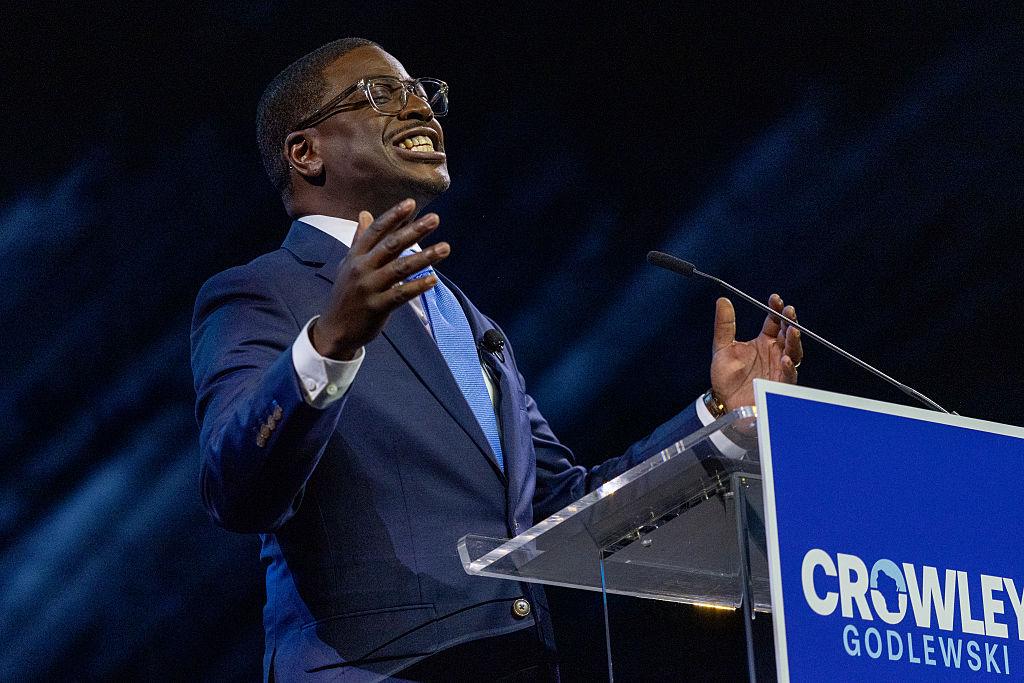
REPUBLICAN INCUMBENTS FALL ACROSS THE STATE
The Senate results included a significant defeat in southwestern Wisconsin.
Democrat Jenna Jacobson unseated Republican Sen. Howard Marklein, who had served in the Senate since 2015 and held a powerful position as co-chair of the Legislature's budget committee.
Democrats also won two open Republican Senate seats in southeastern Wisconsin.
Robyn Vining defeated Republican Mike Roberts in the 5th District, while Trevor Jung won the 21st District against Republican Jim Croft.
Both districts had supported Kamala Harris in the 2024 presidential election.
The combination of open-seat victories and incumbent defeats proved sufficient to change control of the upper chamber.
In the Assembly, Democrats also defeated Republican incumbents Todd Novak, Bob Donovan and Benjamin Franklin in districts that Harris had carried two years earlier.
Together, the results reflected a significant shift in representation across suburban, rural and small-city communities.
A HISTORIC CHANGE AT THE GOVERNOR'S OFFICE
The legislative victories came alongside another significant result.
Democrat David Crowley, the Milwaukee County executive, defeated Republican Rep. Tom Tiffany to become Wisconsin's first Black governor.
His victory completed what political analysts call a governing trifecta: one party controls the governor's office and both legislative chambers.
Wisconsin Democrats had not held that combination of power since the administration of Gov. Jim Doyle.
Their last period of unified government ended following the Republican victories of 2010, when Scott Walker won the governorship.
The 2026 results therefore represent a significant change in state government.
But the transition will not formally occur until the newly elected officials take office in January 2027.
A $3 BILLION QUESTION FOR THE NEW MAJORITY
The incoming Democratic leadership has already identified an ambitious legislative agenda.
Sen. Dianne Hesselbein, expected to become Senate majority leader, and Rep. Greta Neubauer, expected to become Assembly speaker, have emphasized reducing household costs, increasing public education funding, legalizing cannabis and expanding abortion access.
Wisconsin also has a projected state surplus exceeding $3 billion, giving lawmakers additional resources to consider when preparing the next budget.
But control of the Legislature does not guarantee agreement on how that money should be spent.
Democratic lawmakers represent districts with different political preferences, including competitive communities where Republicans will seek to regain seats in 2028.
Their narrow 18-15 Senate majority could make internal disagreements especially consequential.
Some proposals may require compromises among progressive and moderate Democrats.
Others could attract Republican support or encounter determined opposition.
REPUBLICANS WARN ABOUT WHAT COMES NEXT
Outgoing Republican Assembly Speaker Robin Vos has questioned whether Democrats can deliver their campaign promises without increasing costs for Wisconsin residents.
Vos warned voters to scrutinize the new majority's economic plans and expressed confidence that Republicans could eventually regain power.
Democratic leaders have offered a different argument.
They say unified government will allow Wisconsin to move forward on priorities they believe were repeatedly blocked under Republican legislative leadership.
Both parties now face a different political challenge.
Democrats must turn campaign commitments into legislation.
Republicans must develop a strategy to compete in districts where they previously enjoyed greater advantages.
THE TEST THAT BEGINS AFTER THE VICTORY
Wisconsin's election results were part of a broader Democratic wave that changed legislative control in several states.
ABC News reported that Democrats were projected to gain control of at least 10 additional state legislative chambers nationwide.
But Wisconsin offers a particularly revealing example because its political transformation involved both redrawn districts and Democratic victories in areas Trump had carried.
The election demonstrated that Republican success in a presidential race does not automatically translate into Republican victories in subsequent state legislative contests.
It also demonstrated that changing district boundaries can make previously secure legislative majorities more vulnerable.
For Democrats, the immediate challenge is governing with relatively narrow margins while responding to voters' concerns about affordability and public services.
For Republicans, the task is understanding why candidates lost districts that appeared favorable only two years earlier.
The question now is not whether Wisconsin's balance of power has changed.
It has.
The larger question is whether Democrats can maintain that coalition and deliver their promised policies before voters return to the polls in 2028.
For the first time in 16 years, they will have the opportunity to try.