TRUMP'S 34 FELONY CONVICTIONS UNDER REVIEW — COULD A WHITE HOUSE EVIDENCE DISPUTE OVERTURN THE VERDICT?
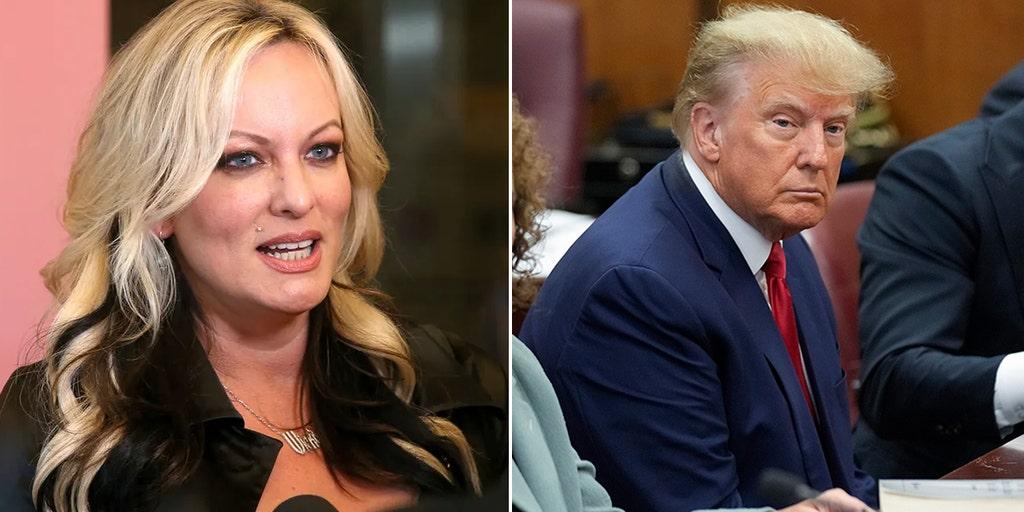
NEW YORK, November 6, 2026 — President Donald Trump's historic criminal conviction is facing another legal test after a New York appeals court examined whether disputed evidence and questions surrounding presidential immunity could justify overturning the verdict.
The hearing on Thursday, November 5, brought renewed attention to the case involving adult film actress Stormy Daniels, a $130,000 payment made before the 2016 presidential election, and 34 felony convictions that Trump has spent more than two years fighting.
But the most consequential questions before the judges may have less to do with the payment itself than with how prosecutors built their case.
Trump's legal team argues that prosecutors improperly relied on federal election law and evidence involving presidential conduct that should have been protected from use at trial.
Prosecutors strongly dispute those arguments.
The appeals court has not announced when it will rule, leaving the future of the conviction unresolved.
A 34-COUNT VERDICT FACES A NEW CHALLENGE
In May 2024, a Manhattan jury found Trump guilty of 34 felony counts of falsifying business records.
The charges centered on reimbursements to his former lawyer Michael Cohen, who had paid Stormy Daniels $130,000 shortly before the 2016 election.
Daniels has alleged that she had a sexual encounter with Trump years earlier, an allegation he denies.
Prosecutors argued that the payment was intended to prevent potentially damaging information from reaching voters and that subsequent business records concealed the arrangement.
Trump maintained that he had committed no crime and that payments recorded as legal expenses were legitimate.
The conviction became a historic moment in American politics, making Trump the first former U.S. president convicted of a crime.
In January 2025, he received an unconditional discharge, meaning no jail time, fine or probation was imposed. The conviction itself, however, remained in place.
Now, his lawyers are trying to change that outcome.
COULD PRESIDENTIAL IMMUNITY CHANGE THE CASE?
One of the most closely examined issues during Thursday's hearing involved evidence concerning conversations and activities inside the White House during Trump's first presidential term.
His attorneys argue that certain testimony and communications should not have been presented to the jury because they involved conduct protected by presidential immunity.
Among the disputed evidence was testimony from Hope Hicks, Trump's former White House communications director, about discussions concerning public reporting of the Daniels matter.
Trump's legal team maintains that communications involving official White House responsibilities should have been treated differently under constitutional protections for presidential acts.
Prosecutors reject that interpretation.
They argue that the relevant conversations concerned private matters rather than protected presidential responsibilities.
The distinction could be significant because the Supreme Court's presidential immunity framework protects official presidential acts while leaving unofficial conduct outside that protection.
The appeals judges questioned both sides about the evidence and its possible influence on the jury.
A central question emerged: If some evidence should have been excluded, would that error be serious enough to require overturning the conviction?
Prosecutors insist the answer is no.
They maintain that substantial other evidence supported the jury's findings and that any mistakes involving disputed testimony would not justify reversing the verdict.
Trump's attorneys contend that the evidentiary issues were more consequential.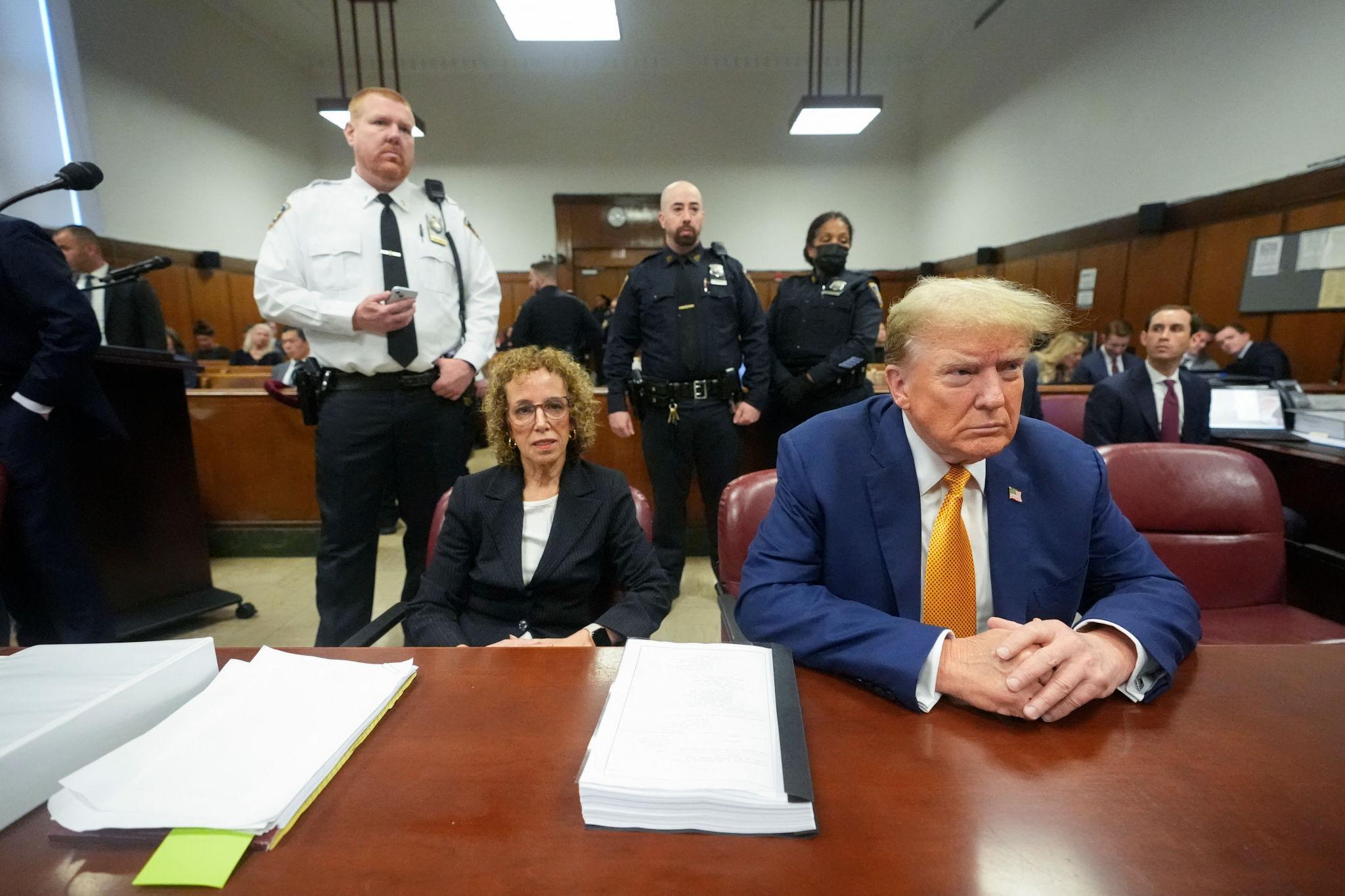
THE ELECTION-LAW ARGUMENT THAT COULD MATTER
Another major dispute concerns the legal foundation of the felony charges.
Under New York law, falsifying business records generally becomes a felony when the conduct involves an intent to commit or conceal another crime.
During Trump's trial, prosecutors presented a theory that the records were falsified as part of an effort to conceal an unlawful scheme influencing the 2016 election.
The defense argues that Manhattan prosecutors improperly brought federal campaign-finance law into a state criminal proceeding.
Trump attorney Robert Giuffra Jr. told the appellate judges that this issue provided a significant basis for reversing the conviction.
Prosecutors responded that they were not independently prosecuting Trump for a federal campaign-finance violation.
Instead, they argued, the election-law evidence helped explain the alleged conspiracy and the purpose behind the business-record entries.
That distinction became a focus of questions from the appellate panel.
For Trump's defense, the issue represents a challenge to the legal reasoning supporting the original verdict.
For prosecutors, the conviction remains supported by the evidence and the applicable provisions of New York law.
WHY THE JUDGES' QUESTIONS MATTER
Appellate hearings often involve difficult questioning of both sides, and the exchanges on Thursday offered no clear indication of how the court will ultimately decide.
The judges examined whether federal election-law concepts were properly used, whether certain White House-related evidence was admissible, and whether any errors could have affected the verdict.
Those questions do not mean the convictions will necessarily be overturned.
The court could uphold the judgment, reverse it or reach another legally available outcome depending on its findings.
The central issue is whether the trial was conducted according to the legal standards required for a valid conviction.
Trump did not attend Thursday's hearing.
He has repeatedly described the prosecution as politically motivated, while Manhattan District Attorney Alvin Bragg's office has defended its handling of the case.
ANOTHER LEGAL BATTLE IS STILL AHEAD
The state appeal is not Trump's only attempt to undo the conviction.
His attorneys have also sought to move the case into federal court and pursue dismissal on presidential immunity grounds.
A federal judge rejected that effort again in August 2026.
Trump's lawyers are appealing that decision as well, with arguments scheduled for November 16.
The separate legal proceedings mean that challenges to the conviction are continuing on more than one front.
For now, however, the 34-count guilty verdict remains in effect.
THE QUESTION THAT REMAINS
The latest hearing has placed the spotlight on a legal issue with potentially substantial consequences: whether the original jury heard evidence that should have been excluded or was asked to consider an improper legal theory.
Trump's lawyers believe those issues warrant reversal.
Prosecutors maintain that the verdict should stand.
The appeals judges must now decide whether the arguments reveal reversible legal errors or whether the conviction can withstand the challenge.
Until a ruling is issued, Trump's effort to overturn the historic verdict remains unresolved.
The next major development will come not from political declarations, but from the courts deciding whether the original judgment was legally sound.