Trump’s Massive 250-Foot Arch Gets Approved — Then a Federal Judge Delivers a Stunning Setback
**WASHINGTON, D.C. — November 6, 2026**
President Donald Trump's ambitious proposal to build a towering triumphal arch near Arlington National Cemetery has encountered a major legal obstacle, just as the administration appeared ready to move forward with construction.
On Thursday, November 5, the National Capital Planning Commission approved the proposed 250-foot monument in an 8-4 vote following a contentious public hearing that lasted more than nine hours.
But just over an hour after the meeting ended, U.S. District Judge Tanya Chutkan issued a temporary restraining order prohibiting the administration from beginning construction for 14 days.
The rapid sequence of events transformed what had been a significant planning victory for the White House into a new legal confrontation over federal authority, historic preservation, and the future of Washington's landscape.
## Federal Judge Intervenes After Major Approval
The National Capital Planning Commission's decision represented an important milestone for Trump's proposed monument.
The administration had indicated that construction could begin once the necessary federal approvals, including authorization from the Interior Department and notification by the National Park Service, were completed.
However, the federal court intervened before work could begin.
Judge Chutkan granted a temporary restraining order requested by Virginia and the District of Columbia, which filed a lawsuit on October 31 challenging the project.
The two jurisdictions warned that immediate construction could disrupt traffic patterns, complicate emergency services, and create significant costs for local governments.
Chutkan concluded that the potential harm was sufficiently immediate to justify temporarily blocking the project.
The judge also directed the federal government to submit a compliance report on Monday, November 9.
The ruling does not permanently cancel the monument. Instead, it prevents construction from beginning during the 14-day period while the legal proceedings continue.
## A 250-Foot Monument Near America's Most Famous Military Cemetery
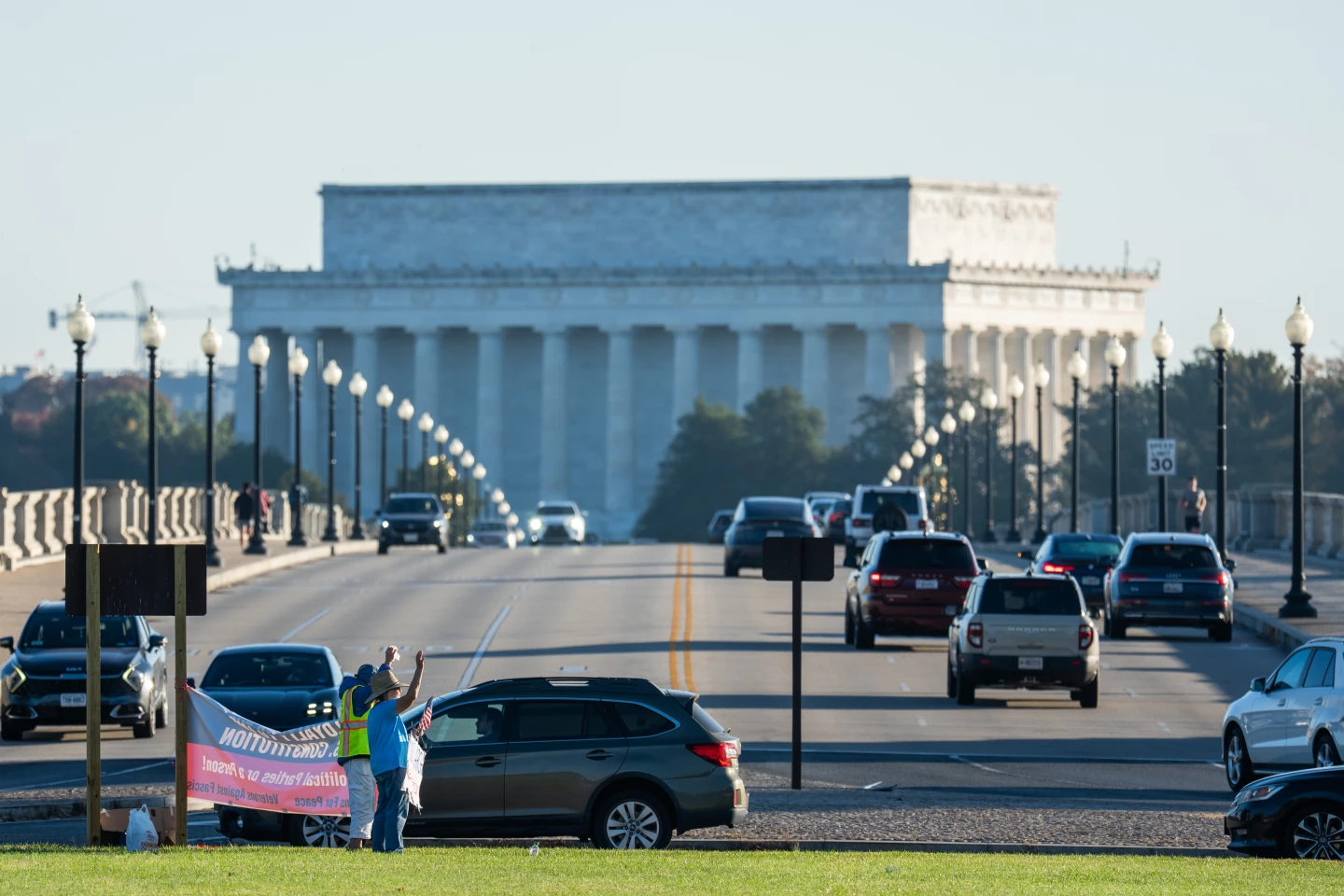
The proposed triumphal arch would stand near Memorial Circle, a prominent location close to Arlington National Cemetery and a major approach to Washington from Virginia.
At approximately 250 feet tall, the monument would become a highly visible feature of the capital's surrounding landscape.
Trump and his supporters envision the arch as an architectural tribute to American history, national identity, and military service.
The administration has pointed to celebrated arches in cities such as Paris, Rome, and London as examples of monumental architecture that communicates national pride.
Supporters believe the structure could create a distinctive ceremonial gateway to Washington.
But the location has generated considerable opposition.
Arlington National Cemetery is a place of remembrance for hundreds of thousands of military personnel, veterans, and other eligible individuals.
Critics argue that a structure of such enormous scale could change the character of the surrounding landscape and undermine the cemetery's solemn atmosphere.
Those concerns became a central issue during the planning commission's review.
## Nine-Hour Hearing Reveals Deep Divisions
The commission's approval followed a lengthy remote hearing marked by technical problems, public criticism, and disagreement among commissioners.
Dozens of witnesses spoke against the project, including individuals concerned about the monument's impact on military remembrance and historic preservation.
Despite the opposition, commission members associated with the Trump administration supported moving forward.
Mark Paoletta, the commission's Trump-appointed chairman, argued that major monuments play an important role in expressing a nation's identity.
He emphasized Trump's interest in creating a grand architectural symbol comparable to historic monuments found in major European cities.
Paul Ingrassia, a lawyer for the General Services Administration who serves on the commission, defended the proposal as a way to commemorate veterans and celebrate American history.
Opponents presented a sharply different interpretation.
D.C. Council Chairman Phil Mendelson questioned whether the commission had received sufficiently complete plans to grant final approval.
He also argued that the project lacked necessary congressional authorization and that Congress had not appropriated money for its construction.
The commission ultimately voted 8-4 in favor of the proposal, with support and opposition divided largely between federal administration representatives and local Washington officials.
## A Century-Old Law Becomes Central to the Court Fight
One of the most important legal disputes concerns a law enacted in 1925.
The Trump administration maintains that Congress provided authority for a memorial at Memorial Circle approximately a century ago.
Supporters of the arch argue that this earlier legislation establishes a legal basis for the proposed monument.
Critics disagree.
They contend that the old authorization does not automatically permit construction of a massive new structure without satisfying current legal requirements.
Judge Chutkan expressed skepticism toward the administration's reliance on the century-old statute.
In her ruling, she questioned whether lawmakers in 1925 had granted authority for a 250-foot arch that previous administrations had never attempted to construct.
The disagreement is significant because it addresses whether the executive branch can proceed with such an ambitious federal project without new congressional approval.
The temporary restraining order resolves the immediate question of whether construction may begin, but the broader legal dispute remains ongoing.
## Veterans and Lawmakers Challenge the Monument
Opposition to the arch has extended beyond local government officials.
A group of Vietnam veterans and an architectural historian previously filed a lawsuit challenging the proposed construction.
Their case was consolidated with the lawsuit brought by Virginia and the District of Columbia.
The opposition has also attracted attention from Democratic lawmakers.
Representative Jared Huffman of California criticized the project during the commission's public hearing, questioning whether its primary purpose was to honor veterans or celebrate the president himself.
Huffman argued that the proposed design resembled monuments historically associated with emperors and monarchs.
Administration supporters rejected that characterization, presenting the arch as a national tribute rather than a personal political monument.
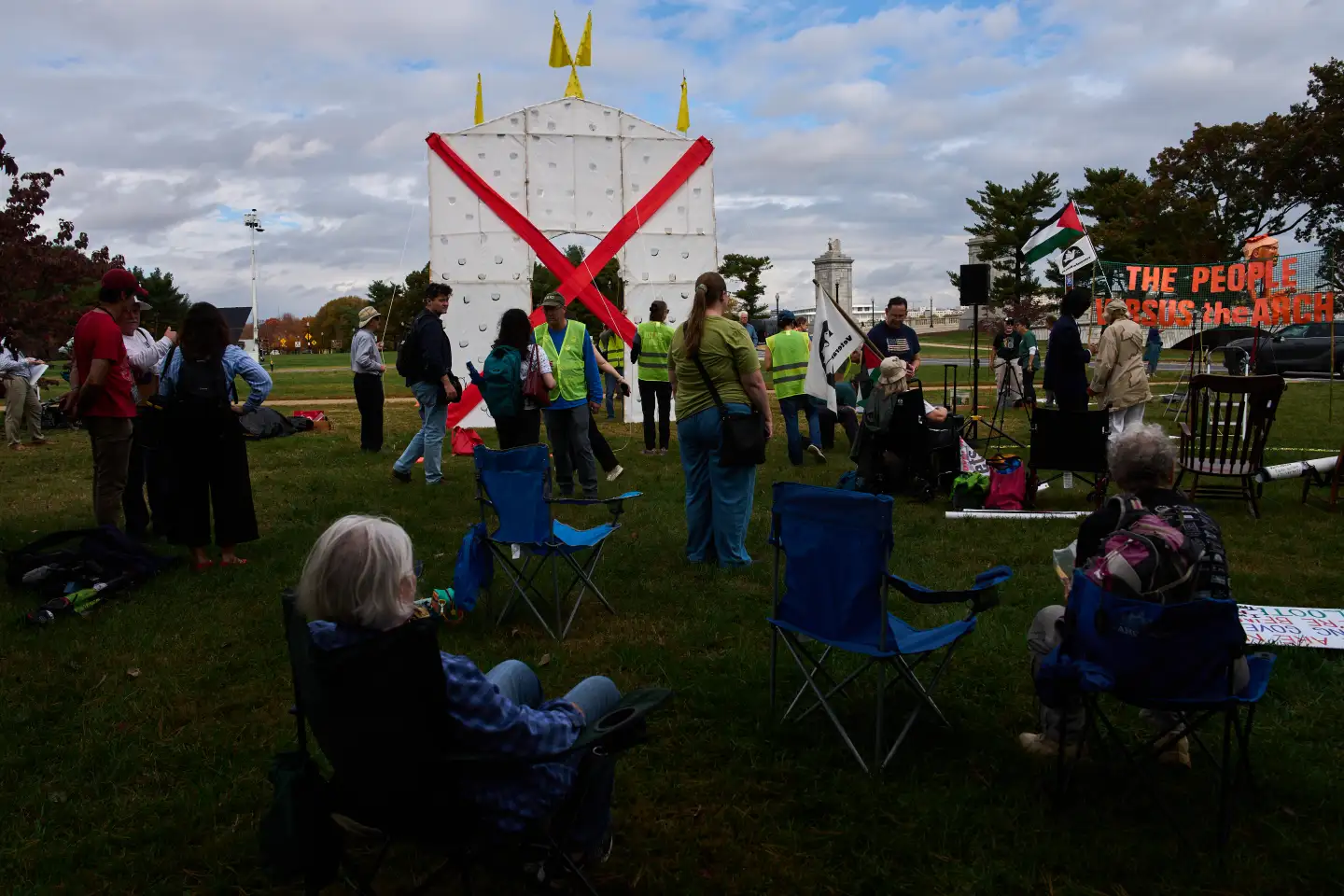
Outside the formal proceedings, protesters gathered near Memorial Circle to voice objections.
Some demonstrations featured signs mocking the idea of a monumental arch, while others emphasized concerns about the cemetery's historical significance.
Together, the lawsuits, public testimony, and demonstrations illustrate the divisions surrounding the proposal.
## Trump's Washington Transformation Faces Growing Scrutiny
The arch is part of a broader series of projects associated with Trump's efforts to change prominent spaces in the nation's capital.
The president has pursued renovations and proposed changes involving federal recreational facilities, cultural landmarks, and other government properties.
Supporters describe those initiatives as efforts to improve Washington's appearance and create lasting architectural achievements.
Opponents have raised concerns about preservation requirements, government spending, and the extent of presidential authority over historically significant locations.
The political environment surrounding those projects is also changing.
Following the November 3 midterm elections, Democrats gained control of Congress, creating the possibility of increased oversight of administration construction plans.
That scrutiny could include questions about funding, legal authorization, and federal review procedures.
For the proposed arch, the combination of congressional attention and ongoing litigation may complicate the administration's efforts to begin construction.
## What Happens Next for the Proposed Arch?
The immediate next step is the federal government's required compliance report, due Monday, November 9.
During the 14-day temporary restraining order, the administration cannot begin construction on the monument.
The court will continue considering the legal challenges brought by Virginia, the District of Columbia, veterans, and preservation advocates.
Further proceedings could address whether the administration possesses sufficient legal authority to construct the arch and whether additional congressional approval is necessary.
The National Capital Planning Commission's approval remains an important milestone, but it does not override the federal court's temporary restriction.
The administration must now navigate the judicial process before advancing the project.
For Trump, the proposed arch represents an effort to leave a lasting architectural mark on Washington.
For critics, it raises broader questions about preserving historic spaces and maintaining appropriate limits on presidential power.
For now, one fact is clear: the 250-foot monument has received federal planning approval, but construction remains temporarily blocked.
Its ultimate future will depend on decisions that have yet to be made.