U.S. Aircraft Carrier USS George Washington Leaves Middle East as Iran War Continues, Reducing American Carrier Presence to Two
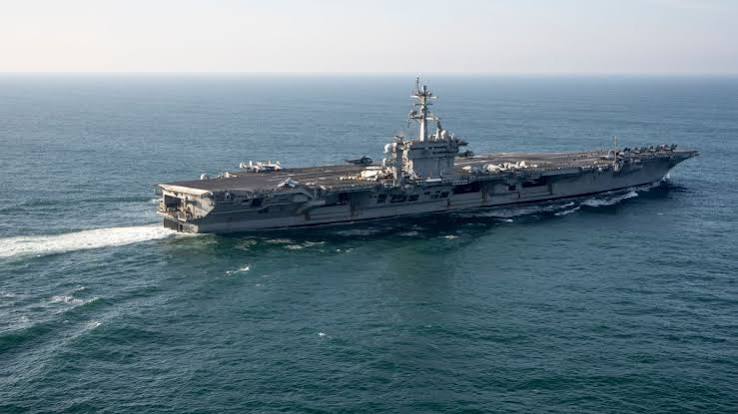
WASHINGTON — November 19, 2026 — The United States military has reduced its aircraft carrier presence in the Middle East from three ships to two after the USS George Washington departed the region, even as American forces continue operations connected to the war with Iran.
The departure represents another significant change in the Navy's deployment arrangements during a conflict that has placed substantial demands on American warships and their crews.
The USS George Washington, a nuclear-powered Nimitz-class aircraft carrier normally based in Japan, had been operating in the Middle East since August.
Its departure came during the same week that the USS Theodore Roosevelt arrived in the region, briefly increasing the number of American aircraft carriers operating near Iran to three.
According to the Associated Press, the George Washington is now conducting routine operations in the Asia-Pacific region under the command of the U.S. Pacific Fleet.
Despite the reduction, two aircraft carriers and more than a dozen other American warships remain in the Middle East, supporting military operations and the continuing blockade of Iran.
The development comes as President Donald Trump offers differing signals about the possibility of additional military strikes against Tehran.
USS George Washington Leaves the Middle East After Months of Operations
The USS George Washington's departure was confirmed Wednesday by Cmdr. Katie Koenig, a spokesperson for the U.S. Pacific Fleet.
Koenig said the aircraft carrier had returned to the fleet's control and was conducting routine operations in the Asia-Pacific.
The statement confirmed that the ship was no longer participating in the Middle East deployment that began in August.
The George Washington had been diverted from operations in the South China Sea earlier this year as the Pentagon adjusted its naval forces to support the Iran war.
Its deployment followed concerns about the demands placed on another American carrier, the USS Abraham Lincoln.
The departure does not mean the United States has withdrawn its naval forces from the region.
Instead, it changes which aircraft carriers are assigned to the continuing mission.
The Associated Press did not report that the George Washington had suffered battle damage or that its departure resulted from an Iranian attack.
The confirmed development is a change in deployment and operational control.
Two American Aircraft Carriers Remain Near Iran
With the George Washington gone, the U.S. Navy's remaining carrier presence in the Middle East consists of the USS George H.W. Bush and the USS Theodore Roosevelt.
The George H.W. Bush arrived in the region in April and has remained part of the American military presence during the conflict.
The Theodore Roosevelt arrived earlier in the week, shortly before the George Washington departed.
For a brief period, all three ships were operating in the broader region.
That temporary concentration of carriers was unusually large.
American aircraft carriers are major naval assets capable of supporting aviation operations, surveillance, defensive missions and strikes against military targets.
Their presence allows the United States to deploy military aircraft without depending entirely on land-based airfields.
However, carrier operations also require substantial logistical support.
Aircraft maintenance, fuel, food, personnel requirements and the operations of accompanying warships all contribute to the complexity of sustained deployments.
The return to two carriers therefore changes the composition of the American naval force while preserving a substantial operational capability.
More Than a Dozen U.S. Warships Continue Supporting the Mission
The American military presence extends well beyond the remaining aircraft carriers.
According to AP, more than a dozen additional U.S. Navy vessels are operating in the region.
Those ships include destroyers, cruisers and a littoral combat ship.
Together with the carrier strike groups, they form part of the naval force supporting U.S. military operations against Iran.
The American naval presence has played a central role in enforcing restrictions on merchant shipping entering or leaving Iran.
These operations are part of Washington's broader campaign to place economic pressure on Tehran.
By restricting Iran's ability to export oil through maritime routes, the Trump administration has sought to reduce the country's access to international energy markets.
The blockade has also become one of the major sources of disagreement between Washington and Tehran.
Although the number of aircraft carriers has decreased, AP reported no announcement ending the blockade.
The continuing presence of escort ships and supporting vessels underscores the scale of the ongoing naval mission.
U.S. Blockade Remains Central to the Iran War
The U.S. naval blockade is intended to prevent merchant shipping from moving to and from Iran.
Oil exports are particularly important because energy sales represent a major source of revenue for the Iranian economy.
The Trump administration has used maritime restrictions as an instrument of pressure during the conflict.
American aircraft carriers have supported the naval forces responsible for maintaining those restrictions.
The strategy has created a confrontation involving military power, international trade and access to critical maritime routes.
Iran has also sought to disrupt shipping through the Strait of Hormuz, contributing to wider instability in regional transportation.
The result has been a prolonged struggle affecting commercial vessels and energy markets.
The departure of one carrier does not resolve the dispute over shipping access.
Nor does it establish that Iran and the United States have reached an agreement about maritime restrictions.
For now, the blockade remains an important part of American military operations.
Strait of Hormuz Remains a Major Global Concern
The Strait of Hormuz has become one of the most consequential locations in the conflict.
The narrow waterway connects the Persian Gulf with the Gulf of Oman and international shipping routes.
Before the war began on February 28, 2026, nearly one-third of the world's oil passed through the strait, according to the figure cited by AP.
Disruptions to shipping through the waterway have contributed to higher global energy prices.
The economic consequences are not limited to Iran and the United States.
Countries that depend on imported oil can face additional costs and uncertainty when major energy transportation routes become unstable.
Shipping companies must also consider the risks associated with moving vessels through waters affected by military operations.
The United States has carried out limited attacks against Iranian targets in the Strait of Hormuz.
Those operations have occurred alongside the continuing naval blockade.
The combination of military strikes and maritime restrictions demonstrates why the region remains strategically important even after the George Washington's departure.
Trump's Statements Raise Questions About the Next Phase of the Conflict
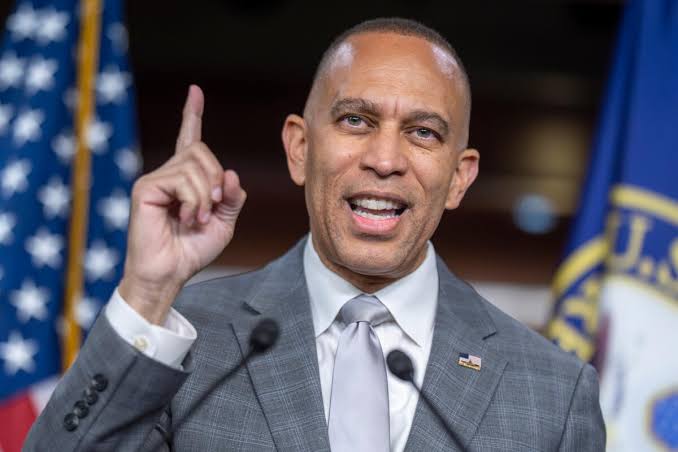
President Donald Trump has offered differing assessments of the war's future.
At times, the president has warned Iran that American forces are prepared to respond with additional military action.
He recently said the United States was monitoring Pickaxe Mountain, a facility associated with Iran's nuclear program, for signs of activity.
His statements have emphasized that Washington retains the ability to conduct further strikes.
At other times, Trump has suggested that major combat operations may no longer be necessary.
He has described the military phase of the war as largely finished and indicated that he considered another large-scale offensive unlikely.
These remarks reflect uncertainty about the administration's intended approach.
The continued presence of two aircraft carriers does not, by itself, establish whether additional strikes will occur.
Likewise, the departure of one carrier is not evidence that a ceasefire has been reached.
The military situation remains dependent on decisions by Washington, Tehran and other actors involved in the conflict.
USS George Washington Was Redeployed From Asia During the War
The George Washington's Middle East mission began after the Navy made adjustments to its carrier deployments.
The aircraft carrier had been operating in the South China Sea before being redirected to support operations connected to Iran.
The decision followed reports concerning conditions aboard the USS Abraham Lincoln, which had been deployed for an unusually long period.
The Abraham Lincoln had remained at sea for more than 240 consecutive days, setting a record for uninterrupted time at sea.
Reports about the carrier raised concerns involving the demands placed on sailors and the availability of supplies.
The George Washington was sent to help relieve pressure on the extended deployment.
Its arrival allowed the Navy to adjust which aircraft carriers supported the mission.
The latest departure represents another stage in that deployment sequence.
Moving carriers between regions also reflects the Navy's responsibility to maintain forces across several strategically important areas.
Even while supporting operations in the Middle East, American naval forces must continue meeting commitments in the Pacific.
Extended Deployments Put Pressure on American Sailors
Aircraft carrier deployments can involve thousands of personnel living and working at sea for months.
The demands of maintaining flight operations, servicing aircraft and supporting other ships create substantial workloads.
During the Iran war, the Navy has faced questions about how extended deployments affect sailors and operational readiness.
The USS Abraham Lincoln's prolonged period at sea became a prominent example of those concerns.
Its deployment lasted more than 240 days without a port visit.
The George Washington's reassignment was connected to the Navy's effort to manage those operational demands.
While military leaders have emphasized the importance of maintaining readiness, extended missions can complicate normal maintenance and personnel schedules.
A carrier cannot remain deployed indefinitely without considering the condition of its equipment and the needs of its crew.
The movement of the George Washington back toward its usual operating region is therefore significant within the wider context of fleet management.
However, AP did not identify a specific maintenance emergency or personnel incident as the direct cause of the latest departure.
Iran War Has Become a Major Political Issue in the United States
The conflict has also affected American domestic politics.
According to AP, public dissatisfaction with the war and its economic consequences contributed to significant Republican losses in the November 2026 midterm elections.
Energy prices have been one visible consequence of the disruption to maritime trade.
The Trump administration has defended its military and economic pressure on Iran while continuing to consider diplomatic and military options.
The changing political environment adds another consideration for policymakers.
Decisions about naval deployments, further strikes and the continuation of the blockade carry financial and military consequences.
They also shape public debate about the objectives and duration of the war.
However, the Navy's carrier rotation should not be interpreted as proof of a particular political decision unless officials announce one.
The AP report establishes the military redeployment but does not identify electoral considerations as the reason for the George Washington's departure.
Why Aircraft Carrier Numbers Matter
Aircraft carriers provide the U.S. military with the ability to operate combat aircraft from international waters.
Each carrier operates as part of a larger naval force supported by escort vessels and logistics ships.
Having multiple carriers in one region can support sustained aviation operations and provide commanders with additional operational flexibility.
However, the number of carriers alone does not offer a complete picture of American military capability.
Other warships, aircraft, personnel and support facilities also contribute to the force available for operations.
In the Middle East, the remaining American fleet includes two carriers and more than a dozen additional vessels.
That means the departure of the George Washington reduces the number of carrier flight decks but does not eliminate the naval presence supporting the blockade.
The exact operational impact will depend on how the remaining forces are used.
AP did not report a detailed Pentagon assessment quantifying how the departure would affect the tempo of military operations.
It is therefore premature to conclude that the move represents a major reduction in American military pressure.
What Happens Next for the U.S. Navy?
The USS George Washington is now operating under the U.S. Pacific Fleet, while the USS Theodore Roosevelt and USS George H.W. Bush remain in the Middle East.
American warships continue supporting the blockade of Iran, and the broader conflict remains unresolved.
President Trump has indicated both that U.S. forces are ready for further military action and that he considers another major offensive unlikely.
No final agreement ending the war was announced in the AP report.
The immediate military picture is therefore one of continued American operations with a reorganized carrier presence.
For the Navy, future decisions will involve balancing operational requirements in the Middle East with commitments elsewhere.
For Washington and Tehran, the blockade and the security of the Strait of Hormuz remain major issues.
For international energy markets, uncertainty over shipping through the waterway continues to matter.
The central question is whether the return to two U.S. aircraft carriers marks a routine adjustment in a prolonged naval campaign or becomes part of a broader change in American military operations against Iran.
For now, the confirmed facts are clear: the USS George Washington has left the Middle East, two American aircraft carriers remain, and the U.S. naval blockade continues as the war enters another uncertain phase.