U.S. Expands Iran Naval Blockade With New Warning to Oil Tankers as Military Threatens to Intercept Ships Receiving Cargo at Sea
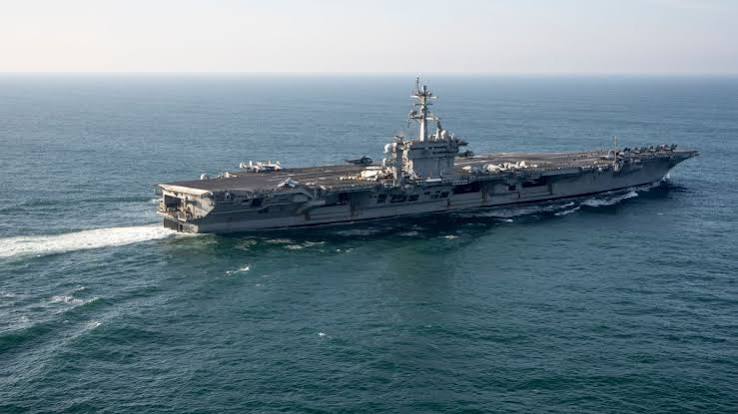
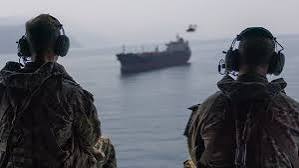
LONDON — November 18, 2026 — The United States military has announced stricter enforcement measures against vessels transporting Iranian cargo, warning that ships receiving goods through transfers at sea could be intercepted, boarded, diverted or captured even if they have never entered an Iranian port.
The new restrictions, outlined in an advisory issued Wednesday by U.S. Central Command (CENTCOM), represent an expansion in how Washington intends to enforce its naval blockade against Iran.
The announcement targets a maritime practice known as ship-to-ship transfers, in which cargo is moved between vessels while both are at sea.
American officials say vessels receiving cargo from ships subject to the blockade may themselves be treated as attempting to evade the restrictions.
The development comes amid the continuing confrontation between the United States and Iran, which has disrupted energy exports and raised concerns about maritime security in the Middle East.
Although Iranian crude oil shipments have remained nearly at a standstill for months, shipping intelligence suggests Tehran has still managed to export certain petroleum products.
The latest U.S. advisory appears designed to address that remaining channel of maritime trade.
U.S. Military Issues New Warning to Ships Carrying Iranian Cargo
CENTCOM's updated advisory makes clear that American enforcement measures will not be limited to vessels directly entering or leaving Iranian ports.
Under the announced policy, a ship that receives cargo at sea from a vessel covered by the blockade may also face enforcement action if the cargo was originally loaded at an Iranian port or coastline.
The restriction applies even when the receiving ship has not sailed into Iranian waters.
That distinction is significant because it extends the practical reach of the blockade to transactions conducted farther along the shipping route.
A vessel cannot necessarily avoid U.S. scrutiny simply by receiving Iranian-origin cargo from another ship outside Iran's immediate coastal area.
CENTCOM said ships suspected of attempting to bypass the blockade may be stopped, boarded, redirected or captured.
The advisory also allows American forces to order a vessel back to the Iranian port from which its cargo originated.
These measures give the military several potential responses when confronting vessels it considers to be violating the blockade.
However, the advisory does not establish that every vessel carrying Iranian-origin cargo will automatically be seized.
Actual enforcement would depend on the circumstances and the orders issued by American forces.
Ships Could Face Force for Refusing Lawful Orders
One of the most serious aspects of the advisory concerns vessels that refuse to comply with American military instructions.
CENTCOM warned that ships failing to obey lawful orders from blockade or boarding forces could face enforcement action.
The military stated that such measures could include the use of force, subject to applicable law.
The warning introduces an additional risk for commercial crews and shipping operators navigating waters affected by the U.S.-Iran confrontation.
Boarding operations involve military personnel approaching or entering a vessel to inspect or enforce restrictions.
Diversion orders can require ships to alter their intended course.
Capture or seizure can result in a vessel being taken into custody by military authorities.
The possibility of force makes compliance decisions particularly consequential.
Nevertheless, the advisory does not mean that CENTCOM has announced a policy of automatically firing on ships carrying Iranian cargo.
Its language concerns possible enforcement against vessels that fail to comply with lawful instructions.
The legal basis for the blockade and individual enforcement actions may also be contested by governments or shipping operators.
Why Ship-to-Ship Transfers Matter
Ship-to-ship cargo transfers are a recognized part of international maritime operations.
They allow ships to move oil, petroleum products and other cargo without immediately returning to a port.
Such transfers can serve legitimate commercial purposes.
However, they can also complicate efforts to determine the origin and movement of cargo.
In the context of a naval blockade, transferring goods to another vessel creates questions about whether the receiving ship is subject to the same restrictions as the original carrier.
The latest CENTCOM advisory addresses that issue directly.
Under the American position, receiving cargo from a vessel covered by the blockade can expose the second ship to enforcement measures if the goods originated from Iran.
That means the route taken by the receiving ship is not the only consideration.
The cargo's origin and its transfer history become central to the enforcement decision.
For commercial shipping companies, this development could require additional attention to cargo documentation, counterparties and the risks associated with transferring goods at sea.
The announcement does not prohibit every ship-to-ship transfer worldwide.
It specifically concerns transfers involving vessels and cargo within the scope of the U.S. blockade.
U.S. Naval Blockade Has Been Imposed, Lifted and Restored
The November announcement follows several changes in Washington's maritime restrictions against Iran.
The United States initially imposed its naval blockade on Iran-related oil exports on April 13, 2026.
The blockade was lifted in June after Washington and Tehran reached a draft understanding.
That development suggested the possibility of reducing maritime tensions through negotiation.
However, the arrangement subsequently collapsed.
On July 14, the United States reimposed the blockade.
The renewed restrictions have remained an important part of American pressure on Iranian energy exports.
The latest advisory does not establish an entirely new blockade beginning in November.
Instead, it clarifies and strengthens the enforcement rules associated with the restrictions already in place.
This distinction helps explain why the announcement is important.
Rather than simply continuing to prevent vessels from loading cargo directly at Iranian ports, the U.S. military is now making explicit that receiving cargo from a blocked vessel at sea can also trigger enforcement.
The change could affect shipping arrangements that previously operated outside Iran's immediate port infrastructure.
Iran Has Continued Exporting Some Petroleum Products
Despite the blockade, Iran has managed to maintain limited exports of certain petroleum products.
According to shipping intelligence and security sources who spoke to Reuters in October, Iranian shipments of liquefied petroleum gas and jet fuel had continued after the July reimposition of the blockade.
Liquefied petroleum gas, commonly known as LPG, is used for heating, cooking and industrial applications.
Jet fuel is a refined petroleum product used in aviation.
These products are distinct from crude oil, which is transported for refining into various fuels and other petroleum-based materials.
Reuters reported that Iran's crude oil exports had remained near a standstill for months.
That means the blockade had already placed significant restrictions on one of the country's most important export categories.
However, the continued movement of some refined products and LPG demonstrated that maritime cargo was still leaving Iran through certain channels.
The November advisory seeks to address the transfer of Iranian cargo between ships as one potential way of avoiding direct port restrictions.
Reuters did not establish the total value or volume of the products Iran had exported through these routes.
Nor did the report identify a complete list of vessels that could become subject to the new enforcement measures.
Why Washington Is Targeting Transfers Beyond Iranian Ports
The logic behind the expanded enforcement approach concerns the movement of cargo after it leaves its original loading point.
If restrictions apply only to a ship sailing directly from Iran, transferring its cargo to a second vessel could complicate enforcement.
The receiving vessel might travel onward without entering an Iranian port.
CENTCOM's advisory seeks to prevent that distinction from automatically placing the second ship outside the blockade's reach.
The American military now explicitly states that a vessel receiving the relevant cargo at sea can still be considered to be evading the restrictions.
This approach places greater emphasis on the origin of cargo and the circumstances of the transfer.
It also raises practical questions about how military authorities will identify vessels, verify their cargo histories and decide which ships should be inspected.
Those operational details were not fully explained in Reuters' November 18 report.
The advisory outlines potential enforcement actions, but it does not provide a comprehensive public account of how every suspected transfer will be investigated.
What the Changes Could Mean for Commercial Shipping
The restrictions could create new considerations for companies transporting oil and petroleum products in the region.
Operators involved in cargo transfers may need to evaluate whether the vessels and products they handle fall within the scope of the blockade.
Shipping companies could also face uncertainty over the consequences of receiving cargo whose origin is disputed or difficult to verify.
The possibility of interception or diversion could affect voyage planning.
For crews, encounters with military boarding forces may introduce additional safety and operational concerns.
However, the scale of the economic consequences cannot be determined from the advisory alone.
Reuters did not report that the new measures had already caused a specific number of vessels to be detained or that a measurable volume of shipments had been canceled.
The announcement establishes a wider enforcement policy.
Its practical effect will depend on how American forces apply it and how shipping operators respond.
A New Development in the U.S.-Iran Maritime Confrontation
The naval blockade has become a significant element of the broader dispute between Washington and Tehran.
Iran's ability to export energy products is economically important, while the United States has sought to use restrictions on maritime trade as a means of applying pressure.
The earlier temporary lifting of the blockade in June demonstrated that negotiations had previously created an opportunity to reduce restrictions.
But the collapse of that draft understanding and the reimposition of the blockade in July left the dispute unresolved.
The November advisory shows that Washington is now pursuing a more extensive enforcement approach.
Rather than relying solely on the interception of ships directly associated with Iranian ports, CENTCOM is addressing cargo transfers between vessels at sea.
That development could make maritime trade involving Iranian-origin products more complicated.
It also introduces the possibility of encounters between U.S. military forces and ships operating beyond Iran's territorial waters.
The announcement does not establish that such encounters will necessarily result in armed confrontations.
It does, however, make clear that CENTCOM is prepared to consider stronger enforcement actions against vessels it regards as evading the blockade.
Questions Remain About Enforcement and International Shipping
Several important questions remain unanswered following the announcement.
CENTCOM has not publicly identified all vessels that may be affected by the expanded restrictions.
The advisory also does not provide a confirmed number of ships intercepted under the new policy.
It is unclear how frequently American naval forces will conduct inspections involving cargo transferred at sea.
The announcement does specify that vessels receiving relevant Iranian-loaded cargo may face action even when they have not entered Iranian ports.
It also warns that failure to follow lawful orders could lead to stronger enforcement measures.
The implications for individual ships will depend on their cargo, transfer history and interactions with military forces.
Commercial operators will therefore need to distinguish between ordinary cargo transfers and operations that American authorities consider attempts to circumvent the blockade.
Any enforcement action may also raise questions involving international maritime law and the positions of other countries.
What Happens Next?
As of November 18, 2026, the United States had formally warned shipping operators about the expanded interpretation of its Iranian naval blockade.
The new advisory places ships receiving certain Iranian-origin cargo at sea within the scope of possible military enforcement.
It also identifies a range of potential actions, from inspection and diversion to capture and the use of force under applicable legal conditions.
Reuters reported that Iran had continued exporting some LPG and jet fuel despite the blockade, while crude oil exports remained close to a standstill.
The immediate question is how actively American forces will enforce the updated policy and whether shipping operators will change their practices in response.
The announcement could become particularly important for vessels engaged in transfers involving cargo loaded at Iranian ports.
However, the full consequences will only become clearer through subsequent enforcement activity and developments in relations between Washington and Tehran.
The earlier collapse of the draft understanding between the two governments illustrates the difficulty of resolving the maritime dispute through negotiations.
For now, the latest advisory represents a further tightening of American restrictions on Iranian trade.
The central question is whether expanding the blockade to ship-to-ship transfers will further restrict Iran's remaining energy exports — or create new disputes involving commercial vessels operating in international waters.
What is clear is that Washington has delivered a new warning: ships cannot assume they are beyond the reach of the U.S. blockade merely because they receive Iranian-loaded cargo at sea rather than entering an Iranian port.